Why does the bureaucratic whip not crack?
Powers of a Bureaucrat
NewsBharati 08-Sep-2026 12:57:25 PM
Total Views |


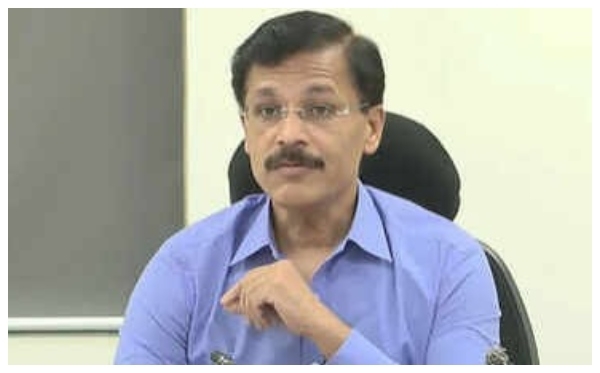
In recent months, Tukaram Mundhe, who is an Indian Administrative Service (IAS) officer known for his strict, honest, and fearless approach to public administration, has cracked the whip. Because of his uncompromising attitude, he has been transferred over 25 times in his 21-year career. This does reflect the overall rot in the entire system.
As the Maharashtra Food and Drug Administration (FDA) Commissioner, he led massive raids against fake milk makers, unsafe food joints, and major fast-food chains. Today, eateries have cleaned up their act- there is fear of law. People are very happy.
 Powers of a bureaucrat
In India, civil servants form the administrative backbone of the government. Their authority spans policy implementation, law enforcement, financial allocation, and quasi-judicial regulation across the union. This is a very broad role to manage the nation.
Authorised strength of 6877, the on-ground deployed strength is around 5600.
Senior civil servants manage departmental operations and ensure government programs are operationalised. At the field level, District Magistrates serve as the primary executive authority in a district. They coordinate line departments.
They hold significant financial management authority over public funds, for government schemes, approving budgets, managing public procurement, and managing land revenue administration.
Several administrative roles grant quasi-judicial authority to resolve specific legal disputes.
They hold statutory power to hear appeals, enforce compliance, impose financial penalties, and adjudicate administrative disputes.
While high-level policy guidelines are made by politicians, civil servants draft the operational rules and statutory orders that determine how laws are implemented.
For all practical purposes, Indian Administrative Service (IAS) officers wield sweeping executive, administrative, and financial powers, but their authority is strictly bound by constitutional laws.
At the same time, the Constitution provides structural safeguards alongside strict accountability measures.
Article 311: Protects civil servants against arbitrary dismissal or reduction in rank without a formal inquiry, ensuring administrative independence.
Of course, bureaucratic decisions, orders, and rules remain subject to review by the High Courts and Supreme Court for constitutionality and administrative fairness.
Some daring, fearless and honest officers
Almost every one of us is aware of the dwindling population of the great grand tigers across the world. From 100,000 in 1900, today the figure hovers around anything between 4,500 tigers across the world. India alone has around 3000 Tigers. The tiger population has literally shrunk to less than 4% in a hundred years. There have been numerous campaigns and celebrity endorsements to reverse the trend. This initiative was also endorsed by people no less than Amitabh Bachchan.
The concern to save the tiger, so that the species does not become extinct, is really important. What is equally important – if not more- is to save the “honest human tiger”. The population of this rare species is also rapidly shrinking by the day, especially in India. There may not be any comparative census report or a head count of the number of honest men and women in India in the year 1900 and how many of such people exist today. But if the tiger population has experienced a decline ratio of 1:25 in the last century, then one could bet on a worse scenario in case of the honest human tiger – at least in India. Such men and women are tigers because in today’s corruption-ridden Bharat you have to be a tiger to fight the corrupt and the jungle raj. You need to be brave heart, strong, risk-taking, and fearlessly devoted to the cause and be prepared to sacrifice- even your life. The major difference between a striped tiger and an honest tiger is that the former is fighting for his life while the latter is fighting for and on behalf of all of us. The corrupt hyenas who have a direct connection with politicians are out to gun them down. The case in point is Tukaram Munde. If nothing else, the public must come on the streets to support them- they fight for us.
Self-cleansing by hotels.
There are 6000 eateries in Pune. Nation-wise numbers are staggeringly high. We talk of self-regulation in terms of cinema content, but we need to be equally vocal about filth in restaurants and hotels which are mushrooming over the last two decades. If the restaurants spend a little more attention, there will be no raids on dirty kitchens. More important is adulteration. It is a crime which should be severely punished, if not life imprisonment.
Here bureaucratic whip is essential; you have the power, demonstrate it- people will support you.
As the Maharashtra Food and Drug Administration (FDA) Commissioner, he led massive raids against fake milk makers, unsafe food joints, and major fast-food chains. Today, eateries have cleaned up their act- there is fear of law. People are very happy.
In India, civil servants form the administrative backbone of the government. Their authority spans policy implementation, law enforcement, financial allocation, and quasi-judicial regulation across the union. This is a very broad role to manage the nation.
Authorised strength of 6877, the on-ground deployed strength is around 5600.
Senior civil servants manage departmental operations and ensure government programs are operationalised. At the field level, District Magistrates serve as the primary executive authority in a district. They coordinate line departments.
They hold significant financial management authority over public funds, for government schemes, approving budgets, managing public procurement, and managing land revenue administration.
Several administrative roles grant quasi-judicial authority to resolve specific legal disputes.
They hold statutory power to hear appeals, enforce compliance, impose financial penalties, and adjudicate administrative disputes.
While high-level policy guidelines are made by politicians, civil servants draft the operational rules and statutory orders that determine how laws are implemented.
For all practical purposes, Indian Administrative Service (IAS) officers wield sweeping executive, administrative, and financial powers, but their authority is strictly bound by constitutional laws.
At the same time, the Constitution provides structural safeguards alongside strict accountability measures.
Article 311: Protects civil servants against arbitrary dismissal or reduction in rank without a formal inquiry, ensuring administrative independence.
Of course, bureaucratic decisions, orders, and rules remain subject to review by the High Courts and Supreme Court for constitutionality and administrative fairness.
- A 1972 batch IAS officer, Vinod Rai, became the Comptroller & Auditor General of India. Rai is known for his uncanny ability to cut through bureaucracy. His compilation of audit reports of irregularities in the Delhi Commonwealth Games 2010, Coalgate allocation and allocation of 2G spectrum licenses brought him name and fame. Forbes quoted Rai as one of the bad-ass IAS officers of the rarest breed of civil servants who knows how to get work done in the bureaucracy. Throughout his service, he ensured that everything that came under his ambit was dealt with honesty and perfection.
- Durga Shakti Nagpal: A 31-year-old IAS officer, unearthed the nexus of ‘Sand Mafias’ in Greater Noida, UP. She was later moved to Gautam Budh Nagar district of UP, where she was posted as ‘Sub-Divisional Magistrate (SDM)’. She demolished an illegal mosque that was under construction in Kadalpur village, for which the UP government suspended her on false charges . She was reinstated later after the government faced ire from national media and bureaucratic circle
- Rajni Sekhri Sibal, a Haryana cadre IAS officer who bluntly says ‘no’ when it comes to corruption. Her habit of being incorruptible led to her frequent transfers. But what she did was something which left the system flabbergasted.Her action led to the imprisonment of former CM Om Prakash Chautala, his son Ajay Chautala and 51 others who were involved in a scam in which interview scores of 3,200 Junior Basic Training (JBT) teachers in 1999-2000 were manipulated to give jobs to those who had paid for it.She was offered a bribe- Rajni was asked to take 5% of the bribe money and change the result list by CM’s associates. Rajni denied doing so. She was transferred, but before she left, she sealed the almirah so that no one could open it.Even her successor wasn’t able to do much with the tampering of files, as he knew that this would lead him into troubled waters.
Almost every one of us is aware of the dwindling population of the great grand tigers across the world. From 100,000 in 1900, today the figure hovers around anything between 4,500 tigers across the world. India alone has around 3000 Tigers. The tiger population has literally shrunk to less than 4% in a hundred years. There have been numerous campaigns and celebrity endorsements to reverse the trend. This initiative was also endorsed by people no less than Amitabh Bachchan.
Self-cleansing by hotels.
There are 6000 eateries in Pune. Nation-wise numbers are staggeringly high. We talk of self-regulation in terms of cinema content, but we need to be equally vocal about filth in restaurants and hotels which are mushrooming over the last two decades. If the restaurants spend a little more attention, there will be no raids on dirty kitchens. More important is adulteration. It is a crime which should be severely punished, if not life imprisonment.
Here bureaucratic whip is essential; you have the power, demonstrate it- people will support you.
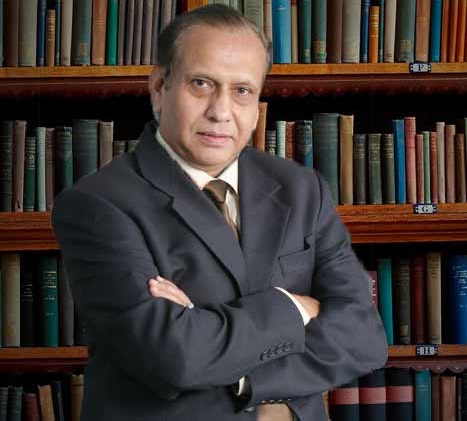
Virender Kapoor
A thinker, educationist and an inspirational guru. Kapoor is an Indian who wears many hats. An educationist of repute, he was the Director of a prestigious management Institute under the Symbiosis umbrella. He has emerged as a leading think tank in human behavior, motivation and success. As a celebrity author, his name appears with the likes of Thomas Friedman and Dale Carnegie. He has authored more than 30 books as of now which are on Amazon worldwide and several of his books are in the pipeline.