Will CM Uddhav Thackeray step down on 27th May 2020?


By Adv. Vijay Trimbak Gokhale
It must be clarified at the very outset that this article is written with a view to articulating only the legal standpoint on the subject and has no political connotation. The rationale of legal points dealt herein is applicable to a minister and chief minister and the Council of States (Rajya Sabha) and the Legislative Council of a state.
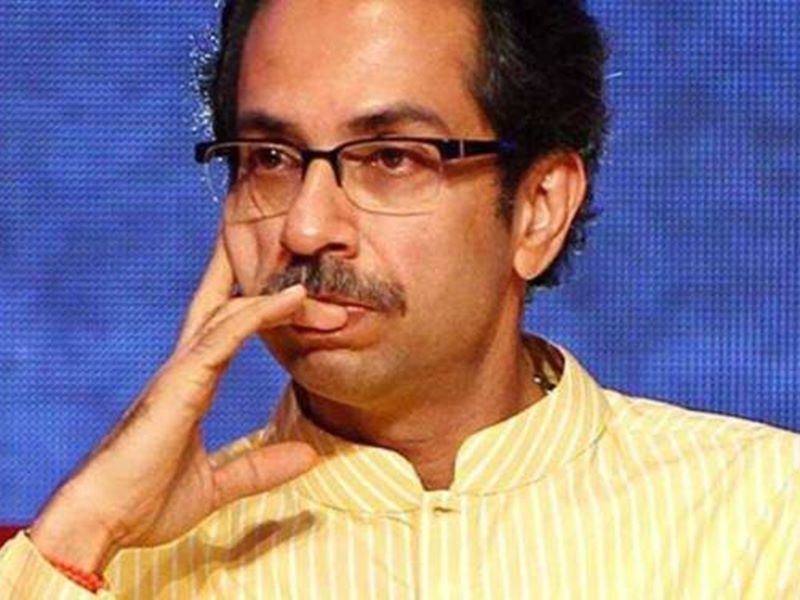
Options before Thackeray:
(1) To contest and win election to Vidha Sabha, (2) To contest and win election to Vidhan Parishad through legislative Assembly, or through the constituencies of local self-government, graduates or teachers, or (3) Become a member of Vidhan Parishad through nomination from the Governor.
As it looks increasingly difficult to complete the process of elections and declare their results by 27th May 2020 the only option left before Thackeray is of nomination.
The Council of Ministers has indeed recommended his name to the Governor for nomination.
As per article 171(5), the governor can nominate any person who has special knowledge or practical experience in the field of literature, science, art, cooperative movement, and social service. All politicians easily become eligible to be nominated due to their love for literature, commitment to the development of science, excellence in the art of politics, dedication to the cooperative movement, and missionary zeal with which they engage in social work.
Nominated member and legal tenability:
Even assuming that he becomes a nominated member it will be a moot point whether he can survive as Chief Minister as he has not got elected to the legislature, directly or indirectly.
It is true that there is no provision either in the constitution or in any other law which forbids a nominated member from becoming a minister. However, Thackeray’s appointment as a Chief Minister can be challenged in the High Court or the Supreme Court on following strong grounds.
Against the basic structure of the constitution:
A person not elected directly or indirectly becoming a minister or Chief Minister is contrary to the representative parliamentary democracy that we have adopted which contemplates that a government will be run by representatives elected directly or indirectly by people. Therefore, such an act will strike at the root of the “basic structure of the constitution” which cannot be changed, as pronounced by the apex court in Keshavanand Bharati case. It can, therefore, be vehemently argued that such ministership is unconstitutional. The supremacy of the constitution, a republican form of government and democracy, secularism, separation of power and independence of the legislature, executive and judiciary, and federal character of the constitution are some of the facets of the basic structure.
What did the Apex court say?:
Supreme Court in S.R. Chaudhuri vs State of Punjab & Others 17 August 2001 Appeal (civil) 244 of 1997 has said that the council of ministers headed by a Chief Minister derives its power from people directly or indirectly. Parliamentary democracy generally represents the people and the power directly bestowed on it by people is the mainstay of such a democracy.
Noting that the scope and ambit of article 164 and particularly 164(4) are the important issues involved in this appeal the court has explained and interpreted article 164(4). The court has repeatedly stated that a person who has been appointed a minister but who is not a member of any of the two houses of the legislature must get elected within six months. It is true that this appeal is pertaining to Punjab where there is no legislative council but the court has interpreted article 164(4) which has a word legislature and not legislative assembly. Therefore, if the court ever wanted to say that if a minister becoming a nominated member of the legislative council would constitute substantial compliance of this article and he could become a minister it could have stated so. But it has not done so. Instead, it has repeatedly stated that such a minister must get elected.
Constituent Assembly debate:
Many members of the constituent assembly while participating in the debate on this point had stated that there are many learned, studious, and knowledgeable persons in the society who do not wish to get into the heat and dust of the election. The assembly contemplated that such persons should be made nominated members of the legislative council so that society benefits from their wisdom. However, no one expressly stated that they should be made the members of the government. This indicates that the assembly did not intend that such members should participate in the governance function also.
Practice and precedents:
One of the nominated members in a State Council, a former senior official of the Legislature Secretariat and a former senior official of Lok Sabha Secretariat told me during my telephonic conversation with them that they do not recollect any instance from states or at the center where a nominated member was appointed a minister. The official of Lok Sabha said that though he did not recollect the details he certainly remembers that there was one such proposal under consideration at the center but it was abandoned due to all-round criticism.
In the third part titled “Membership of Rajya Sabha” of a revised publication "Rajya Sabha at work" by Rajya Sabha Secretariat in October 2016 it is stated “it may be noted here that even though there is no constitutional embargo on nominated members becoming ministers, no such member has, up to now, been inducted into the Central cabinet. Prof. Nurul Hasan was nominated to Rajya Sabha in 1968. He resigned the membership of Rajya Sabha on 30th September 1971. He was inducted into the Union Cabinet on 4th October 1971 and he got elected to Rajya Sabha from UP on 11th November 1971.
Congress leader Mani Shankar Aiyar while speaking in a seminar held on 27th September 2011 at Royal Geographical Society had said: “In India, if you are a nominated member of Council of States you cannot become a minister”. You can watch the video of the seminar proceedings here: https://www.youtube.com/watch?v=mL66rqZKfhk.
It would not be out of place to note the meaningful observations made by Fali Nariman, a noted jurist (who himself was a nominated member of Council of States) in his autobiography ‘Before Memory Fades’: “The status of a nominated member of a parliament is that he or she is a non-party member to whom the party whips of none of the political parties applied. A nominated member is, strictly speaking, an independent member with no party affiliation or leanings”.
It is undisputed that this is equally applicable to the nominated members of the State Legislative Council.
Resignation of Thackeray and his reappointment:
Some are toying with the idea of Uddhav Thackeray resigning as CM and being re-elected as a leader so that on his re-appointment as CM he would get another term of six months within which he could get elected. This is wrong and smacks of ignorance.
The Supreme Court in the verdict of S.R. Chaudhuri case quoted above has said “Reappointment of such a person, who fails to get elected as a member within the period of grace of six consecutive months, would not only disrupt the sequence and scheme of Article 164 but would also defeat and subvert the basic principle of representative and responsible Government. Framers of the Constitution by prescribing the time limit of ‘six consecutive months’ during which a non-legislator Minister must get elected to the legislature clearly intended that a non-legislator cannot be permitted to remain a minister for any period beyond six consecutive months, without getting elected in the meanwhile. Resignation by the individual concerned before the expiry of the period of six consecutive months, not followed by his election to the legislature, would not permit him to be appointed a Minister once again without getting elected to the legislature during the term of the legislative assembly. The "privilege" of continuing as a Minister for "six months" without being an elected member is only a one-time slot for the individual concerned during the term of the concerned legislative assembly. It exhausts itself if the individual is unable to get himself elected within the period of grace of "six consecutive months". It would be a perversion of the Constitution and even a fraud on it. Articles 164(1) and 164(4) have, therefore, to be so construed that they further the principles of a representative and responsible government”.
It may be remembered that the constitution has a clear provision of six consecutive months. A Latin legal maxim ‘Expressio unius est exclusio alterius’ is a principle in statutory construction. It means “when one or more things of a class are expressly mentioned others of the same class are excluded” and “Construction ut res magis valeat quam pereat” means the construction of a rule should give effect to the rule rather than destroying it.
His reappointment as a leader of the legislature party will be a “Colorable action”. What it means is that what cannot be done directly cannot also be done indirectly. It is a settled principle of law that this way you cannot make provisions in law or constitution ineffective. While as per the constitution Governor is the head of a state but all the executive authority is de facto with the Chief Minister. Therefore, it would be a constitutional impropriety if a person who has been a Chief Minister, even if for a very small duration, and who desires to stay in that position for long would approve of such action.
No constitutional crisis:
It may be remembered that the post of a minister or Chief Minister is not a contractual arrangement. The legal maxim ‘Force majeure’ has no application to this case. (‘Force majeure’ means an unexpected event such as a war or circumstances beyond one’s control and non-fulfillment of contractual obligations arising out of this is excused). There is also no constitutional crisis or fear of breakdown of constitutional machinery. It is because the constitution provides for a Chief Minister, it does not say, X, Y, or Z chief minister. By an internal mutual agreement, Maha Vikas Aghadi (MVA) (an alliance of Shiv Sena, NCP, and Congress which is in power in the state) can appoint any other elected member of the legislature as a titular or caretaker leader of the house who will step down at an appropriate time. It is true that the state is passing through a very difficult time due to Coronavirus but that does not mean that there will be a constitutional crisis or breakdown of constitutional machinery if Uddhav Thackeray has to step down. If at all there is a crisis it is within MVA.
It was possible for Thackeray to get elected to Legislative Council from Yavatmal Local Self-Government constituency in February 2020 from where Shiv Sena candidate Dushyant Chaturvedi got elected. But he did not avail of that opportunity. While it is true that constitution provides for six months to get elected but considering the fact that this period is a special privilege as stated by the Supreme court and ideal situation is that every minister and the chief minister should be a member of legislature at the time of his appointment as such minister, a person who is the head of a political party and who has adorned the post of Chief Minister ought to have availed of the very first available opportunity to comply with a constitutional requirement.
Party politics and its gains and losses, personal pride, and prejudices must take a back seat when it comes to constitutional responsibility, and compliance of a constitutional requirement should not be delayed.
In case it is possible and a petition is indeed filed in the Supreme Court, the chances are quite bleak that the court will exercise the power available to it under article 142 to do complete justice and provide relief.
(The author is a lawyer and works for legal literacy. Contact 9819287584)