The Indo-China standoff and China’s ‘Five Finger Strategy’


New Delhi, June 25: The recent Chinese misadventure in Galvan Valley which cost India 20 precious lives of army personnel, must be seen not in isolation. It is the part of the Red Dragon’s expansionist scheme to acquire as much territory as it can of neighboring countries like India, Nepal and Pakistan.
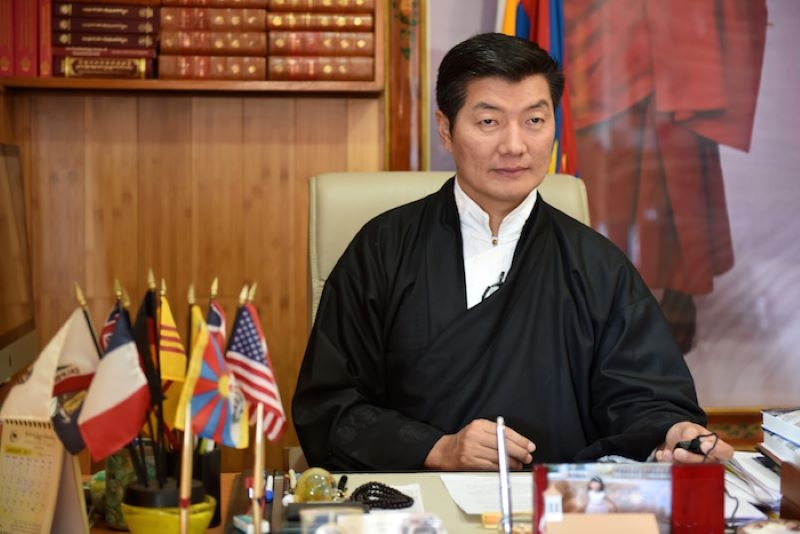
Sangay said that Beijing's recent actions on the line of actual control with India should be seen as following the 'Five Fingers of Tibet’ strategy as laid down by Mao Zedong.
China had made its claim on the entire Galvan Valley in eastern Ladakh for the first time. It had not made such a direct claim for decades. Taking a cue from the action, Sangay said that he was prompted to issue the warning to India.
In an interview to a television news channel Sangay, who is the top leader of the Tibetan Government in Exile and President of the Central Tibetan Administration, underlined that the recent military actions of China should be seen in concord with ‘Five Finger Strategy’ laid down by Mao Zedong, the founder of the People’s Republic of China.
“When Tibet was occupied, Mao Zedong and other Chinese leaders said, ‘Tibet is the palm which we must occupy, then we will go after the five fingers. The first finger is Ladakh. The other four are Nepal, Bhutan, Sikkim, and Arunachal Pradesh,” he said.
Sangay said that the 2017 Doklam standoff and the recent violent face-off in Galvan Valley are all part of this strategy. The Tibetan leaders have been warning the Indian leaders about this strategy for the last 60 years. India’s Himalayan neighbors Nepal and Bhutan and the Indian state of Arunachal Pradesh are experiencing the pressures from China.
After the 1962 war, China had made a claim of sovereignty over the entire Galvan Valley making the relatively peaceful Ladakh area into a major flashpoint.
On Thursday, China’s foreign ministry spokesperson said “India must not misjudge the current situation or underestimate China's firm will to safeguard its territorial sovereignty” in the Valley. The area is strategically crucial as it overlooks India’s Darbuk-Shyok-Daulat Beg Oldi (DSDBO) road, which connects Leh to Karakoram Pass.
The Ministry of External Affairs (MEA) commented on this claim as “exaggerated ad untenable” and the MEA S Jaishankar in a phone conversation with his Chinese counterpart Wang Yi on June 17 categorically mentioned that the Chinese side had “sought to erect a structure in the Galvan Valley on our side of the LAC”.
This became a source of dispute, leading to the violent face-off on the night of June 15. Twenty Indian soldiers, including a Commanding Officer, had died in the clash.
Sangay said that India needs to remain very wary of the Chinese leadership. “Unless you know what happened in Tibet you will not fully understand the Chinese leadership mindset, their strategy. So, they have the palm, now they are coming after the five fingers.”
He expressed deep concern over the violence on the border and said that in most cases, the intrusions in border areas are coming from the Chinese side.
"Dialogue is the only way forward. Having said that, India has the right to defend its territory and sovereignty. Chinese strategy has been carrot and stick. India should have the same strategy but never be the first one to take action or intrude," he said.