India China border dispute and China’s predicament
08 Jun 2020 12:01:18
-Dr. Kuldip Chand Agnihotri
The Indo-China border is once again in the news, this time for more than one reason. India shares 3488 km border spreading from Ladakh to Arunachal Pradesh with Tibet, now occupied by China. So long Tibet was an independent nation, there was no dispute on this border. But as this ‘Buffer State’ was forcibly occupied by expansionist China in 1959 this border was changed to Indo-China border overnight. Had the then Government of India been vigilant and proactive this would not have happened? But thanks to the day-dreaming leadership of Prime Minister Jawaharlal Nehru and his most trusted Defence Minister V K Krishna Menon, and India’s Ambassador in China Panikkar, China could easily swallow Tibet.
Though the then Home Minister Sardar Vallabh Bhai Patel warned Nehru on his Tibet-China policy and the then RSS Sarsanghchalak M. S. Golwalkar ‘Guruji’ sounded an alarm bell over expansionist designs of the Dragon, Nehru chose to ignore them. He even drubbed Golwalkar as ‘Warmonger’! Taking advantage of Nehru’s gullible policies, China had already made inroads into Aksai Chin and occupied 38000 sq km area and built an all-weather 200-km road linking Sinkiang province. This helped China to consolidate its defensive prowess.
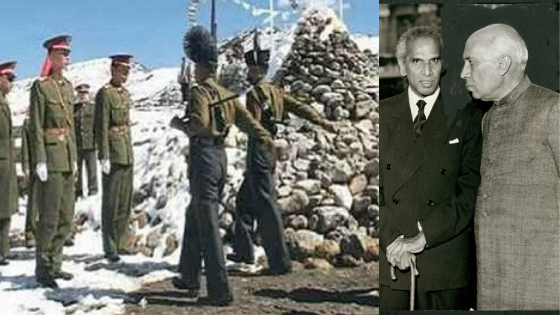
Unfortunately, instead of exposing China, Nehru and Krishna Menon tried to hide this incursion from the Indian people and parliament. China had shown in 1958 the Aksai Chin area as its own territory and exposed Nehru’s hollow claims, making it difficult and embarrassing for the Indian Premier to face the Parliament. Nehru was cornered by a senior member Mahavir Tyagi but somehow, he could manage to come out of the trouble then. But he never gave up the euphoria of ‘Hindi-Chini-Bhai-Bhai’ and ‘Panchasheel’. This blind faith in China led to the horrible debacle of 1962. China occupied India’s land and declared a unilateral ceasefire. China realized that in the future it has to keep its supply chain working in The Himalayan region, then it must have a good network of roads. So, China began its activities in this region along the Indo-Tibet border and laid a railway line from Gomo to Lhasa.
What lessons India learned from the ‘Himalayan Blunder’ of 1962 is a debatable issue but it was beyond doubt that instead of supporting democratic China (Taiwan) India was batting for UN Security Council seat for Communist China. Probably, Nehru would have thought that this gesture by hum would be reciprocated by the Chinese leadership with friendship towards India. India also did not concentrate on securing its border with China. However, the Indian Army had given a befitting reply to the Chinese forces at Nathu La in Sikkim in 1967 when the latter tried to make incursions in the Indian territory. But Indian forces were not given free hand by the politicians of the day and China very well knew it. That is why China had been continuously trying to sneak inside the Indian territory and grab the areas since 1962 diplomatic parleys notwithstanding.
Since the last some years, China failed to get the desired results of this policy. The 2017 Doklam issue is the best example of this change in the Indian attitude China had a taste of. China has been eyeing the Chumbi Valley for long and trying to bring it under its influence. They tried this in Doklam three years ago. The Indian forces remained on their positions for 70 days and did not give up. This was new to the Chinese leadership. India never acted so firmly in the past.
The other concern of China was India constructing roads along the border. Road to Daulat Beg Oldie was completed, construction work is going on in Gawlan Valley; work on the railway project from Bhanupali in Punjab to Leh via Bilaspur in Himachal Pradesh is on cards and road has been constructed joining Lipulekh on the trijunction of India-Tibet and Nepal. This has caused many headaches for China. China is at its old game again and tried to move forces along the border. It is also trying to stall the road work under the pretext of ‘talks’ and wait for the decision. But to its chagrin, the Government of India has clarified that road work will not be halted while talks can go along. This was unexpected for the Dragon.
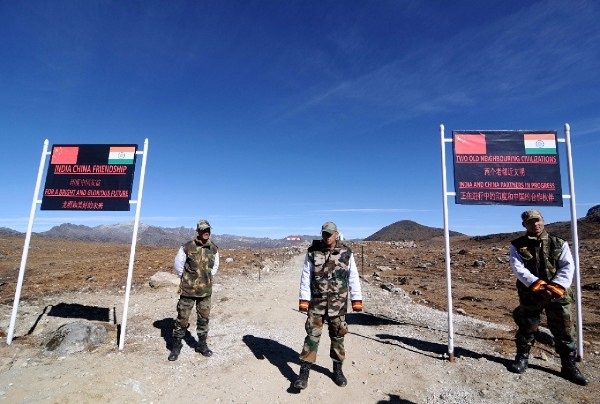
China also needs seashore for trade, and it is trying its best in the South China Sea. But no one is accepting its claim there. India is siding firmly with Vietnam and the US is also not in the mood to favor China. So, the Dragon is left with no alternative but to reach Gwadar via Gilgit-Baluchistan. By making the China-Pakistan Economic Corridor (CPEC) China has invested huge money in Gilgit and Gwadar. The road of this corridor is passing through Gilgit which is part of Jammu and Kashmir but currently under unauthorized occupation of Pakistan, thanks to the policies of Pt. Nehru and Lord Mountbatten. Though J & K is an integral part of India, due to provisions of Article 370 inserted in the Constitution at the behest of Nehru, it enjoyed a special status so long. Nehru even approached the UN requesting the world body to interfere with the Kashmir dispute giving leverage to India’s adversaries as regards the Kashmir issue.
However, the Narendra Modi government had abrogated the controversial Article 370 and 35A and brought the J & K at par with entire Indian states. China and Pakistan are the most disturbed neighbors of India due to the removal of Art. 370. Now the Modi government had given clear indications that sooner or later the PoK will be part of the state of J & K. This has brought the Gilgit-Baltistan region at the center-stage in contemporary politics. The Chinese are worried because their future economic moves are dependent on this region.
China is facing global isolation on the account of the Coronavirus pandemic. The debate will continue on this issue whether the virus was released through the Chinese laboratory or not. But most nations have already voiced their intention to break relations with China and most manufacturing companies are moving out the Chinese territory in search of better lands. India has spread a red carpet for such companies adding to the Chinese worries. Yogi Adityanath has already invited most of these companies to his state promising them all facilities and amenities. Thus, China finds itself under siege from all sides and therefore, is trying to prove its might by raising the border disputes. But the present government in India is very realistic and pragmatic. China must understand this or face doom.