Sri Ram and North East India
Total Views |


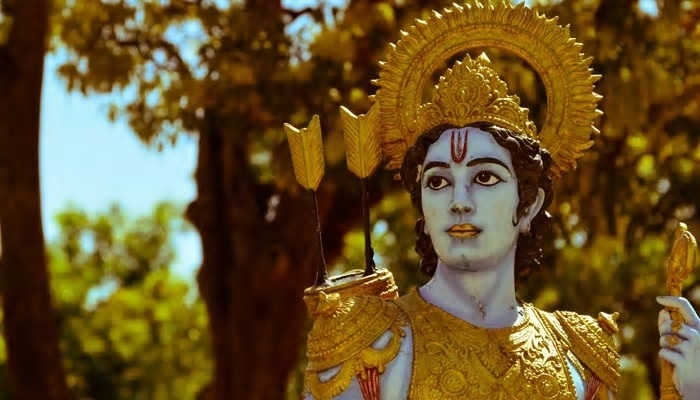
Sri Ram has been a national hero and ideal man and epitome of Indian culture and national identity for the several thousand years. Stories of Sri Ram are found in diverse manifestations all over the country and abroad. After the historic judgment by Supreme Court of India in favour of construction of Ram temple in Ayodhya, there has been a jubilation and festivity across India. The intensity of the elation among the followers of Indian culture further received impetus after declaration of bhumi pujan for the Ram temple scheduled to be held on 5th August 2020. Soil and water from all the holy shrines and rivers across India are being collected for this purpose. With the rest of the country the religious fervor and excitement for contributing holy water and soil for the Ram temple from the North East India has significantly increased. So far soil and water of several holy places and rivers such as Brahmaputra, Barak, Imphal, Lohit, Tirap, Myntdu, Umiam, Jatinga, Dhansiri, Dhaleswari, Surma, Disang, Kopili, Mahur, Langting, Gumati, Kushiyara, Longai, Tut, Tlawng, Karnaphuli, Jairl, Sipu, Siyom, Dicrong, Morangang, Moragang, Diphu, Longnit, Mahamaya etc. have been sent to Ajyodha for the bhumi phujan ceremony. It is indeed an important event for the people of North East India.
North east India is a diverse place with its beautiful tradition and culture. The archeological and literary sources of this region suggest that it has been an important centre of Hindu culture. This region lies in the ancient super highway connecting the India with South East Asia and China. Places of this region have been mentioned both in the Ramayan and the Mahabharata. The impact of the Ramayan and Ram can be seen among different communities of this region. During the pre-British period Ramayan and Sri Ram-katha was a popular tradition among the Mizos. Their oral traditions described Ram and Khen (Lakshman) as their gods and believe that they taught them how to cultivate paddy. The Karbi Community has their own version of Ramyan called Sabin Alun where entire story of Ramayan is described in Karbi language and it is set in the environment of Karbi customs and traditions. They believe that the Karbis are the descendents of Sugriv, the king of Kiskindha. The Khamti of Arunachal Pradesh has their own version of Ramayan called ‘Lik Chaw Lamang’ the Mishimis has similar story to Ramkatha. The Aka of Kameng district also relates them to Jambavan, a great character of Ramayan. In the state of Meghalaya, the Jaintia, the Khasi and the Garo have their own versions of Ramayan. Ramayan was translated into Khasi language way back in 1900 by Jeebon Roy, the founder of Seng Khasi movement. Besides the Tiwa, Rabha and several other communities also have their version of Ramayan and in all these oral traditions Ram has been described as the destroyer of evil and savior of righteousness.
In Tripura Ram is worshiped as God since time immemorial. A 15th century Tripuri chronicle described King Ramganga Manikya as the ardent devotee of Sri Ram. Manipur is a centre of Vaishnava tradition in North East India. Stories of Ram are depicted in Manipuri language popularly known as ‘Larik-Thiba-Maiba’. In the Brahmaputra valley Ram is present in oral traditions, folk songs, performing arts (bhauna) and in day to day prayers. In the marriage ceremonies, the ‘Biya Nam’ or the wedding folk song, describes stories how Ram went to Videha to marry Sita. The Assemese marriage is considered to be a union of Ram and Sita. The ideal husband in Assamese tradition is compared with Lord Ram.
The above discussion indicates that Ramayan and Ram has been a part and parcel of traditional life in North East India. Sri Ram is a god, ideal man and protector of righteousness in this region. The collection of holy water and soil from North East India for the bhumi pujan of Ram temple is an example of cultural continuum. It is not an exaggeration or showing off something not belong to this region. It is the expression of cultural heritage, love and devotion to their god, Ram.
It is a historical fact that the local history and tradition including the Ramayan and Ramkatha were severely suppressed during the colonial period. After the independence, our education system never included the popular folk traditions of this region in the syllabi and curriculum. We were taught about foreign rulers and invaders as heroes. The history of Europe and America were made known to our students deliberately to divert the real history of Bharat. Our education system produced a class of people who were admirers of everything not belong to their own country. Foreign religion and ideals are worshiped by them and devoted for the establishment of those ideas in the country by uprooting Bharatiya tradition and culture. Perhaps this is the reason why some intellectuals are so arrogant to accept when it comes to Sri Ram and Ramayan.
- Dr Raktim Patar