132-year-old British-era tunnel discovered under Mumbai's JJ hospital
In the JJ Hospital in Mumbai’s Byculla which was built in the British-era, a 200-meter-long tunnel was found under the building of a medical ward.
Total Views |


Mumbai, Nov 5: In a very significant development, a 132-year-old tunnel has been discovered at the government-run hospital in Mumbai. In the JJ Hospital in Mumbai’s Byculla which was built in the British-era, a 200-meter-long tunnel was found under the building of a medical ward.
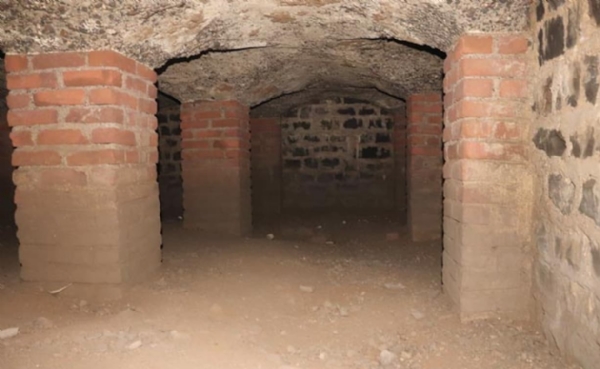
"We inspected the nursing college building after a complaint of water leakage. PWD engineers and security guards surveyed the building and found a 132-year-old tunnel. The tunnel is closed from one end," Dr Arun Rathod, Resident Medical Officer to the news agency ANI.
Reports suggest that the 200-meter-long structure was found under a building which originally housed the Sir Dinshaw Manockjee Petit Hospital for Women and Children which was later converted into a nursing college. Soon after it was found, the authorities have apprised the Mumbai collector and Maharashtra Archaeology Department about the discovery as the building is a heritage structure.
It is being reported that the tunnel is 4.5 feet high and has several brick pillars with the entrance being sealed with a stone wall. The authorities of the hospital entered after opening what looked like a sealed ventilation duct, three ft-by-three ft in size. There are many such sealed openings on the front and rear sides of the structure.
According to some former hospital employees, another British-era building located behind this building has a similar structure underneath, but it was yet to be verified. The two buildings could be connected by a tunnel but this was only a conjecture at this point, he said.
The foundation stone of the British-era heritage building was laid by Lord Reay, then Governor of Bombay, on January 27, 1890, Dr. Rathod said. The building under which the tunnel was found was designed by architectural executive John Adams and inaugurated on March 15, 1892. The construction cost was Rs 1,19,351, Rathod said. The JJ Hospital campus houses several British-era heritage structures. "We are now planning to start a heritage walk through the hospital premises," said Dr Saple.