Know the reality! History of Indian judges being convicted of corruption
One such question was raised by a social media user, Vijay Patel. Taking to a well-known social media site, on April 9, Patel curiously asked, "Any judge convicted of corruption?"
Total Views |


"Judiciary" is one of the three pillars of our great Indian democracy. As one of the organs of government, it can play a critical role in defining the content and evolution of both democracy and human rights. The principal role of the judiciary is to protect the rule of law and ensure the supremacy of law.
But have you ever heard of a judge, a public officer who is appointed to deliver justice to the people, being convicted on corruption charges?
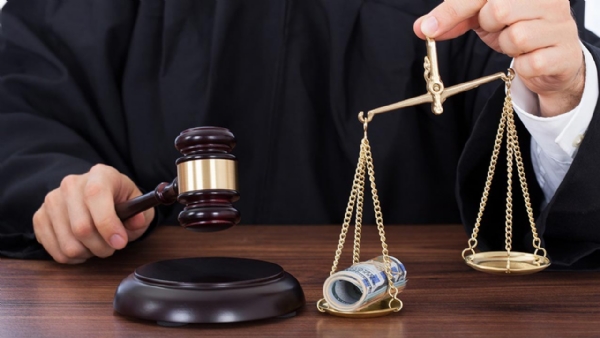
One such question was raised by a social media user, Vijay Patel. Taking to a well-known social media site, on April 9, Patel curiously asked, "Any judge convicted of corruption?"
Many of us didn't hear of such news, as judges in India are given a significant amount of protection (Judges (Protection) Act) from legal proceedings being initiated against them. However, there is also a act (Judges (Inquiry) Act ) that helps court to deliver justice in such cases.
Do you know that if any judicial officer is found guilty, then judicial officer can be arrested and punished. Even the Apex Court has also laid down guidelines for arresting a judicial officer.
There are many cases where judges have been convicted of corruption charges. One of the most famous cases related to the issue is from Telangana’s Ranga Reddy, where a district court judge was arrested for possessing assets. During the early investigation, V Vara Prasad, the 14th additional magistrate in Ranga Reddy district court at LB Nagar, was remanded in judicial custody for 14 days. He was later found guilty and was convicted under relevant sections of the Prevention of Corruption Act.
In a recent case in April 2021, a judge from Pune was arrested by the Anti Corruption Bureau for taking bribes to give judgment in favor of a party. Many times, the Supreme Court, along with subordinate courts, has remarked that the protection of judicial officers is not unreasonable.
Our Judiciary always belives the fact that no one is above the law, which also means that judicial officers also come under this umbrella. Ultimately, what it truly depicts is there is nobody above the law.
.
.