At UNSC, India takes veiled dig at China, urges to respect sovereignty, territorial integrity & international agreements
At UNSC, India stated that any "coercive or unilateral" action that seeks to change the status quo by force will undermine the common security.
Total Views |


New Delhi, Aug 23: In what can be called a veiled attack on China, India at UN Security Council called out Beijing for its "double standards" in fighting terrorism. It stated that any "coercive or unilateral" action that seeks to change the status quo by force will undermine the common security.
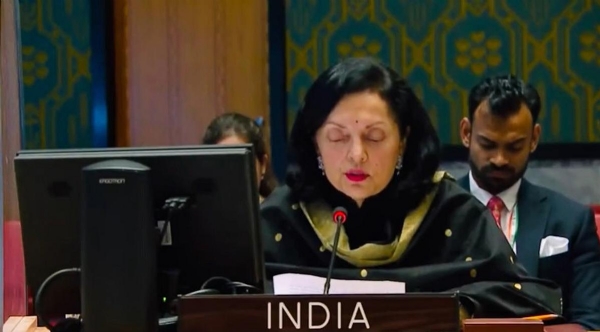
At a UNSC briefing on "Maintenance of International Peace and Security: Promote Common Security Through Dialogue and Cooperation" India's Permanent Representative to the UN, Ruchira Kamboj did not reveal the country but it was obvious that China was the one who was changing the status quo by force.
The meeting convened at the behest of China, Kamboj noted that one of the guiding questions posed by the presidency for the meeting is what constitutes “common security”.
“Any coercive or unilateral action that seeks to change the status quo by force is an affront to common security. Further, common security is only possible when countries respect each others’ sovereignty and territorial integrity, as they would expect their own sovereignty to be respected,” Kamboj said against the backdrop of the military standoff between India and China on the Line of Actual Control (LAC) and teh recent tensions arised between China and Taiwan.
"Common security is also only feasible when all countries stand together against common threats such as terrorism and do not engage in double standards while preaching otherwise. Common security is also possible only if countries respect agreements signed with others, bilateral or multilateral, and do not take unilateral measures to nullify those very arrangements to those they were party to," she added.
The Indian envoy to UN also questioned whether the UN has lived up to its expectations, and noted that the requirements and challenges of the present and future are very different from those of the past. " At the same time, going into the third decade of this millennium, we need to ask ourselves, has the UN lived up to its expectations? The requirements and challenges of our present and future are vastly different from those of the past. The world today is very different from the world of 1945. Is the UN, particularly the Security Council which is the foremost organ tasked with the responsibility of maintaining international peace and security, able to remain relevant?" she questioned.
She said, "The world today is beset with multiple challenges. Terrorism, radicalism, threats and challenges from new and emerging technologies, climate change, pandemics, the intensifying geopolitical competition and many more. Each of these directly affects the lives of one and all. An armed conflict in one part of the world has cascading effects on the people of another.We have seen the effect of the Ukraine conflict on other developing countries, particularly, on the supply of food grains, fertilizer and fuel. The impact of the crisis in Afghanistan is still being felt throughout the region. "