My Life: The Iron Lady of Israel, Golda Meir - X
19 Dec 2023 15:40:48
Work, that occupied great space in her life
Golda had to travel a lot as a part of her work with the Women's Labour Council, sometimes outside the country too, and for weeks together. Her children had to adjust to her work schedule.
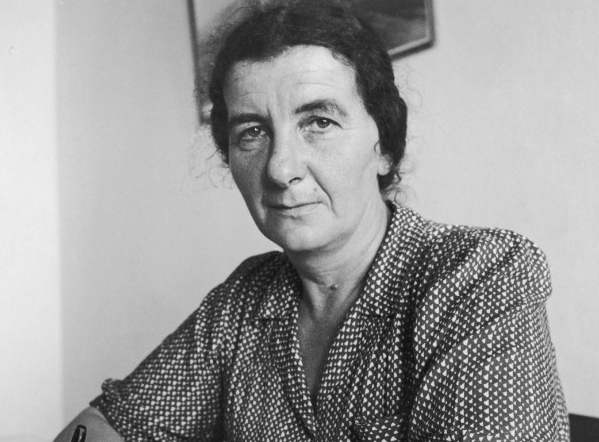
When she came to the US after 7 years, it was a foreign country to her, with a different lifestyle, English being spoken around, and many more things she had left behind. She visited America to work with the organization' The Pioneer Women ' which was a new organization, all the members were European-born. They were idealistic and politically committed and Palestine mattered a lot to them. They were involved in fundraising too. Golda engaged them, delivered speeches, and explained many points like how Jewish Palestine would in a way guarantee the liberation of women. Even explained the political picture of the Zionist movement and the different shades of it, as all had a great concern for happenings in Palestine.
Golda met her younger sister Clara after a long time. She had no thought of joining the family in Palestine, though she was involved with Jewish life and activities of the United Jewish Council.
In 1930 Golda attended the Conference of Socialist Women in England. All the members were curious to know about Histadrut (general organization of workers in Israel) and kibbutz, life in Palestine. Women were fascinated by the Zionist experiment and wanted to know more about it. Golda talked about the Arab riots in 1929 and the way the British handled it, she explained the reality and presented hard facts.
Two year's stay in America
In 1932 Golda had to return to America for the treatment of her daughter, though she was advised not to travel with her children, especially with the daughter to such a faraway place. She did not want to carry the burden of not doing every possible thing for her. She had to travel for two weeks. Her daughter Sarah was diagnosed with kidney decease, but was discharged from the hospital after 6 weeks with good health. On regaining strength she could go to school. Both the children had no exposure to English before reaching America. In 1934 she returned home, to Palestine. Her children could speak Hebrew and English after their 2 years of stay in America.
Back to work and responsibilities
In return, she was asked to join the executive committee of the Histadrut. She was assigned many responsibilities and portfolios, but they were not easy to carry out, the aspect of translating socialist principles into the down-to-earth terminology of everyday life ' intrigued her the most. The time was difficult, all were paid wages sufficient for basic living, seniority, and the number of dependents was considered. All were treated to be equal and were to get equal rights and opportunities. ( Egalitarianism ) Even unemployed people had to be taken care of, and along with it internal conflict was something to with.
Golda had to travel to America for the Pioneer Women, she worked very hard in those two years to raise money and get recruits. People often fell very short of their goal of raising funds, but the sum collected was of great importance. She constantly traveled by train gave speeches, and talked to people about Palestine. She did every possible thing to raise money. Money collected was in a way ' a manifestation of the will and determination of the nation at large,' she wrote in 1933.
The Jews managed it all but the price was very high, Golda noted. Those who saw this period and managed to survive were the greatest optimists, she observed. There were multiple tasks handled in that period.
The constant outbreak of Arab terror was an issue that needed focus. The situation was very dangerous, even when Golda traveled to Jerusalem there was no guarantee to return alive many times, she wrote. At the same time self-restraint approach was to be followed in retaliation to avoid clamping down on the number of Jewish immigrants and settlement by the British. She mentioned that she never supported the idea of indiscriminate attacks on Arabs. A particular act had to be retaliated. She always hoped that Arabs and Jews could coexist in peace and equality as citizens of the Jewish homeland and same would be allowed to Jews living in Arab countries. She never wanted to complicate and embitter the matter. She stated that reconciliation was not to take place, all realized this ultimately. Arabs in the hope of incapacitating the Jewish settlements ordered not to go to work till the Jewish immigration ended. What Arabs refused to work for, the Jewish community decided to get it done on its own.
Ben-Gurion
Golda wrote about Ben-Gurion and his persona with great reverence. She always wondered whether Jewish people would be able to produce a greater leader or a more astute and courageous statesman. He was in a way a self-sufficient man.
When some people thought it was impossible to establish and defend the state of Israel, he felt there was no alternative other than it. Golda portrayed him in the light of her experience gave him his due and described where she disagreed on the issues while working with him.
Tel Aviv as a Port
Golda described the efforts they took to launch a shipping enterprise, she went to America to raise funds. The Jews of Palestine were sea-faring people, but after they were exiled for 2000 years, dispersed, and stayed in countries they could reach, the art was lost. They wanted to open a port of their own in Tel Aviv. Many poems were written and songs were composed on this development. Golda saw it as a step ahead of Jewish independence. She knew the importance of a port, she wanted it to flourish and she knew the sea was the only way Jewish refugees could reach Palestine.