Book Review by Pralhad Joshi: Defending Human Rights, The Indian Narrative
22 Aug 2023 10:34:43
Book Review by Pralhad Joshi on "Defending Human Rights, The Indian Narrative"
“The story of human rights is a drama of persistent struggle and steady advances, often against heavy odds. It is a long-drawn battle between forces inimical to global brotherhood and those who have chosen to fight for every individual’s right to dignity and self-respect” says the opening remarks in the preface to the newly published book ‘Defending Human Rights – The Indian Perspective’ by Mr. Chintan Mokashi and Mr. Avinash Mokashi.
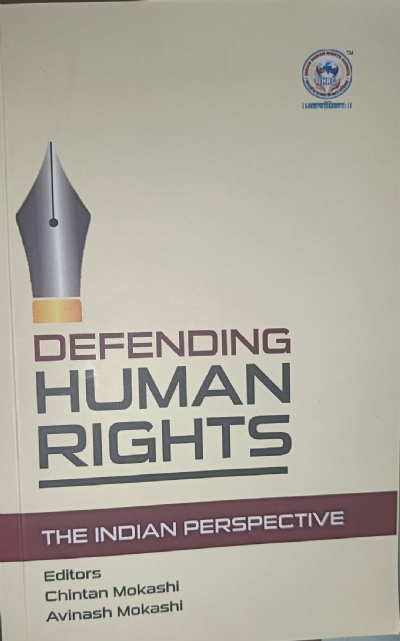
The writer brothers, to begin with, observe that what the common people know about human rights is very little and what they don’t know is immense. For example, in India, the discussions on human rights start and end with Kashmir, mostly with comments on the alleged excesses by the government agencies like the Army. But a common man is least informed about the grave violations of the human rights of the Gujjar Bakarwal, the backward communities, or the women folk in Jammu & Kashmir itself. Every day, society has to deal with critical situations individually or as a community where these inalienable rights are usurped. Society is quite oblivious to the nature and gravity of such violations.
Hence a common man does not necessarily know the nuances of this subject. When exactly human rights are violated is a matter of great ambiguity and that is why the book "Defending Human Rights" deserves a warm welcome. Both the writer brothers have been working continuously in the field of human rights for more than a decade as founder directors of the Indian Human Rights Council. As a part of their task to disseminate information about human rights violations in the day to day life and create awareness about this sensitive issue in Society, they started the magazine "Indian Human Rights Chronicle" (2015). Through this magazine, a quality platform was made available for this subject. In this magazine, many experts in the field of human rights have shared their thoughts on human rights, and analyzed situations of human rights violations.
Hence a common man does not necessarily know the nuances of this subject. When exactly human rights are violated is a matter of great ambiguity and that is why the book "Defending Human Rights" deserves a warm welcome. Both the writer brothers have been working continuously in the field of human rights for more than a decade as founder directors of the Indian Human Rights Council. As a part of their task to disseminate information about human rights violations in the day to day life and create awareness about this sensitive issue in Society, they started the magazine "Indian Human Rights Chronicle" (2015). Through this magazine, a quality platform was made available for this subject. In this magazine, many experts in the field of human rights have shared their thoughts on human rights, and analyzed situations of human rights violations.
Though the book under review is a collection of these articles by eminent experts published in this magazine, the first part of the book elaborates on the United Nations Declaration of Human Rights (1948), the articles of the Human Rights Act, and also how the principles of human rights have been incorporated in the Indian Constitution. The Values and human rights in Indian culture have also been highlighted. All this discussion in the first part is comprehensive but concise, easy to understand, very interesting, and enlightening too! Hence, the first part of the book is not only a value addition to this collection but a very relevant commentary on the subject that makes this book a very useful document for ready-reference.
The second section of the book includes select articles published in the Indian Human Rights Chronicle between 2015 and 2018. These articles are mainly analyses of or reactions to past events. For example, there is a very informative article by the late Soli J Sorabjee who was perhaps the first person to declare the atrocities during the Emergency as not a violation of the fundamental rights as enshrined in the Constitution alone but a violation of human rights as understood globally. Similarly, in an article titled "Tyranny of the Unelected? The National Judiciary Appointment Commission Act " was passed in the year 2014 and swiftly struck down by the Supreme Court at that time.
But today how the country is facing a situation of a tussle between the Judiciary and the executive –the two most important pillars of democracy is depicted by eminent lawyer Ganesh Sohoni. The shocking state of violation of the human rights of seniors in society is equally painful. ‘Whose Responsibility Are They Anyway?’ is an article that captures the pitiable condition of senior citizens and how they are made to live miserable life. Each article is well-researched and provides valuable insights into the various aspects of human rights violations. They present both individual stories and broader perspectives, making the readers empathize with the victims and understand the systemic issues at play.
But today how the country is facing a situation of a tussle between the Judiciary and the executive –the two most important pillars of democracy is depicted by eminent lawyer Ganesh Sohoni. The shocking state of violation of the human rights of seniors in society is equally painful. ‘Whose Responsibility Are They Anyway?’ is an article that captures the pitiable condition of senior citizens and how they are made to live miserable life. Each article is well-researched and provides valuable insights into the various aspects of human rights violations. They present both individual stories and broader perspectives, making the readers empathize with the victims and understand the systemic issues at play.
In fact, it would be interesting to go back a bit and see what made Mr. Avinash Mokashi quit his job as a Police Officer and dedicate himself to the cause of Human Rights. He narrates a heartbreaking experience in the field of human rights during his deputation to Bosnia as part of the international peacekeeping force while in the police. At the very beginning of this book, Lieut. Gen. Dr. Shekatkar, as well as Shri Bhagwantrao More and Shri Kishore Jadhav (both ex-IPS officers), members of the Maharashtra State Human Rights Commission, have a great appreciation of the sincere exercise by the Mokashis to bring the subject to the notice of the common person.
Overall, Defending Human Rights is a thought-provoking and informative read. It educates and inspires readers to be more aware of the human rights violations happening around them and urges them to take action. The book is a testament to the writers' unwavering commitment to the cause of human rights and their ability to effectively communicate their message. It is a must-read for anyone interested in understanding and championing the rights of individuals in India.
One of the strengths of the book is the authors' ability to combine personal anecdotes with well-researched facts and data. This approach not only adds a human touch to the narratives but also strengthens the credibility of the information provided. The writers have clearly done their homework, extensively studying the subject matter and ensuring that their arguments are backed by evidence. Another noteworthy aspect of the book is its accessibility. Despite being a complex and multifaceted subject, the authors have managed to present the information in a clear and concise manner.
In conclusion, "Defending Human Rights - The Indian Perspective" is an important and timely book that sheds light on the human rights struggles faced in India. With its comprehensive coverage of various issues and its passionate advocacy for justice and equality, the book is a valuable resource for anyone interested in understanding and fighting for human rights. The book is a commendable effort, and the author brothers should be commended for their tireless work in the field of human rights.