Manual Scavenging Deaths Expose DMK's Governance Gaps
Total Views |


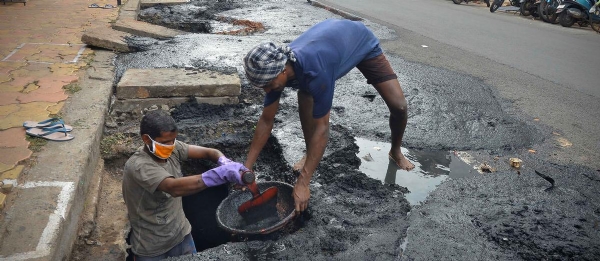
The Dravida Munnetra Kazhagam (DMK) government in Tamil Nadu is facing mounting criticism as a disturbing number of manual scavenging deaths expose the widening gulf between its promises and the grim reality on the ground. Despite proclaiming social justice as its ideological cornerstone, the state continues to witness sanitation workers losing their lives in sewage pits and septic tanks. This tragedy starkly contradicts the government’s repeated assurances of dignity, safety, and reform.
When the DMK returned to power in 2021, it did so with a sweeping promise — to eradicate manual scavenging once and for all. The party’s election manifesto had pledged complete mechanisation of sanitation work, strict enforcement against deploying humans in hazardous cleaning, and comprehensive rehabilitation for existing workers. These promises were presented as an extension of the Dravidian movement’s long-standing mission to achieve social equality.
This vision inspired real hope for thousands of sanitation workers — most of whom belong to marginalised castes. But four years later, that hope has all but disappeared.
Deaths That Should Have Been Prevented
Since 2021, Tamil Nadu has continued to record manual scavenging deaths with alarming regularity. The data itself tells a story of inaction and neglect:
The most recent tragedy occurred in Thiruppathi Nagar near Kolathur, Chennai, where a worker named Kuppan suffocated to death after inhaling toxic gases while cleaning a sewage canal. He died on the spot. Activists claim that the actual death toll is far higher than official figures, as many cases go unreported or are misclassified to avoid scrutiny.
Mechanisation Promised, Neglect Delivered
The DMK government had promised to modernise sanitation work through technology and mechanisation. Yet, except for a few pilot initiatives in select urban areas such as Chepauk, the broader implementation has been painfully slow. Most districts still rely on manual labour for cleaning septic tanks and drains, with workers often entering pits without protective gear, oxygen masks, or supervision.
In 2021, Chief Minister M.K. Stalin had publicly announced that no human should die cleaning sewage. However, activists point out that beyond photo-ops with newly launched robotic cleaning machines, little has changed on the ground. Municipal bodies, especially in smaller towns and peri-urban areas, continue to outsource hazardous cleaning to unregistered contractors — a practice that perpetuates exploitation and shields officials from accountability.
Schemes That Stalled
The Annal Ambedkar Business Champions Scheme (AABCS) — introduced to help sanitation workers transition into entrepreneurship — was touted as a flagship social empowerment initiative. But by mid-2023, the scheme’s implementation remained negligible. Very few beneficiaries received funding or training, and there has been little transparency about the programme’s reach. Civil society groups allege that the government’s claims are more about optics than genuine rehabilitation.
Similarly, promises of compensation and job support for the families of victims often remain trapped in bureaucratic limbo. Many families wait for months or years to receive aid, while officials routinely downplay responsibility or delay investigations.
Political Silence and Moral Erosion
The silence of the DMK’s allies — including the Viduthalai Chiruthaigal Katchi (VCK) and the Congress — has deepened public anger. Both parties have historically positioned themselves as defenders of Dalit rights and social justice, yet their muted response to these deaths has sparked disappointment among marginalised communities.
“Each death is treated as just another statistic,” says an activist from Chennai’s Safai Karamchari Andolan. “The government that claims to champion equality cannot even ensure the right to life for those at the bottom of the social ladder.”
Justice Delayed, Dignity Denied
Almost all victims of manual scavenging belong to Scheduled Castes. However, convictions under the Prohibition of Employment as Manual Scavengers and their Rehabilitation Act, 2013 remain rare. FIRs are often not filed under the relevant sections, and families of the deceased are pressured to accept meagre settlements in exchange for silence.
This failure to ensure justice perpetuates a vicious cycle of neglect. Without accountability, contractors and local officials continue to flout safety norms with impunity.
The Unfulfilled Promise of Reform
The DMK’s 2021 manifesto had envisioned a future where no person would be forced into hazardous sanitation work. It promised modern technology, worker rehabilitation, and social security. But four years later, Tamil Nadu’s sewage systems remain death traps, and its sanitation workers remain invisible to the very system that claims to represent them.
The government’s focus has shifted from systemic reform to symbolic gestures — from ensuring change on the ground to producing glossy progress reports.
The DMK’s pledge to end manual scavenging was once a moral promise rooted in the idea of social justice. Today, it has become a test of governance — one that Tamil Nadu cannot afford to keep failing.
When the DMK returned to power in 2021, it did so with a sweeping promise — to eradicate manual scavenging once and for all. The party’s election manifesto had pledged complete mechanisation of sanitation work, strict enforcement against deploying humans in hazardous cleaning, and comprehensive rehabilitation for existing workers. These promises were presented as an extension of the Dravidian movement’s long-standing mission to achieve social equality.
This vision inspired real hope for thousands of sanitation workers — most of whom belong to marginalised castes. But four years later, that hope has all but disappeared.
Deaths That Should Have Been Prevented
Since 2021, Tamil Nadu has continued to record manual scavenging deaths with alarming regularity. The data itself tells a story of inaction and neglect:
- 2021: 6–10 deaths reported.
- 2022: Toll rose to 14–16.
- 2023: At least 15–18 deaths, with five in May alone.
- 2024: Another 12–15 fatalities.
- 2025 (till September): Eight deaths, including three in a single Tiruppur incident.
The most recent tragedy occurred in Thiruppathi Nagar near Kolathur, Chennai, where a worker named Kuppan suffocated to death after inhaling toxic gases while cleaning a sewage canal. He died on the spot. Activists claim that the actual death toll is far higher than official figures, as many cases go unreported or are misclassified to avoid scrutiny.
Mechanisation Promised, Neglect Delivered
The DMK government had promised to modernise sanitation work through technology and mechanisation. Yet, except for a few pilot initiatives in select urban areas such as Chepauk, the broader implementation has been painfully slow. Most districts still rely on manual labour for cleaning septic tanks and drains, with workers often entering pits without protective gear, oxygen masks, or supervision.
In 2021, Chief Minister M.K. Stalin had publicly announced that no human should die cleaning sewage. However, activists point out that beyond photo-ops with newly launched robotic cleaning machines, little has changed on the ground. Municipal bodies, especially in smaller towns and peri-urban areas, continue to outsource hazardous cleaning to unregistered contractors — a practice that perpetuates exploitation and shields officials from accountability.
Schemes That Stalled
The Annal Ambedkar Business Champions Scheme (AABCS) — introduced to help sanitation workers transition into entrepreneurship — was touted as a flagship social empowerment initiative. But by mid-2023, the scheme’s implementation remained negligible. Very few beneficiaries received funding or training, and there has been little transparency about the programme’s reach. Civil society groups allege that the government’s claims are more about optics than genuine rehabilitation.
Similarly, promises of compensation and job support for the families of victims often remain trapped in bureaucratic limbo. Many families wait for months or years to receive aid, while officials routinely downplay responsibility or delay investigations.
Political Silence and Moral Erosion
The silence of the DMK’s allies — including the Viduthalai Chiruthaigal Katchi (VCK) and the Congress — has deepened public anger. Both parties have historically positioned themselves as defenders of Dalit rights and social justice, yet their muted response to these deaths has sparked disappointment among marginalised communities.
“Each death is treated as just another statistic,” says an activist from Chennai’s Safai Karamchari Andolan. “The government that claims to champion equality cannot even ensure the right to life for those at the bottom of the social ladder.”
Justice Delayed, Dignity Denied
Almost all victims of manual scavenging belong to Scheduled Castes. However, convictions under the Prohibition of Employment as Manual Scavengers and their Rehabilitation Act, 2013 remain rare. FIRs are often not filed under the relevant sections, and families of the deceased are pressured to accept meagre settlements in exchange for silence.
This failure to ensure justice perpetuates a vicious cycle of neglect. Without accountability, contractors and local officials continue to flout safety norms with impunity.
The Unfulfilled Promise of Reform
The DMK’s 2021 manifesto had envisioned a future where no person would be forced into hazardous sanitation work. It promised modern technology, worker rehabilitation, and social security. But four years later, Tamil Nadu’s sewage systems remain death traps, and its sanitation workers remain invisible to the very system that claims to represent them.
The government’s focus has shifted from systemic reform to symbolic gestures — from ensuring change on the ground to producing glossy progress reports.
The DMK’s pledge to end manual scavenging was once a moral promise rooted in the idea of social justice. Today, it has become a test of governance — one that Tamil Nadu cannot afford to keep failing.