Crime and Minor Children
22 Nov 2025 11:34:33
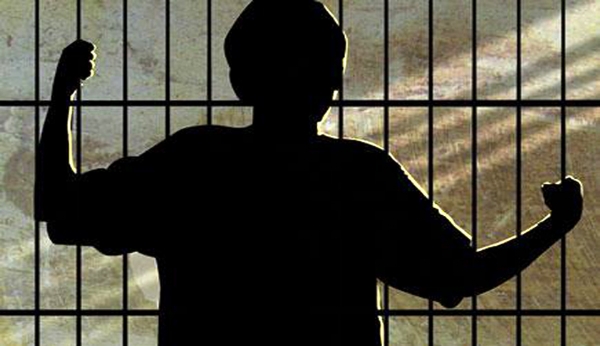
A report published by Maharashtra Times related to crimes committed by minors states that the juvenile detention facility has admitted 1500 children in the last 18 months. Out of the 10 to 12 children admitted, there is a background of murder every month. This picture is really alarming or chilling. These facility centres strive to provide them with vocational training and utilise mediums such as sports, Counselling, and the Art of Living to help them achieve balance. The problem can't be easily dealt with only at this level. Efforts are needed at all levels.
Parents, siblings, teachers, and school friends will all need to make concerted efforts. Our families have 1 or at most 2 children. All the family members are compelled to work to run the home in a better way.
Economically weaker strata people really struggle to manage the monthly expenses. Their work absorbs most of their time and energy, too. Of course, they work hard to give a good future to children, and fortunately, they treat education as a significant component that helps in securing a good future. By the end of the day, they have very little free time to be devoted to children and other family matters. Thus, their interaction with the children and other family members is also restricted. Specifically, dialogue with children gets hardly any time left.
In the middle-class families, too, both parents work and their work absorbs most of their time. If grandparents are at home, they are available for the children. They pay attention to children, they have time to talk to them and discuss the small issues of their concern. This, of course, is not the picture in many families as parents either move to the places of their work or have a separate house.
The affluent class has a totally different lifestyle and has its own share of challenges.
Somehow, the dynamics of family as an institution have changed a lot, and so has the value system. Perspective has changed; almost everything is perceived by keeping oneself at the centre. The corollary of the thought is that' I can just not be wrong in acting or thinking in a particular way '. This thought is reflected in simple acts like overtaking a vehicle or driving on the road, or making small decisions. One may be really wrong, but it is usually not accepted. If one attempts to explain or bring it to one's notice, the response is very aggressive. Even the use of expletives is not seen as indecent. Young boys and girls are equally heard mouthing them, even when one is obviously at the wrong end. Everyone wants to prove that one just cannot go wrong, and unnecessarily simple things become an ego issue.
This can be experienced at every level. Realising the small mistakes and saying or feeling sorry is not a total surrender, on the contrary, it offers an opportunity to introspect, make the changes and improve.
Some job profiles are such that one always meets people with problems; they are always perplexed, and the words need to be used very cautiously in such situations. Heated exchanges are not expected, it is the demand of the role one us entrusted with. It is a skill that is to be essentially acquire. Almost all the roles need it at some level. Someone speaking a different language or comprehending it from a different perspective is not a challenge to someone's authority. One has to find a common ground to understand the situation. Using the word sorry need not be an ego issue. Rather, it helps to see things clearly and change.
Of course, this is easier said than done. How does one explain this to children? Words may sound hollow, so making them reflect through the behaviour probably can help. It is to be discussed or brought to the notice of young people, making them understand that this point is essential. Responding maturely may appear like a defeat, but it is not.
Parents, teachers and all the elders at home have to help in introducing this value. It does not stop at arguing aggressively or raising voice or using expletives. It can be seen that reaching the level of physically harming someone or even killing a person in the heat of the situation, simply because the other person doesn't agree with what one says. It is seen as a serious challenge which should not exist. This is definitely the most unhealthy turn of any argument. One acts in a fit of emotion but has to face the consequences throughout out the life. Any amount of remorse or repentance does not help after altercations take the form of crime.
Schools and higher educational institutions appoint counsellors; they too have a significant role in dealing with this issue. They need to make children think seriously, help them have control over their emotions. The teachers, too, should be made aware of the problem and ways to deal with it. They ought to be trained to be able to sense the problem or emotional turmoil. Parents can be made aware using the parents' teachers' meetings or by organising some workshops or group discussions.
Teachers are with the children every day. They can subtly guide students. Mostly, teachers remain or act as role models for a greater part of the schooling. S,o some conscious efforts may be made by them. Most of them have a good dialogue with the parents, too. This can be used to help parents and guide them a little. There needs to be structured efforts. We just cannot be mute spectators; if necessary, all the stakeholders have to change themselves. The environment at home too, must be paid attention to. We all ought to see the trouble in making which might ruin the life of our younger generation.
Some believe that religion can play some role in helping people in such situations. Teachers too should have a good background of children's world. A little more about it in the next write-up.
Parents, siblings, teachers, and school friends will all need to make concerted efforts. Our families have 1 or at most 2 children. All the family members are compelled to work to run the home in a better way.
Economically weaker strata people really struggle to manage the monthly expenses. Their work absorbs most of their time and energy, too. Of course, they work hard to give a good future to children, and fortunately, they treat education as a significant component that helps in securing a good future. By the end of the day, they have very little free time to be devoted to children and other family matters. Thus, their interaction with the children and other family members is also restricted. Specifically, dialogue with children gets hardly any time left.
In the middle-class families, too, both parents work and their work absorbs most of their time. If grandparents are at home, they are available for the children. They pay attention to children, they have time to talk to them and discuss the small issues of their concern. This, of course, is not the picture in many families as parents either move to the places of their work or have a separate house.
The affluent class has a totally different lifestyle and has its own share of challenges.
Somehow, the dynamics of family as an institution have changed a lot, and so has the value system. Perspective has changed; almost everything is perceived by keeping oneself at the centre. The corollary of the thought is that' I can just not be wrong in acting or thinking in a particular way '. This thought is reflected in simple acts like overtaking a vehicle or driving on the road, or making small decisions. One may be really wrong, but it is usually not accepted. If one attempts to explain or bring it to one's notice, the response is very aggressive. Even the use of expletives is not seen as indecent. Young boys and girls are equally heard mouthing them, even when one is obviously at the wrong end. Everyone wants to prove that one just cannot go wrong, and unnecessarily simple things become an ego issue.
This can be experienced at every level. Realising the small mistakes and saying or feeling sorry is not a total surrender, on the contrary, it offers an opportunity to introspect, make the changes and improve.
Some job profiles are such that one always meets people with problems; they are always perplexed, and the words need to be used very cautiously in such situations. Heated exchanges are not expected, it is the demand of the role one us entrusted with. It is a skill that is to be essentially acquire. Almost all the roles need it at some level. Someone speaking a different language or comprehending it from a different perspective is not a challenge to someone's authority. One has to find a common ground to understand the situation. Using the word sorry need not be an ego issue. Rather, it helps to see things clearly and change.
Of course, this is easier said than done. How does one explain this to children? Words may sound hollow, so making them reflect through the behaviour probably can help. It is to be discussed or brought to the notice of young people, making them understand that this point is essential. Responding maturely may appear like a defeat, but it is not.
Parents, teachers and all the elders at home have to help in introducing this value. It does not stop at arguing aggressively or raising voice or using expletives. It can be seen that reaching the level of physically harming someone or even killing a person in the heat of the situation, simply because the other person doesn't agree with what one says. It is seen as a serious challenge which should not exist. This is definitely the most unhealthy turn of any argument. One acts in a fit of emotion but has to face the consequences throughout out the life. Any amount of remorse or repentance does not help after altercations take the form of crime.
Schools and higher educational institutions appoint counsellors; they too have a significant role in dealing with this issue. They need to make children think seriously, help them have control over their emotions. The teachers, too, should be made aware of the problem and ways to deal with it. They ought to be trained to be able to sense the problem or emotional turmoil. Parents can be made aware using the parents' teachers' meetings or by organising some workshops or group discussions.
Teachers are with the children every day. They can subtly guide students. Mostly, teachers remain or act as role models for a greater part of the schooling. S,o some conscious efforts may be made by them. Most of them have a good dialogue with the parents, too. This can be used to help parents and guide them a little. There needs to be structured efforts. We just cannot be mute spectators; if necessary, all the stakeholders have to change themselves. The environment at home too, must be paid attention to. We all ought to see the trouble in making which might ruin the life of our younger generation.
Some believe that religion can play some role in helping people in such situations. Teachers too should have a good background of children's world. A little more about it in the next write-up.