India Launches Decisive Crackdown on Fugitive Economic Offenders Abroad
NewsBharati 22-Nov-2025 11:41:06 AM
Total Views |


For years, fleeing abroad after committing crimes in India has proven to be a successful strategy for high-profile offenders. From financial fraud and cybercrime to terrorism and organized criminal networks, many accused individuals have managed to evade Indian law by seeking refuge overseas. Notable examples include Vijay Mallya and Nirav Modi, whose cases have come to symbolise the challenges of extradition and asset recovery.
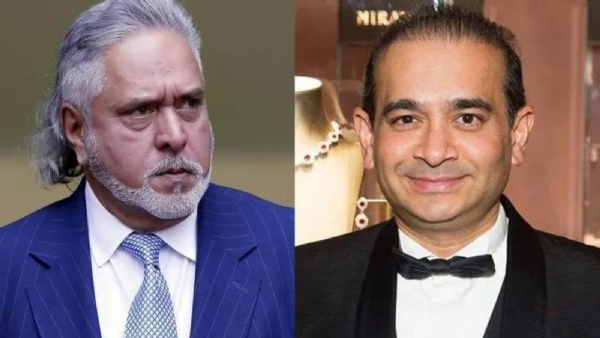
Once these fugitives cross international borders, bringing them back to face trial, seizing their illicit assets, and prosecuting them under Indian law becomes a complex and often elusive process. The perception among such offenders is that Indian legal mechanisms are either ineffective beyond national boundaries or riddled with loopholes that can be exploited.
CBI’s Global Offensive
To counter this perception and strengthen India’s legal reach, the Central Bureau of Investigation (CBI) has launched a Global Operation Centre—a dedicated unit designed to coordinate in real-time with international law enforcement agencies. This initiative marks a strategic shift in India’s approach to transnational crime, with the goal of streamlining extradition and enhancing global cooperation.
The success of this initiative is already evident: judicial proceedings in the UK regarding Nirav Modi’s extradition have concluded, and his return to India now appears imminent.
The Billion-Dollar Scandals
India’s banking sector was rocked by two massive frauds in the past decade:
- Vijay Mallya: Accused of defrauding Indian banks of ₹9,000 crore through loans taken under the banner of Kingfisher Airlines. Mallya fled to London in March 2016 and remains abroad.
- Nirav Modi: Orchestrated a ₹13,000 crore scam involving fake Letters of Undertaking (LoUs) in collusion with Punjab National Bank officials. He diverted funds to his companies and fled to the UK, where he was arrested in 2019 but has yet to be extradited.
These cases exposed systemic vulnerabilities in India’s banking system and highlighted how political and economic influence can be misused to bypass regulatory safeguards.
Impact on Banking and Public Trust
The fallout from these scandals has been severe. There was a massive surge in Non-Performing Assets (NPAs) across public sector banks which triggered widespread erosion of public trust in financial institutions It entailed the Public Sector Banks to adhere to stricter scrutiny of loan approvals and internal audits. As a direct impact of these scams, the Centre called for regulatory reforms to prevent future abuse.
Amit Shah’s Strong Message
On October 16, 2025, Union Home and Cooperation Minister Amit Shah addressed a national conference organized by the CBI titled “Extradition of Foreign Fugitives: Challenges and Strategy.” He emphasized the need for zero tolerance against corruption, crime, and terrorism—both within and beyond India’s borders.
“Ensuring national security requires bringing all offenders within the ambit of Indian law,” Shah declared. He outlined a roadmap leveraging Interpol protocols and India’s newly enacted criminal laws to facilitate extradition and prosecution.
Strategic and Legal Measures
Key resolutions from the conference included:
- Coordinated global action, robust inter-agency cooperation, and smart diplomacy
- Aggressive pursuit of fugitives involved in financial, cyber, and terror-related crimes
- Use of cyber forensics to trace money trails and simplify extradition
- Creation of a geographic database of fugitives and enhanced collaboration with international police forces
- Dismantling the legal, financial, and political ecosystems that shield fugitives abroad
- Establishment of dedicated state-level units to track and repatriate absconders
Technology and International Cooperation
The CBI and Home Ministry have deployed tech-driven platforms to enable real-time coordination with global law enforcement. This has accelerated progress in Nirav Modi’s extradition case, with expectations that he will soon face trial in India.
India’s campaign against fugitive offenders is not just a legal obligation, it’s a matter of national interest. These individuals pose a threat to economic stability, sovereignty, and public trust. The ₹22,000 crore defrauded by Mallya and Modi underscores the urgency of reform and enforcement.
The establishment of the Global Operation Centre, coupled with legal reforms and international protocols, signals a new era in India’s fight against transnational crime. The government’s resolve to bring back fugitives like Nirav Modi and Vijay Mallya is a step toward restoring accountability and reinforcing the rule of law.
Once these fugitives cross international borders, bringing them back to face trial, seizing their illicit assets, and prosecuting them under Indian law becomes a complex and often elusive process. The perception among such offenders is that Indian legal mechanisms are either ineffective beyond national boundaries or riddled with loopholes that can be exploited.
CBI’s Global Offensive
To counter this perception and strengthen India’s legal reach, the Central Bureau of Investigation (CBI) has launched a Global Operation Centre—a dedicated unit designed to coordinate in real-time with international law enforcement agencies. This initiative marks a strategic shift in India’s approach to transnational crime, with the goal of streamlining extradition and enhancing global cooperation.
The success of this initiative is already evident: judicial proceedings in the UK regarding Nirav Modi’s extradition have concluded, and his return to India now appears imminent.
The Billion-Dollar Scandals
India’s banking sector was rocked by two massive frauds in the past decade:
- Vijay Mallya: Accused of defrauding Indian banks of ₹9,000 crore through loans taken under the banner of Kingfisher Airlines. Mallya fled to London in March 2016 and remains abroad.
- Nirav Modi: Orchestrated a ₹13,000 crore scam involving fake Letters of Undertaking (LoUs) in collusion with Punjab National Bank officials. He diverted funds to his companies and fled to the UK, where he was arrested in 2019 but has yet to be extradited.
These cases exposed systemic vulnerabilities in India’s banking system and highlighted how political and economic influence can be misused to bypass regulatory safeguards.
Impact on Banking and Public Trust
The fallout from these scandals has been severe. There was a massive surge in Non-Performing Assets (NPAs) across public sector banks which triggered widespread erosion of public trust in financial institutions It entailed the Public Sector Banks to adhere to stricter scrutiny of loan approvals and internal audits. As a direct impact of these scams, the Centre called for regulatory reforms to prevent future abuse.
Amit Shah’s Strong Message
On October 16, 2025, Union Home and Cooperation Minister Amit Shah addressed a national conference organized by the CBI titled “Extradition of Foreign Fugitives: Challenges and Strategy.” He emphasized the need for zero tolerance against corruption, crime, and terrorism—both within and beyond India’s borders.
“Ensuring national security requires bringing all offenders within the ambit of Indian law,” Shah declared. He outlined a roadmap leveraging Interpol protocols and India’s newly enacted criminal laws to facilitate extradition and prosecution.
Strategic and Legal Measures
Key resolutions from the conference included:
- Coordinated global action, robust inter-agency cooperation, and smart diplomacy
- Aggressive pursuit of fugitives involved in financial, cyber, and terror-related crimes
- Use of cyber forensics to trace money trails and simplify extradition
- Creation of a geographic database of fugitives and enhanced collaboration with international police forces
- Dismantling the legal, financial, and political ecosystems that shield fugitives abroad
- Establishment of dedicated state-level units to track and repatriate absconders
Technology and International Cooperation
The CBI and Home Ministry have deployed tech-driven platforms to enable real-time coordination with global law enforcement. This has accelerated progress in Nirav Modi’s extradition case, with expectations that he will soon face trial in India.
India’s campaign against fugitive offenders is not just a legal obligation, it’s a matter of national interest. These individuals pose a threat to economic stability, sovereignty, and public trust. The ₹22,000 crore defrauded by Mallya and Modi underscores the urgency of reform and enforcement.
The establishment of the Global Operation Centre, coupled with legal reforms and international protocols, signals a new era in India’s fight against transnational crime. The government’s resolve to bring back fugitives like Nirav Modi and Vijay Mallya is a step toward restoring accountability and reinforcing the rule of law.

Chintan Mokashi
Chintan Mokashi is a Pune-based writer, journalist, and researcher. He specialises in cinema, world history, human rights, and corporate fraud examination. With a postgraduate degree in journalism and extensive experience in writing across diverse subjects, his work blends analytical depth with cultural insight. Fluent in Marathi and English, Chintan’s writing bridges historical context with contemporary relevance, offering readers a thoughtful and engaging perspective.