26/11 Horrors: Barkha Dutt Chose to Go LIVE when Mumbai bled — Meet the 'OG Terror Sympathiser'


When the term “Mumbai vibes” is casually shared today, it evokes the city’s relentless energy, its late-night hustle, and its enduring spirit. But for Gen Z, it can be difficult to grasp the gravity of the night when Mumbai's essential rhythm was brutally interrupted.
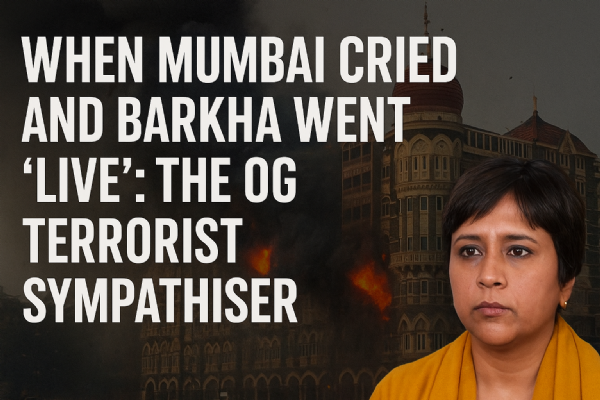
Today’s young Mumbaikars know the 26/11 attacks largely through digital fragments, a reference in a reel, a stylised movie sequence, or a historical footnote. But the reality of that night runs deeper than any documentary can convey. It was a time when the world's most crowded city suddenly fell silent.
Every home became a vigil, every family was united by a desperate, shared anxiety, praying for strangers under siege. Mumbai, the financial heartbeat of India, was experiencing its darkest hour since 1993. The streets, normally chaotic with traffic, echoed only with the sound of sirens as the city bled under the relentless glare of live television. Chhatrapati Shivaji Maharaj Terminus (CST) the city's landmark, its core, and the transit hub where millions chase their dreams daily was soaked in tragedy. Trains stood still. Crowds scattered.
What often goes unspoken in the retellings is the complex chaos of the moment. As security forces fought to regain control of locations like The Taj Mahal Palace Hotel and Nariman House, the events unfolded on live television for the world to see. It was a time of unprecedented transparency, where the line between reporting the tragedy and inadvertently revealing strategic details became tragically blurred.
In a world where global causes are passionately championed on social media, the focus often shifts away from crucial lessons learned closer to home. For those who admire and amplify today’s media voices, it is a sobering historical fact that during Mumbai’s darkest hours, the immediacy of live reporting blurred the lines of safety. As terrorists executed their plan, the continuous flow of information broadcast by many highly respected news personalities inadvertently provided real-time intelligence on troop movements and counter-strategies.
If Gen Z chooses to look beyond the curated narratives of today, they will find one name frequently surfacing in the post-mortem analysis of 26/11 coverage: Barkha Dutt.
The journalist, now often celebrated across digital platforms as a progressive and feminist icon, was at the heart of the intense media spotlight during Mumbai's three-day siege in 2008. But the narrative surrounding her reporting isn't one of simple information delivery.
When the stakes were highest, and commandos were engaging terrorists inside the Taj Mahal Palace and Nariman House, questions were raised about the immediate consequences of her live broadcasts. Her on-air reports, which detailed crucial specifics like the number of floors cleared, the location of troop movements, and the status of hostages became a widely discussed example of the severe ethical challenge posed by real-time coverage in a crisis.
Barkha Dutt, in one of the videos of the coverage of 26/11, can be heard reporting that “her sources are on the 19th floor where the terrorists are currently in their murderous frenzy”. She didn’t blink or hesitate for a second before giving such a crucial bit of information live. How can a media person stoop so low during one of the biggest terror attacks that happened in India?
Even during an interview, she accepted the media's role in endangering the lives of civilians as well as security personnel by not restraining themselves during the telecast. Barkha admits that perhaps in hindsight, journalists made mistakes during the Mumbai siege. However, she then again tried to cover up the issue, saying that the media wasn’t aware that the handlers of the terrorists were monitoring news channels.
She helped them not unintentionally, but in a way that looked deliberate, precise, and purposeful. Even today, she gets visibly aggressive when anyone questions her role, as if accountability is an insult. But the facts remain: her actions during 26/11 didn’t aid India; they aided those who came to kill Indians.
When interviewed later by a left-liberal journalist at Newslaundry, Barkha remained unapologetic for her role in the attacks. She said, without offering an apology or admission of mistake, “The Oberoi story, I do remember having said at some point… not the exact number but when they was confusion over the fact that the hotel has been cleared, I did say that no, we still have reasons to believe that there are people who are trapped as hostages. That I did say. I don’t believe I was the only one who said it. Journalists across the board said that.”
It was because of her live reporting that terrorists got a clear sense of our soldiers’ positions, turning her coverage into the perfect unofficial guidebook for the attackers. That night, she wasn’t just a journalist on the ground; she practically became the signal booster that amplified exactly what the terrorists needed to hear.
What’s even more ironic is that just a few months after the 26/11 blunder, the Sonia Gandhi–led Manmohan Singh government rewarded “Dutt” with the Padma Award in 2009 for her so-called reporting style. But of course, why would anyone be surprised? This is the same Congress that once proudly invited a terrorist like Yasin Malik for “talks.” Their track record is an open book consistently sympathetic to people who have harmed the nation, and consistently hostile to those who defend it. So naturally, honouring someone whose 26/11 coverage ended up helping terrorists fits perfectly into their pattern. The Congress ecosystem has always been the one offering safe havens political, ideological, and narrative to those who weaken India. They are the root cause, and Barkha is simply one of their many puppets performing on cue.And frankly, the Padma Shri wasn’t a honour it felt more like a reward for Barkha’s unwavering loyalty to anti-India narratives and her consistent alignment with Pakistan’s line.
And as Mumbai marks yet another 26/11 anniversary, Gen Z has to realise one thing history isn’t just about what happened, it’s about who made it worse. Terrorists attacked our city from the outside, but it was the “insiders” with mics, cameras, and agendas who accidentally handed them the roadmap.
Today, activism feels cool. Posting Palestine flags, retweeting liberal icons, sharing aesthetic protest pics all of that looks trendy on your feed. But before taking sides because it’s “viral”, pause and ask: If this were Mumbai 2008, would your hero help save lives… or leak locations?
Mumbai didn’t just battle bullets at Taj, CST, and Nariman Houseit battled misplaced priorities, careless reporting, and the people who let the city bleed in the name of “breaking news”.
So the next time someone sells you a narrative wrapped in feminism, activism, or progressive tags, remember: Your city paid the price once. You can’t afford to choose wrong again.