Should the state languages other than the mother tongue be given equal importance as foreign languages?
NewsBharati 25-Nov-2025 15:21:30 PM
Total Views |


On 24th November's TOI issue published a news related to the educational and cultural collaboration between Pune district and France. As a part of the programme, 30 ZP teachers are learning French. Obviously, it will open new career possibilities for children. This certainly is a very positive initiative by the administration. The CEO, Shri Gajanan Patil (Pune Zilla Parishad CEO), met the consulate official and SSPU's foreign language department head.
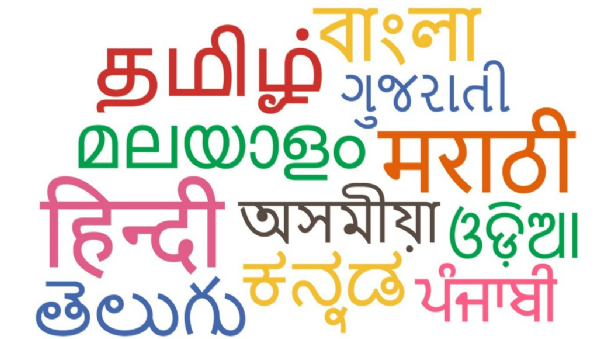
We have many regional languages in our country. All languages have a treasure of literature. Sometimes the languages of neighbouring states are totally different from each other. Bordering area people mostly understand both and can communicate in both languages, no doubt, but knowing the language and being able to read both scripts is not that common. Of course, being able to speak works in their advantage. Interdining and intermarriage among the people of the two states, too, are common.
If the example of Karnataka and Maharashtra is considered, their scripts are totally different from each other, and so are the spoken languages. Either one has to have an opportunity to be in the company of the other group, or conscious efforts have to be made to know the language.
If the possibility of additional work opportunities is considered, knowing the language of the state one wants to work with, one definitely has an advantage. Learning a foreign language and getting an opportunity in that country have some limitations. Migrating to a state in our country has a better probability.
One of the advantages that works in our favour is, we share a cultural background, ethos, moral values, many customs and traditions. Understanding the thought process is comparatively easy. Being able to read and speak a language helps one to know the literature and lifestyle too. One unconsciously develops an affinity towards the people of the state.
Indirectly, it strengthens national integrity also. Maybe discord or points of friction reduce, and sharp edges soften.
We have many languages spoken in our country, though this reflects our diversity, we have a common thread of our culture that keeps us together. We need to strengthen it. Children need to be given the opportunity to learn at least one more Bharatiya language, other than their mother tongue. All the states can have online programmes to teach their state language. ( probably some states already have such a facility ) After the Corona phase, all are accustomed to the online learning model. Exams can be conducted, projects may be submitted, and assignments can be submitted online. The entire coursework may be completed, and certificates may also be generated and issued.
An interstate tie-up needs to be developed; at least the languages of the neighbouring states need to be learned. Some Children may love to learn more than one language and continue it even after their school phase. Low-cost modules ought to be provided to all.
Nowadays, migration for work is a common feature of the workforce. So in a way, it would help many. All those who migrate for work learn the local language. This facility would make the task easier.
All the states have to think and act upon this.
We have many regional languages in our country. All languages have a treasure of literature. Sometimes the languages of neighbouring states are totally different from each other. Bordering area people mostly understand both and can communicate in both languages, no doubt, but knowing the language and being able to read both scripts is not that common. Of course, being able to speak works in their advantage. Interdining and intermarriage among the people of the two states, too, are common.
If the example of Karnataka and Maharashtra is considered, their scripts are totally different from each other, and so are the spoken languages. Either one has to have an opportunity to be in the company of the other group, or conscious efforts have to be made to know the language.
If the possibility of additional work opportunities is considered, knowing the language of the state one wants to work with, one definitely has an advantage. Learning a foreign language and getting an opportunity in that country have some limitations. Migrating to a state in our country has a better probability.
One of the advantages that works in our favour is, we share a cultural background, ethos, moral values, many customs and traditions. Understanding the thought process is comparatively easy. Being able to read and speak a language helps one to know the literature and lifestyle too. One unconsciously develops an affinity towards the people of the state.
Indirectly, it strengthens national integrity also. Maybe discord or points of friction reduce, and sharp edges soften.
We have many languages spoken in our country, though this reflects our diversity, we have a common thread of our culture that keeps us together. We need to strengthen it. Children need to be given the opportunity to learn at least one more Bharatiya language, other than their mother tongue. All the states can have online programmes to teach their state language. ( probably some states already have such a facility ) After the Corona phase, all are accustomed to the online learning model. Exams can be conducted, projects may be submitted, and assignments can be submitted online. The entire coursework may be completed, and certificates may also be generated and issued.
An interstate tie-up needs to be developed; at least the languages of the neighbouring states need to be learned. Some Children may love to learn more than one language and continue it even after their school phase. Low-cost modules ought to be provided to all.
Nowadays, migration for work is a common feature of the workforce. So in a way, it would help many. All those who migrate for work learn the local language. This facility would make the task easier.
All the states have to think and act upon this.
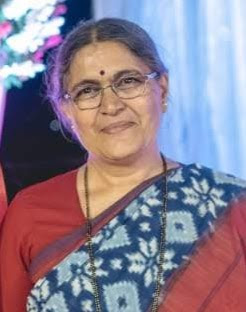
Prof. Vidya Deshpande
Professor Vidya Deshpande has had a journey of more than four decades in the field of education. Her main expertise is in the subject of Philosophy, and she has worked as a teacher of philosophy and logic with Nowrosjee Wadia college for 36 years. She has been associated with the Janakalyan Blood bank for last for 38 years and has also carried out the responsibility as a management committee member of Karve Stree Shikshan Sanstha for 10 years. Her special fields of interest are Philosophy of social sciences, school education, development of skills for self reliance, and top up skills to make students profession ready,