India’s Silent Revolution: How Indo African Alliance Is Shaking Washington
NewsBharati 02-Dec-2025 12:43:00 PM
Total Views |


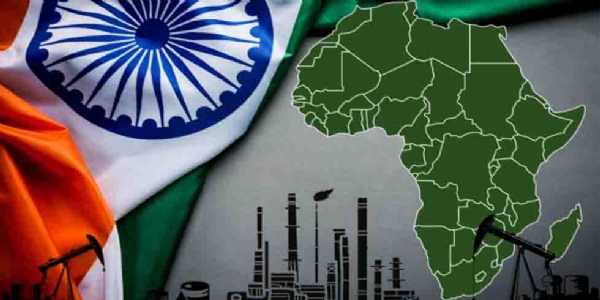
In a world distracted by China's assertiveness and the West's waning grip on global influence, India has quietly orchestrated a geopolitical masterstroke that’s sending shockwaves through Washington. Prime Minister Narendra Modi has forged a sweeping military alliance with over 30 African nations—an unprecedented move that’s not just strategic, but symbolic. While Western powers continue to offer partnerships laced with conditions, India is rewriting the rules by offering respect, autonomy, and shared prosperity. From naval bases in Mombasa to radar systems in Ghana, India’s presence is no longer peripheral—it’s pivotal. This isn’t just a regional pivot; it’s a tectonic shift in global power. And for the first time in decades, Africa is choosing its own path—with India by its side.
The Pentagon’s Panic and India’s Parallel Power Play
When a leaked Pentagon memo labeled India’s African outreach a “security concern,” it wasn’t just a bureaucratic alarm - it was existential dread. For decades, the West’s deep state operated with impunity, controlling global narratives and military partnerships through conditional aid, debt diplomacy, and strategic coercion. But Modi’s quiet revolution has upset the western old doctrine. The memo’s translation was blunt: “Control is slipping.” Something unprecedented is happening.
Someone in the media commented, “India didn’t ask for a seat at the old table, it built a new one.” And aptly so. African nations are lining up to join. While Washington tried to isolate India, Modi flipped the script by forging alliances rooted in respect, not dominance. The West’s monopoly over African security—held tightly by the U.S., France, and Britain—is now being challenged in real time. And the panic is palpable.
The Strategic Shift No One Saw Coming
In Mauritius Modi inaugurated a new airstrip and naval jetty, turning the island into a strategic logistics hub. The Mauritian Prime Minister’s 8-day visit to India, including a stop at the Ram Mandir, wasn’t just ceremonial—it was symbolic of a deeper alignment.
At India’s recent air show, 30 African army chiefs weren’t just guests—they were buyers. Indian helicopters, drones, and artillery systems were showcased, all proudly Made in India. This wasn’t charity—it was commerce.
India’s defense exports to Africa have surged 64% in just two years. From Ethiopian drones to Ghanaian radar systems, Indian tech is replacing Western hardware.
Unlike the West, India isn’t selling for control of the region. It’s offering partnership. No lectures. No debt traps. Just mutual development.
Why Africa Is Choosing India
Africa has long been a pawn in global power games. Western nations trained African armies only to sell them weapons and manipulate their foreign and financial policies. China offered infrastructure but often with opaque terms and sovereignty risks. India’s model is different: co-development, transparency, and respect.
Modi’s message is clear: “You don’t need to beg. You need to build. And we’ll build with you.” That’s why African leaders are calling this moment self-determination, not militarization.
The Deep State’s Dilemma
The Pentagon isn’t just worried about India’s rise—it’s terrified of the precedent. If India can offer strategic partnerships without control, others might follow. The BRICS expansion is accelerating this shift, creating an alternative world order where cooperation trumps coercion.
India’s presence in East Africa is pushing out entrenched Western powers. In the south, where China once held sway, India is now dominant. The map is changing - and changing fast.
Building the South-South Security Network
India has quietly constructed a dotted line of strategic partnerships across Africa—a South-South Security Network that challenges the old order. Listening posts, refueling stations, and logistics hubs are now Indian-built and African-owned. The West’s dominance is fading.
This isn’t just a shift in alliances—it’s a shift in mindset. Developing nations are helping each other, not exploiting each other. Africa and India are scripting a new narrative together.
And it has seen the Global Ripple Effect. Latin America is already leaning toward India. Pacific nations are welcoming Modi with reverence. China has been outmaneuvered in East Africa. The West is losing its grip—not because of aggression, but because of irrelevance. India’s rise isn’t just military—it’s moral. It’s strategic. It’s inclusive. And that’s why Washington is worried. The 54 African nations are slipping out of Western control, rewriting their own stories, and choosing India as a partner—not a patron.
This isn’t just a geopolitical pivot. It’s a philosophical one. The world is dividing into two camps: those who seek control, and those who seek collaboration. India has chosen its side. And in doing so, it’s giving Africa—and the Global South—a new voice.
The West can panic. The Pentagon can leak memos. But the reality is undeniable: India is no longer reacting to global power shifts—it’s creating them.
The Pentagon’s Panic and India’s Parallel Power Play
When a leaked Pentagon memo labeled India’s African outreach a “security concern,” it wasn’t just a bureaucratic alarm - it was existential dread. For decades, the West’s deep state operated with impunity, controlling global narratives and military partnerships through conditional aid, debt diplomacy, and strategic coercion. But Modi’s quiet revolution has upset the western old doctrine. The memo’s translation was blunt: “Control is slipping.” Something unprecedented is happening.
Someone in the media commented, “India didn’t ask for a seat at the old table, it built a new one.” And aptly so. African nations are lining up to join. While Washington tried to isolate India, Modi flipped the script by forging alliances rooted in respect, not dominance. The West’s monopoly over African security—held tightly by the U.S., France, and Britain—is now being challenged in real time. And the panic is palpable.
The Strategic Shift No One Saw Coming
In Mauritius Modi inaugurated a new airstrip and naval jetty, turning the island into a strategic logistics hub. The Mauritian Prime Minister’s 8-day visit to India, including a stop at the Ram Mandir, wasn’t just ceremonial—it was symbolic of a deeper alignment.
At India’s recent air show, 30 African army chiefs weren’t just guests—they were buyers. Indian helicopters, drones, and artillery systems were showcased, all proudly Made in India. This wasn’t charity—it was commerce.
India’s defense exports to Africa have surged 64% in just two years. From Ethiopian drones to Ghanaian radar systems, Indian tech is replacing Western hardware.
Unlike the West, India isn’t selling for control of the region. It’s offering partnership. No lectures. No debt traps. Just mutual development.
Why Africa Is Choosing India
Africa has long been a pawn in global power games. Western nations trained African armies only to sell them weapons and manipulate their foreign and financial policies. China offered infrastructure but often with opaque terms and sovereignty risks. India’s model is different: co-development, transparency, and respect.
Modi’s message is clear: “You don’t need to beg. You need to build. And we’ll build with you.” That’s why African leaders are calling this moment self-determination, not militarization.
The Deep State’s Dilemma
The Pentagon isn’t just worried about India’s rise—it’s terrified of the precedent. If India can offer strategic partnerships without control, others might follow. The BRICS expansion is accelerating this shift, creating an alternative world order where cooperation trumps coercion.
India’s presence in East Africa is pushing out entrenched Western powers. In the south, where China once held sway, India is now dominant. The map is changing - and changing fast.
Building the South-South Security Network
India has quietly constructed a dotted line of strategic partnerships across Africa—a South-South Security Network that challenges the old order. Listening posts, refueling stations, and logistics hubs are now Indian-built and African-owned. The West’s dominance is fading.
This isn’t just a shift in alliances—it’s a shift in mindset. Developing nations are helping each other, not exploiting each other. Africa and India are scripting a new narrative together.
And it has seen the Global Ripple Effect. Latin America is already leaning toward India. Pacific nations are welcoming Modi with reverence. China has been outmaneuvered in East Africa. The West is losing its grip—not because of aggression, but because of irrelevance. India’s rise isn’t just military—it’s moral. It’s strategic. It’s inclusive. And that’s why Washington is worried. The 54 African nations are slipping out of Western control, rewriting their own stories, and choosing India as a partner—not a patron.
This isn’t just a geopolitical pivot. It’s a philosophical one. The world is dividing into two camps: those who seek control, and those who seek collaboration. India has chosen its side. And in doing so, it’s giving Africa—and the Global South—a new voice.
The West can panic. The Pentagon can leak memos. But the reality is undeniable: India is no longer reacting to global power shifts—it’s creating them.

Chintan Mokashi
Chintan Mokashi is a Pune-based writer, journalist, and researcher. He specialises in cinema, world history, human rights, and corporate fraud examination. With a PG Diploma in Journalism from KC College, Mumbai and extensive experience in writing across diverse subjects, his work blends analytical depth with cultural insight. Fluent in Marathi and English, Chintan’s writing bridges historical context with contemporary relevance, offering readers a thoughtful and engaging perspective.