India at the Centre: A New Decade of Independence and Influence
NewsBharati 02-Dec-2025 12:04:48 PM
Total Views |


A Line That Shook the Summit
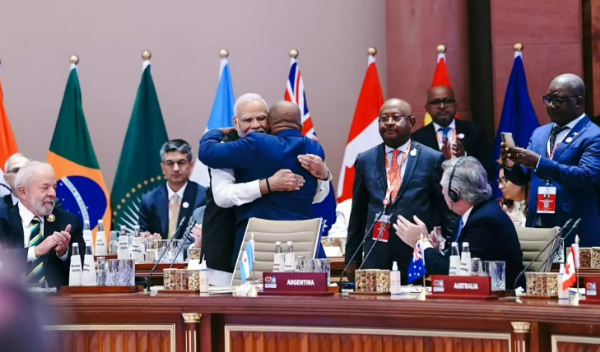
Something unexpected unfolded at the G20 summit in South Africa. In a room filled with world leaders, CEOs, military strategists, and journalists, Prime Minister Narendra Modi delivered a line so bold, so calculated, and so disruptive that it instantly reverberated across the globe. Overnight, his words dominated American television screens, igniting debates among analysts and commentators.
India’s Rise to Centre Stage
While US President Trump stayed away from the G20 Meet in South Africa, India took centre stage. India is no longer a quiet player in international affairs. With a population of 1.4 billion and the world’s fifth-largest economy, its rise is impossible to ignore. As the fastest-growing major economy, home to world-class engineers, scientists, and entrepreneurs, India’s decisions ripple across global markets, technology pipelines, and political alliances.
For decades, Washington’s strategic gaze was fixed on China. But today, the United States is compelled to view India not as a secondary partner, but as a future powerhouse. Modi’s leadership style—firm, confident, and unpredictable—has amplified this shift. Like other polarising global figures, he commands attention wherever he goes, and his words travel instantly across newsrooms.
The Atmosphere Before the Shock
The summit’s atmosphere was formal and predictable. Attendees expected routine speeches filled with diplomatic language and safe promises. Modi stepped onto the stage with his trademark confidence, and most anticipated a standard address on India’s economic goals and cooperation. But midway through, he delivered a sentence that changed everything.
The Line That Sparked Global Debate
Modi declared:
“The world cannot rely on one country’s approval anymore. India will make decisions that serve humanity, not any superpower.”
It was not angry, nor emotional, but undeniably direct. In one stroke, Modi signaled India’s independence, its refusal to be pressured, and its readiness to act on its own vision. The hall froze, reporters rushed to file breaking alerts, and whispers filled the room.
Global politics today is at a boiling point. The U.S. and China are locked in fierce competition over technology, trade, and military influence. Amid this rivalry, India stands uniquely positioned—neither fully aligned with the West nor dependent on China. This independence makes Washington acutely aware of India’s importance:
• Tech talent to drive innovation.
• Manufacturing capacity to replace Chinese supply chains.
• Military cooperation in the Indo-Pacific.
• Rising global influence that shapes the balance of power.
Modi’s statement crystallized these realities. For American broadcasters, it was irresistible—drama, geopolitics, and strategy wrapped into one moment.
Media Frenzy in the U.S.
Within hours, CNN and other networks dissected the line. Analysts debated whether India was simply stepping into the leadership role its size demands, or whether it was becoming too powerful too quickly. Some warned Washington to recognize the scale of New Delhi’s influence before it reshapes the global order.
In one sentence, Modi disrupted expectations and forced the world to acknowledge India’s assertive independence. The statement was not just a diplomatic remark—it was a declaration of intent. And for the United States, it was a reminder that the balance of power is shifting, with India firmly at the center.
Something unexpected unfolded at the G20 summit in South Africa. In a room filled with world leaders, CEOs, military strategists, and journalists, Prime Minister Narendra Modi delivered a line so bold, so calculated, and so disruptive that it instantly reverberated across the globe. Overnight, his words dominated American television screens, igniting debates among analysts and commentators.
India’s Rise to Centre Stage
While US President Trump stayed away from the G20 Meet in South Africa, India took centre stage. India is no longer a quiet player in international affairs. With a population of 1.4 billion and the world’s fifth-largest economy, its rise is impossible to ignore. As the fastest-growing major economy, home to world-class engineers, scientists, and entrepreneurs, India’s decisions ripple across global markets, technology pipelines, and political alliances.
For decades, Washington’s strategic gaze was fixed on China. But today, the United States is compelled to view India not as a secondary partner, but as a future powerhouse. Modi’s leadership style—firm, confident, and unpredictable—has amplified this shift. Like other polarising global figures, he commands attention wherever he goes, and his words travel instantly across newsrooms.
The Atmosphere Before the Shock
The summit’s atmosphere was formal and predictable. Attendees expected routine speeches filled with diplomatic language and safe promises. Modi stepped onto the stage with his trademark confidence, and most anticipated a standard address on India’s economic goals and cooperation. But midway through, he delivered a sentence that changed everything.
The Line That Sparked Global Debate
Modi declared:
“The world cannot rely on one country’s approval anymore. India will make decisions that serve humanity, not any superpower.”
It was not angry, nor emotional, but undeniably direct. In one stroke, Modi signaled India’s independence, its refusal to be pressured, and its readiness to act on its own vision. The hall froze, reporters rushed to file breaking alerts, and whispers filled the room.
Global politics today is at a boiling point. The U.S. and China are locked in fierce competition over technology, trade, and military influence. Amid this rivalry, India stands uniquely positioned—neither fully aligned with the West nor dependent on China. This independence makes Washington acutely aware of India’s importance:
• Tech talent to drive innovation.
• Manufacturing capacity to replace Chinese supply chains.
• Military cooperation in the Indo-Pacific.
• Rising global influence that shapes the balance of power.
Modi’s statement crystallized these realities. For American broadcasters, it was irresistible—drama, geopolitics, and strategy wrapped into one moment.
Media Frenzy in the U.S.
Within hours, CNN and other networks dissected the line. Analysts debated whether India was simply stepping into the leadership role its size demands, or whether it was becoming too powerful too quickly. Some warned Washington to recognize the scale of New Delhi’s influence before it reshapes the global order.
In one sentence, Modi disrupted expectations and forced the world to acknowledge India’s assertive independence. The statement was not just a diplomatic remark—it was a declaration of intent. And for the United States, it was a reminder that the balance of power is shifting, with India firmly at the center.

Chintan Mokashi
Chintan Mokashi is a Pune-based writer, journalist, and researcher. He specialises in cinema, world history, human rights, and corporate fraud examination. With a PG Diploma in Journalism from KC College, Mumbai and extensive experience in writing across diverse subjects, his work blends analytical depth with cultural insight. Fluent in Marathi and English, Chintan’s writing bridges historical context with contemporary relevance, offering readers a thoughtful and engaging perspective.