International Relations Reimagined
12 Aug 2025 15:00:52
The year 2025 finds the world at a critical crossroads, shaped by increasing trade tensions, shifting alliances, and the emergence of new global coalitions. The United States, under President Donald Trump, imposed huge cumulative tariffs on Indian imports in August, claiming to punish India for its continued purchase of Russian oil. He has used the dominance of the American economy in world trade by imposing such crippling tariffs on a few other countries, too. This has severely impacted global supply chains, increased costs, and heightened uncertainties, driving down growth forecasts in both developed and emerging economies.
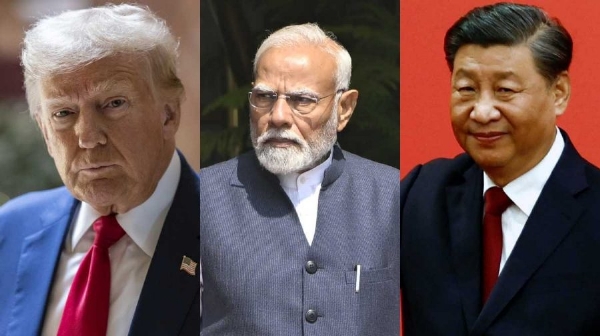
Against a backdrop of these emerging threats, slowing growth and rising protectionism by the developed nations and established powers, it has imperative for the other emerging economies to reimagine frameworks for cooperation, financial integration, and strategic engagement, between themselves with India, China Russia and Brazil standing firmly as four strong pillars at the center of these tectonic shifts.
Trump’s Tariffs, China - India Reconciliation, and a New BRICS-Led Order
In August 2025, U.S. President Donald Trump enacted a total of 50% tariffs on Indian imports, one of the highest ever levied by the U.S. on any trading partner with 25% taking effect August 7 and an additional 25% added 21 days later. This move explained away as primarily in retaliation for India’s purchase of Russian oil. The economic hit to Indian exports will be significant, raising the urgency for India to seek alternative markets and alliances. USA – meaning Trump, has started acting like a bully threatening friends and foes alike. The unjustified act of USA purportedly for the purpose of “Making America Great Again” is the immediate catalyst for this proposed realignment.
Aksai Chin is a high-altitude plateau, presently controlled by China since 1962 but a part of Jammu and Kashmir, contributing to strained China - India relations. Arunachal Pradesh, Indian territory is claimed by China and is consistently cited in Chinese maps and pronounced in official statements as part of ‘Southern Tibet’. Deep-seated mistrust, unresolved border disputes, and internal political priorities threaten progress. A lasting peace would demand extraordinary compromise by China relinquishing control on Aksai Chin and claims on Arunachal Pradesh and in return, though presently, India’s official stance remains firm against linking its economic corridors to Chinese interests due to sovereignty concerns. As an alternative way out, India could potentially offer economic or logistical incentives, such as granting China port access to the Arabian Sea, Bay of Bengal and Indian Ocean offering transnational rail/road/port cooperation. The strategic logic of such networks can transform regional economies and global supply chains.
China sought direct and secure access to the Arabian Sea via Pakistan’s Gwadar Port as part of its flagship Belt and Road Initiative (BRI) and the China-Pakistan Economic Corridor (CPEC). The logic was compelling that Gwadar in Balochistan province, would offer China a maritime outlet for Western China, circumventing chokepoints and reducing exposure to geopolitical turbulence in the South China Sea. However, this strategy has floundered on several counts. Balochistan is riddled with political turmoil, violent insurgency, and anti-Pakistan, hence anti-China sentiment. Militant groups including the Balochistan Liberation Army (BLA) and other factions routinely target Chinese projects and workers, causing project delays and skyrocketing security costs. Despite investments in the billions, Gwadar remained largely underutilized for trade, and its infrastructure is incomplete and vulnerable. Attacks on Chinese nationals and assets have prompted China to demand heavy security from Pakistan. Yet, even dedicated military protection has failed to contain unrest, complicating long-term strategic planning and raising questions about the commercial and geostrategic viability of Gwadar as a secure node in China’s commercial and maritime ambitions.
In stark contrast, India’s western coastline boasts a string of major, high-capacity, and well-connected ports from Jawaharlal Nehru Port Trust near Mumbai and Kandla in Gujarat to Mormugao in Goa and Cochin in Kerala which are all located in peaceful regions with robust law enforcement, efficient customs, and minimal threat of insurgency. JNPT alone is among the top global ports for container handling, backed by modern infrastructure, multi-modal connectivity, and proximity to India’s industrial heartland. Vadhavan deep sea port is coming up near Mumbai. India is also investing in more port infrastructure (e.g., Chabahar in Iran, Sittwe in Myanmar), seeking to counter China’s maritime influence and build alternatives for regional trade partners.
Instead of competing and acting against the interest of each other, a new mindset of cooperative partnership would take both the countries to new heights. However, India providing China direct access to the Arabian Sea via JNPT or Kandla would represent a dramatic shift in Indian foreign policy, pre-prerequisite being the resolution of bilateral territorial disputes first.
This idea should be approached with care and caution as India’s experience with China in past has not been too happy. If hostilities cease by China returning Aksai Chin, dropping claims on Arunachal Pradesh; and China and India resolve their disputes, and a New Global Order is possible. Granting port access to China could become a cornerstone of a new European, Asian, Arabian Sea, Bay of Bengal and Indian Ocean connectivity for China. China’s access to these ports would grant it unparalleled logistical efficiency, stability, and proximity to international maritime routes, far superior to the volatile corridors in Pakistan.
BRICS expansion and Role of African Countries
The expanded BRICS group now features strong African representation with South Africa, Egypt, Ethiopia as members, and Nigeria, Uganda, Algeria, and others advancing as partners. These African nations hope to leverage BRICS cooperation for investment, access to technology, finance outside Western-dominated channels, and a stronger geopolitical voice. African members and partners hope for investment, infrastructure development, technological exchange, and alternatives to Western aid and trade models. This realignment could strengthen multilateral trade, reduce dependency on the U.S. dollar, and support regional ambitions, including the African Continental Free Trade Area.
Unified BRICS Currency and The Way Forward
Contrary to frequent speculation, as of July 2025 no unified BRICS currency has been announced. Recent summits reaffirmed technical cooperation in payments and increased local-currency trade, but the bloc is not close to launching a single currency or seeking to, overtly, undermine the dollar in the short term. The “BRICS currency” remains a medium to long term ambition, with focus for now on cross-border systems and trade settlements in national currencies.
India, China, Russia, Brazil, South Africa, and other Asian and African economies could collectively create economic synergies through resource sharing, technology transfer, and unified market access. A BRICS-aligned financial system, including cross-border payment mechanisms, should gradually reduce dependence on the dollar-dominated SWIFT and Western banking infrastructure, with Indian UPI system providing an alternative for global engagements.
The China-India territorial reconciliation, compensation through strategic access, and BRICS led economic transformation shows enormous potential. And, U.S. tariffs, Western trade sanctions, and shifting global power could serve as catalysts for these nations to reconsider their policies and embrace a broader, multi-purpose partnership for the 21st century. Participation of Russia and Brazil as strong partners would be crucial in this commercial arrangement which can go far in dealing with the American and European power centers. Sharing access to each other’s markets and also roping in other centers like Myanmar, Thailand, Laos, Cambodia, Vietnam, Malaysia, Indonesia, Japan and both the Koreas including other powers together would create a huge block and will make the US and Europe fall in line.
If this re-imagine global order is realized, such different set of priorities amongst the world leaders from conflict to cooperation and proposed realignment would not only create a strong economic and political bloc but also offer a credible alternative to the current global order, especially for the Global South.
Adv Rajesh Gehani, Mumbai
(Lawyer, Educationist)
Against a backdrop of these emerging threats, slowing growth and rising protectionism by the developed nations and established powers, it has imperative for the other emerging economies to reimagine frameworks for cooperation, financial integration, and strategic engagement, between themselves with India, China Russia and Brazil standing firmly as four strong pillars at the center of these tectonic shifts.
Trump’s Tariffs, China - India Reconciliation, and a New BRICS-Led Order
In August 2025, U.S. President Donald Trump enacted a total of 50% tariffs on Indian imports, one of the highest ever levied by the U.S. on any trading partner with 25% taking effect August 7 and an additional 25% added 21 days later. This move explained away as primarily in retaliation for India’s purchase of Russian oil. The economic hit to Indian exports will be significant, raising the urgency for India to seek alternative markets and alliances. USA – meaning Trump, has started acting like a bully threatening friends and foes alike. The unjustified act of USA purportedly for the purpose of “Making America Great Again” is the immediate catalyst for this proposed realignment.
China-India Border Disputes
Aksai Chin is a high-altitude plateau, presently controlled by China since 1962 but a part of Jammu and Kashmir, contributing to strained China - India relations. Arunachal Pradesh, Indian territory is claimed by China and is consistently cited in Chinese maps and pronounced in official statements as part of ‘Southern Tibet’. Deep-seated mistrust, unresolved border disputes, and internal political priorities threaten progress. A lasting peace would demand extraordinary compromise by China relinquishing control on Aksai Chin and claims on Arunachal Pradesh and in return, though presently, India’s official stance remains firm against linking its economic corridors to Chinese interests due to sovereignty concerns. As an alternative way out, India could potentially offer economic or logistical incentives, such as granting China port access to the Arabian Sea, Bay of Bengal and Indian Ocean offering transnational rail/road/port cooperation. The strategic logic of such networks can transform regional economies and global supply chains.
China’s Exploration towards Pakistan
China sought direct and secure access to the Arabian Sea via Pakistan’s Gwadar Port as part of its flagship Belt and Road Initiative (BRI) and the China-Pakistan Economic Corridor (CPEC). The logic was compelling that Gwadar in Balochistan province, would offer China a maritime outlet for Western China, circumventing chokepoints and reducing exposure to geopolitical turbulence in the South China Sea. However, this strategy has floundered on several counts. Balochistan is riddled with political turmoil, violent insurgency, and anti-Pakistan, hence anti-China sentiment. Militant groups including the Balochistan Liberation Army (BLA) and other factions routinely target Chinese projects and workers, causing project delays and skyrocketing security costs. Despite investments in the billions, Gwadar remained largely underutilized for trade, and its infrastructure is incomplete and vulnerable. Attacks on Chinese nationals and assets have prompted China to demand heavy security from Pakistan. Yet, even dedicated military protection has failed to contain unrest, complicating long-term strategic planning and raising questions about the commercial and geostrategic viability of Gwadar as a secure node in China’s commercial and maritime ambitions.
What India can offer
In stark contrast, India’s western coastline boasts a string of major, high-capacity, and well-connected ports from Jawaharlal Nehru Port Trust near Mumbai and Kandla in Gujarat to Mormugao in Goa and Cochin in Kerala which are all located in peaceful regions with robust law enforcement, efficient customs, and minimal threat of insurgency. JNPT alone is among the top global ports for container handling, backed by modern infrastructure, multi-modal connectivity, and proximity to India’s industrial heartland. Vadhavan deep sea port is coming up near Mumbai. India is also investing in more port infrastructure (e.g., Chabahar in Iran, Sittwe in Myanmar), seeking to counter China’s maritime influence and build alternatives for regional trade partners.
Instead of competing and acting against the interest of each other, a new mindset of cooperative partnership would take both the countries to new heights. However, India providing China direct access to the Arabian Sea via JNPT or Kandla would represent a dramatic shift in Indian foreign policy, pre-prerequisite being the resolution of bilateral territorial disputes first.
This idea should be approached with care and caution as India’s experience with China in past has not been too happy. If hostilities cease by China returning Aksai Chin, dropping claims on Arunachal Pradesh; and China and India resolve their disputes, and a New Global Order is possible. Granting port access to China could become a cornerstone of a new European, Asian, Arabian Sea, Bay of Bengal and Indian Ocean connectivity for China. China’s access to these ports would grant it unparalleled logistical efficiency, stability, and proximity to international maritime routes, far superior to the volatile corridors in Pakistan.
BRICS expansion and Role of African Countries
The expanded BRICS group now features strong African representation with South Africa, Egypt, Ethiopia as members, and Nigeria, Uganda, Algeria, and others advancing as partners. These African nations hope to leverage BRICS cooperation for investment, access to technology, finance outside Western-dominated channels, and a stronger geopolitical voice. African members and partners hope for investment, infrastructure development, technological exchange, and alternatives to Western aid and trade models. This realignment could strengthen multilateral trade, reduce dependency on the U.S. dollar, and support regional ambitions, including the African Continental Free Trade Area.
Unified BRICS Currency and The Way Forward
Contrary to frequent speculation, as of July 2025 no unified BRICS currency has been announced. Recent summits reaffirmed technical cooperation in payments and increased local-currency trade, but the bloc is not close to launching a single currency or seeking to, overtly, undermine the dollar in the short term. The “BRICS currency” remains a medium to long term ambition, with focus for now on cross-border systems and trade settlements in national currencies.
India, China, Russia, Brazil, South Africa, and other Asian and African economies could collectively create economic synergies through resource sharing, technology transfer, and unified market access. A BRICS-aligned financial system, including cross-border payment mechanisms, should gradually reduce dependence on the dollar-dominated SWIFT and Western banking infrastructure, with Indian UPI system providing an alternative for global engagements.
The China-India territorial reconciliation, compensation through strategic access, and BRICS led economic transformation shows enormous potential. And, U.S. tariffs, Western trade sanctions, and shifting global power could serve as catalysts for these nations to reconsider their policies and embrace a broader, multi-purpose partnership for the 21st century. Participation of Russia and Brazil as strong partners would be crucial in this commercial arrangement which can go far in dealing with the American and European power centers. Sharing access to each other’s markets and also roping in other centers like Myanmar, Thailand, Laos, Cambodia, Vietnam, Malaysia, Indonesia, Japan and both the Koreas including other powers together would create a huge block and will make the US and Europe fall in line.
If this re-imagine global order is realized, such different set of priorities amongst the world leaders from conflict to cooperation and proposed realignment would not only create a strong economic and political bloc but also offer a credible alternative to the current global order, especially for the Global South.
Adv Rajesh Gehani, Mumbai
(Lawyer, Educationist)