Is the Demographic Divide Still Ripping Bharat Apart?
Total Views |


Partition Horrors Remembrance Day is not merely an occasion to mourn the victims or recall the rivers of blood that flowed in 1947. It is a mirror, revealing the true cost of division as a warning against the forces that once tore Bharat apart and a pledge that such discord must never again be allowed to weaken the nation’s unity. It reminds us that history offers a stark lesson: whenever Hindus have been reduced to a minority in a region, that region has sooner or later drifted away politically, culturally or territorially from Bharat.
This is exactly what Vinayak Damodar Savarkar meant when he declared, “धर्मांतर हेच राष्ट्रांतर” (religious conversion is national conversion). To him, mass conversion to non-Indic faiths was not just a matter of personal belief — it was a civilisational fracture, shifting cultural and political loyalties beyond Bharat’s natural borders. The Partition of 1947 was the most violent manifestation of this truth, and its lessons remain urgent even today.
The Partition of 1947: A Demographic Outcome
For centuries, Bharat was one continuous civilisation united by culture, spirituality and traditions, even if it was politically divided into kingdoms. Over time, foreign invasions and religious conversions altered the demographic makeup of certain regions.
In Punjab, the 1941 British census recorded a Muslim majority of 53.2% — a slender margin that nonetheless proved decisive in the demand for Pakistan. Partition followed, enforced through unprecedented violence and mass expulsions, deliberately engineered to create religiously homogenous territories.
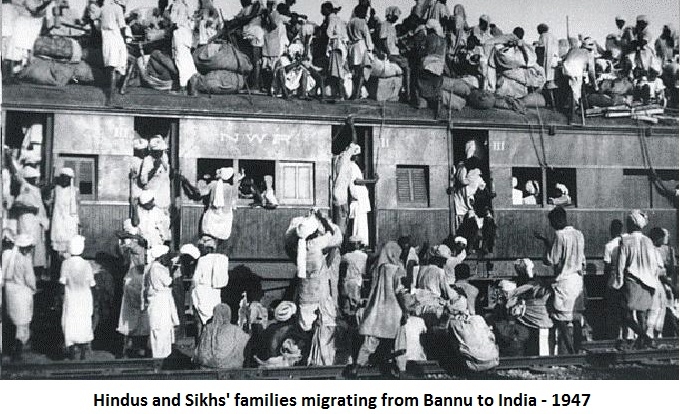
An estimated 14–20 million people were uprooted in the largest forced migration in human history. Up to two million were killed, and 75,000–100,000 women were abducted and raped. This was not random chaos — it was calculated ethnic cleansing.
Hindus and Sikhs in Muslim-majority West Punjab, Sindh, NWFP, and East Bengal faced targeted massacres. The Rawalpindi killings of March 1947, the torching of Hindu quarters in Lahore, and the tribal invasion of Jammu & Kashmir all served the same purpose: erase indigenous non-Muslim populations to secure territorial claims.
The Bleeding of East Bengal
The story in Bengal was equally grim. In 1872, Hindus formed 53% of the population in present-day Bangladesh; by 1941, they had fallen to 28%, while Muslims rose to 55%.
While Hindus in West Pakistan were almost wiped out in 1947, 22% remained in East Pakistan in 1951 — only to face decades of persecution. The Noakhali riots (1946), Khulna-Barisal attacks (1947), and the targeted genocide during the 1971 Liberation War drove millions into exile. U.S. diplomat Archer Blood described it as “selective genocide”, with the International Commission of Jurists confirming that Hindus were slaughtered solely because of their religion.
Patterns Within Today’s Borders
The demographic lessons of Partition are not frozen in history — they are unfolding within Bharat’s borders even now.
Kashmir (1989–1990): Nearly the entire Kashmiri Pandit community — 3 to 3.5 lakh people — was driven out by targeted killings and threats from Islamist militants. Loudspeakers from mosques called on Pandits to “convert, leave, or die,” echoing the warnings of 1947.
Kerala’s silent shift: In 1901, Hindus made up 68.5% of Kerala; by 2011, they were down to 54.7%, while Muslims rose from 17.5% to 26.6%. Districts like Malappuram now have Muslim majorities exceeding 70%. The banned Popular Front of India (PFI) and its political arm SDPI grew in this environment.
Central & Eastern tribal belts: In Jharkhand, Odisha, and Chhattisgarh, aggressive Christian missionary activity — often aided by foreign funding — has altered village demographics, creating culturally alienated zones. “Crypto-Christians” retaining Hindu identity for reservation benefits further obscure the real numbers.
Northeast India: Nagaland, Mizoram, and Meghalaya are now overwhelmingly Christian-majority, with histories of separatist insurgencies fuelled by religious conversion during the colonial period. These states illustrate how complete demographic transformation can permanently alter a region’s identity.
One chilling document, “India 2047: Towards Rule of Islam in India”, allegedly prepared by PFI before its ban, outlined strategies for demographic and political consolidation aimed at altering Bharat’s civilisational identity by 2047.
The Warning for the Future
Assam Chief Minister Himanta Biswa Sarma has warned that current census trends suggest Muslims could equal Hindus in the state by 2041, driven by migration and higher birth rates. This is not speculation but a statistical fact.
Partition Horrors Remembrance Day must therefore go beyond ritual mourning. It must be a call to national awareness. It is a civilisational pledge to protect Bharat’s unity. Preventing another Partition, whether sudden or gradual, requires the foresight to connect people, culture, and land as inseparable elements of national integrity.
A nation that forgets its past is condemned to relive it. The ghosts of 1947 still walk among us — the choice is whether we will confront them today or face them in full force tomorrow.
This is exactly what Vinayak Damodar Savarkar meant when he declared, “धर्मांतर हेच राष्ट्रांतर” (religious conversion is national conversion). To him, mass conversion to non-Indic faiths was not just a matter of personal belief — it was a civilisational fracture, shifting cultural and political loyalties beyond Bharat’s natural borders. The Partition of 1947 was the most violent manifestation of this truth, and its lessons remain urgent even today.
The Partition of 1947: A Demographic Outcome
For centuries, Bharat was one continuous civilisation united by culture, spirituality and traditions, even if it was politically divided into kingdoms. Over time, foreign invasions and religious conversions altered the demographic makeup of certain regions.
In Punjab, the 1941 British census recorded a Muslim majority of 53.2% — a slender margin that nonetheless proved decisive in the demand for Pakistan. Partition followed, enforced through unprecedented violence and mass expulsions, deliberately engineered to create religiously homogenous territories.
An estimated 14–20 million people were uprooted in the largest forced migration in human history. Up to two million were killed, and 75,000–100,000 women were abducted and raped. This was not random chaos — it was calculated ethnic cleansing.
Hindus and Sikhs in Muslim-majority West Punjab, Sindh, NWFP, and East Bengal faced targeted massacres. The Rawalpindi killings of March 1947, the torching of Hindu quarters in Lahore, and the tribal invasion of Jammu & Kashmir all served the same purpose: erase indigenous non-Muslim populations to secure territorial claims.
The Bleeding of East Bengal
The story in Bengal was equally grim. In 1872, Hindus formed 53% of the population in present-day Bangladesh; by 1941, they had fallen to 28%, while Muslims rose to 55%.
While Hindus in West Pakistan were almost wiped out in 1947, 22% remained in East Pakistan in 1951 — only to face decades of persecution. The Noakhali riots (1946), Khulna-Barisal attacks (1947), and the targeted genocide during the 1971 Liberation War drove millions into exile. U.S. diplomat Archer Blood described it as “selective genocide”, with the International Commission of Jurists confirming that Hindus were slaughtered solely because of their religion.
Patterns Within Today’s Borders
The demographic lessons of Partition are not frozen in history — they are unfolding within Bharat’s borders even now.
Kashmir (1989–1990): Nearly the entire Kashmiri Pandit community — 3 to 3.5 lakh people — was driven out by targeted killings and threats from Islamist militants. Loudspeakers from mosques called on Pandits to “convert, leave, or die,” echoing the warnings of 1947.
Kerala’s silent shift: In 1901, Hindus made up 68.5% of Kerala; by 2011, they were down to 54.7%, while Muslims rose from 17.5% to 26.6%. Districts like Malappuram now have Muslim majorities exceeding 70%. The banned Popular Front of India (PFI) and its political arm SDPI grew in this environment.
Central & Eastern tribal belts: In Jharkhand, Odisha, and Chhattisgarh, aggressive Christian missionary activity — often aided by foreign funding — has altered village demographics, creating culturally alienated zones. “Crypto-Christians” retaining Hindu identity for reservation benefits further obscure the real numbers.
Northeast India: Nagaland, Mizoram, and Meghalaya are now overwhelmingly Christian-majority, with histories of separatist insurgencies fuelled by religious conversion during the colonial period. These states illustrate how complete demographic transformation can permanently alter a region’s identity.
One chilling document, “India 2047: Towards Rule of Islam in India”, allegedly prepared by PFI before its ban, outlined strategies for demographic and political consolidation aimed at altering Bharat’s civilisational identity by 2047.
The Warning for the Future
Assam Chief Minister Himanta Biswa Sarma has warned that current census trends suggest Muslims could equal Hindus in the state by 2041, driven by migration and higher birth rates. This is not speculation but a statistical fact.
Partition Horrors Remembrance Day must therefore go beyond ritual mourning. It must be a call to national awareness. It is a civilisational pledge to protect Bharat’s unity. Preventing another Partition, whether sudden or gradual, requires the foresight to connect people, culture, and land as inseparable elements of national integrity.
A nation that forgets its past is condemned to relive it. The ghosts of 1947 still walk among us — the choice is whether we will confront them today or face them in full force tomorrow.