Ram as Myth, Ravan as Hero – The Politics of Liberal Hypocrisy
13 Aug 2025 15:27:41
In a strange twist of ideological gymnastics, the same “left-liberal” crowd that rolls its eyes at the Ramayana as mere mythology is now busy plucking Ravan out of its pages and crowning him a tribal hero. This isn’t scholarship. This is strategy.
For decades, a network of left-leaning academics, missionary outfits, and activist fronts has been hard at work severing Vanvasis from their dhārmic roots. Their method? Replace Shri Ram with Ravan as an icon of “resistance.” Not to empower, but to alienate. Not to preserve heritage, but to fracture Hindu civilisational unity.
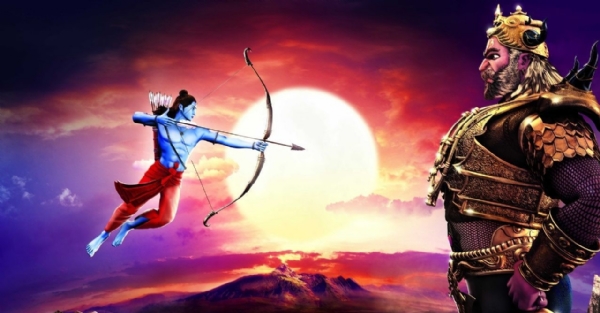
They mock gods as fiction. Then, they slice them into caste-based compartments — “upper caste,” “Dalit,” “tribal.” And for forest-dwelling communities, the script gets even more poisonous: You are not Hindu. You worship nature, not gods. You are the descendants of Asuras. And Ravan is your king. Ram is your oppressor.
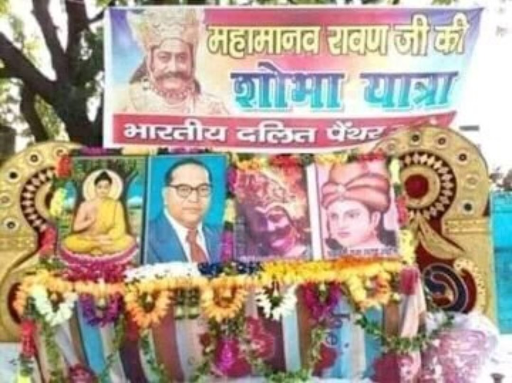
If you’ve seen the posters, you know what I mean. Tribals worshipping Ravan. Slogans hailing him as a god. This is not some organic cultural revival. This is slow poison — drip-fed for decades through classrooms, NGOs, activist literature, and even pulp novels masquerading as history.
The Manufactured Link Between Vanvasis and Asuras
Let’s be clear: equating Vanvasis with Asuras is neither historically nor spiritually accurate. In the dharmic worldview, “Asura” is not a caste, race, or ethnic tag. It’s a moral category. An Asura is defined by guna (qualities) and karma (actions) — arrogance over humility, chaos over order, cruelty over compassion.
Ravan fits that definition perfectly. Yes, he was a scholar, a musician, and a devotee of Lord Shiva. But he was also a tyrant who abducted a woman, defied sages, and ruled through fear. He wasn’t a misunderstood revolutionary. He was the antagonist of the Ramayana by choice, not by birth.
Now contrast that with real Vanvasi communities — people who live in balance with nature, revere rivers and forests, and have safeguarded Sanatan values for centuries. They are not destroyers of dharma; they are its guardians.
Was Ravan a Vanvasi? Absolutely Not.
Ravan’s father, Vishrava, was a learned Brahmin; his mother, Kaikesi, belonged to a Rakshasa lineage. This mixed heritage gave Ravan his knowledge as well as his asuric tendencies. But there is no cultural, geographic, or spiritual overlap between him and India’s tribal communities.
In fact, the Ramayana’s forest episodes show the opposite — Ram’s closest allies were Vanvasis: Shabari Mata, Hanuman, Sugreev, Nal, Neel. Even Ravan’s own wife, Mandodari, called Ram a Vanvasi. The bond between Ram and forest-dwellers is one of trust and devotion — not oppression.
The Imported Identity Game
The terms “Adivasi” and “Moolnivasi” are colonial imports. In India, there was no historic fracture where one group displaced another like in America or Australia. Tribals and non-tribals have lived side by side for millennia, sharing food, festivals, and gods. The Aryan Invasion Theory — used to justify these divisions — has been discredited by historians, geneticists, and even Dr. B.R. Ambedkar.
So why push the “Ravan-as-tribal-hero” story? Because if you accept that all Indians share a common ancestry and spiritual heritage, the whole divide-and-rule narrative collapses. And certain groups simply can’t afford that.
The Literary-Political Alliance
Writers like Sharad Tandale have portrayed Ravan as a symbol of Bahujan resistance — purely as a political statement. These are works of fiction, not archaeological or scriptural truth. Yet they are sold to the youth as “alternative history.” It’s not empowerment; it’s propaganda.
One Epic, Many Lies
Notice the pattern: For the Ram Mandir debate, they called the Ramayana a myth. For South Indian politics, Ravan became a Dravidian king. For Vanvasis, suddenly he’s a forest-dwelling ancestor. One epic, multiple spins — each tailored to a political agenda.
This isn’t confusion. This is calculation. The goal? Pit caste against caste, tribe against tribe, region against region — and present themselves as the saviours.
The Bottom Line
Ravan wasn’t a symbol of resistance. He was a tyrant who embodied arrogance and adharma. Glorifying him is not pride; it’s cultural self-betrayal. And the people pushing this narrative know exactly what they’re doing: divide, convert, conquer — again.
The only antidote is clarity. The truth is simple: Vanvasis are not heirs of an Asura legacy; they are the protectors of dharma. Ram is not their oppressor; he has always been their ally. The sooner we reclaim that truth, the sooner we close the door on this dangerous historical fraud.