Malegaon Blast Case: Years of Cruelty They Had To Face in Silence
02 Aug 2025 11:49:26
"I was physically and verbally traumatised to the extent that I wanted to commit suicide," and "My own colleague started slapping me without any respite and also started kicking me all over my body including private parts". These are not metaphors, but lived experiences from those falsely accused in the 2008 Malegaon bomb blasts, revealing the raw, dehumanising brutality they had to endure.
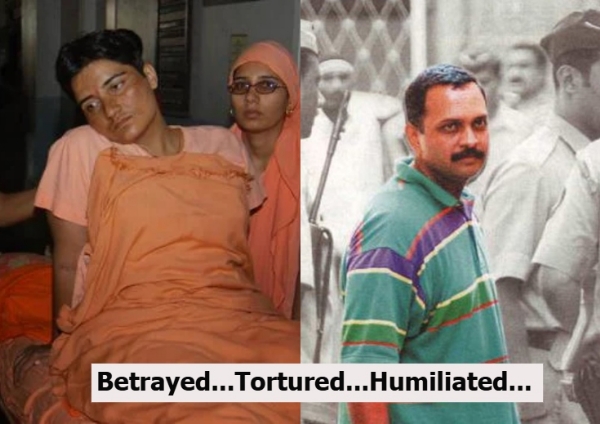
After 17 long years of trials, a Special National Investigation Agency (NIA) court finally acquitted all seven accused, including former BJP MP Pragya Singh Thakur, Lt. Col. Prasad Purohit, Major (retd.) Ramesh Upadhyay, Ajay Rahirkar, Sudhakar Dwivedi, Sudhakar Chaturvedi, and Sameer Kulkarni in connection with the 2008 Malegaon blast cases. But behind this legal victory lies the horrifying physical and psychological abuse inflicted upon them by the authorities.
From beatings to forced isolation, their bodies bore the marks of physical pain and humiliation. This systematic abuse was not merely the result of a flawed investigation; it was a deliberate effort to force propaganda that suited their outcomes.
It should be noted that the acquittal of all the accused strongly condemned the investigation and the narrative it had created. This comes as the judgment, delivered by Special Judge A.K. Lahoti, consisted of powerful statements that addressed the case's core. It emphasised that "mere suspicion cannot replace real proof" and that a court "cannot convict based on perception" or moral assumptions alone. He also made a pointed remark, seemingly responding to years of public discussion, saying, "Conviction cannot be based on moral grounds".
These were not just legal technicalities; they were a direct criticism of the "saffron terror" label that had followed the accused for almost two decades. By rejecting this propaganda, the court indirectly called out the political and media climate that had already judged the accused based on their ideology, urging a deeper look into how this case was built from the beginning.
In the courtroom, the emotional toll of the long ordeal was clear. Pragya Singh Thakur, speaking to the judge, expressed the pain she had endured: "This ruined my whole life... I was living as a sanyaasi and was labelled a terrorist." Lt. Col. Prasad Purohit, who had been a serving military officer at the time of his arrest, expressed his gratitude to the court for giving him a "fair opportunity" to clear his name. "I can now serve my organisation again with the same conviction," he said. His words revealed the heartbreak of a dedicated soldier whose life and service to the nation had been interrupted unjustly. Beneath these emotions lay harrowing experiences, where they were forced to endure both physical pain and humiliation for many years.
Sadhvi Pragya subjected to life-threatening torture
Pragya Singh Thakur, a sanyasi who had renounced worldly life, described an ordeal that began with a 13-day illegal detention. She was subjected to relentless beatings with a belt, day and night for 24 days. Late Hemant Karkare, the then ATS Chief, Param Bir Singh, the then joint commissioner of ATS and other ATS officials – all men – tortured her.
“Param Bir Singh had snatched the belts of two inspectors - one male and another female - and told them that you lack strength. Hand over the belt to me. I will handle her while hurling the filthiest of abuses, he asserted. They showered all their wrath, anger and stamina on me by flogging me with their belts. My head was banged against a wall. They tormented me to the extent that I became unconscious, following which they took me to some hospital secretly and when that hospital submitted its report, it stated that because of the way I was thrashed and beaten, my lungs were damaged, because of which I fainted and faced severe difficulty in breathing.”
Apart from this, she also said in the court that the Maharashtra ATS asked her disciple Bhimbhai Pasricha to beat her with sticks, belts, etc, on her palms, forearms, soles, etc. When he refused to do so, he was severely beaten by the Maharashtra ATS. Ultimately, with the greatest reluctance, he complied with the Maharashtra ATS orders but obviously being her disciple, he exerted the very minimum of force on me. He was then pushed aside by a member of the Maharashtra ATS squad known as Khanwilkar, who then himself commenced beating her severely with a belt on my hands, forearms, palms, feet, soles, causing me bruises, swelling and contusions in these areas.
“My current state is such that I struggle to even walk independently. I manage to walk only 4-5 steps and there are days when I have been bedridden because my spinal cord has been damaged and because of that torture, I am facing severe health issues and I have been told that there is a chance that I may never be able to recuperate,” she told to Republic in Oct 2020.
Prior to this, Sadhvi had told a judge in 2008 that, “ATS officials threatened to strip me and hang me upside down if I did not confess about my involvement in the blast. I am mentally disturbed and not able to eat anything”.
She also accused ATS officials of listening to obscene CDs. Throughout her incarceration, she maintained that this sustained abuse, combined with numerous narco-analysis and polygraph tests, directly contributed to her diagnosis of breast cancer. Moreover, she was reportedly denied cancer treatment in 2013, too.
Lt Col Prasad Purohit
The shocking 24-page letter was written by Lt.Col.Shrikant Purohit to the National Human Rights Commission in December 2013, describing how he was tortured for weeks by a Military Intelligence Officer and Maharashtra Police ATS team in October and November 2008. In his complaint, he said he was brutally tortured by Maharashtra ATS officers late Hemant Karkare, Parambir Singh and Military Intelligence Officer Col. Rajiv Kumar Srivastav alias RK Srivastav, then based in Delhi HQ.
In his heart-wrenching complaint, Lt. Col. Purohit also accuses other Maharashtra ATS officers Mohan Kulkarni (then ACP-Mumbai in ATS) and Arun Khanvilkar (then Senior Inspector of ATS), of brutally torturing him for weeks pre and post recording of the arrest on November 5, 2008.
He stated that on October 29, 2008, he was taken to an isolated bungalow in Khandala, where Karkare, Parambir Singh, and at least six ATS constables attacked him. They tied his wrists to a chair, broke his right knee, and subjected him to illegal interrogation. The torture was not merely to extract information but was part of a larger political agenda. He was pressured to implicate leaders such as Yogi Adityanath and others, framing the case within the politically charged narrative of "Hindu Terror."
Purohit stated, "Karkare and Parambir Singh were time and again forcing me to give out the details of my intelligence network and a list of my sources and assets who had assisted me in mapping SIMI, ISI, and Dr. Zakir Naik’s activities. I refused to divulge my source network as it is against the basic ethos of intelligence."
He also recalled, "I was meted with treatment which not even any animal would experience and was treated worse than a prisoner of war of an enemy country. Karkare, Parambir Singh, and Col. Shrivastav continued insisting that I should own up to the Malegaon bomb blast and that I should name senior right-wing leaders of the RSS and VHP, including Yogi Adityanath, the then Member of Parliament from Uttar Pradesh. This torture continued incessantly till 3rd Nov 2008."
“Col.R K Srivastava suddenly pounced on me from his chair and initiated a brutal physical assault with vulgar possibly abusive remarks about my mother, wife, and sister. Col. R. K. Srivastava started slapping me without any respite and also started kicking me all over my body. As if everything was pre-rehearsed and planned the officers of Inspector level of ATS Maharashtra Police besides some constables got into the action and virtually pinned me down to my chair holding my hands behind the backrest and pulling my hair thereby exposing my face to receive blows on my face,” said Purohit in details the torture on him to take responsibility for Malegaon blast.
Purohit details how the ATS officers tortured and stripped and attacked him in his private parts to confess and own up to the responsibility of planting bombs and explosives used in the Malegaon blast.
The then-ATS officers threatened him that they would plant explosives at his home and put his mother and wife in prison. “Your kids will be orphans,” they shouted at him. For weeks, every hour, the interrogation team will inflict injury and twist his private parts by stripping him and hanging him on iron rods in different positions. He further revealed that he was informed of plans to gun him down, saying, "Custodial assassination was confirmed." He also stated that ATS officials threatened his wife with dire consequences and had said RDX would be planted in his home to frame him.
He even went on to say that several witnesses were tortured, threatened, and detained, at times at gunpoint, to extract prefabricated statements as required by the ATS and/or other political masters.
This misconduct was not limited to the two main accused. Another accused and retired army officer, Ramesh Upadhyay, had also made similar accusations against Singh, saying he was tortured by Parambir Singh and Sukhwinder Singh in custody. “Parambir and Sukhwinder physically abused me and then threatened to parade my wife and daughter naked in the police station and get them raped by all the officers here,” Upadhyay had said.
Another accused, Sudhakar Chaturvedi, claimed that the ATS planted RDX and a pistol in his home to frame him. This allegation was deemed so credible that the Special NIA Court, upon delivering its acquittal, took the extraordinary step of directing the Additional Director General of the ATS to launch a formal probe into the matter. This post-verdict order serves as a powerful judicial validation of the long-standing claims of a frame-up.
Similarly, Sudhakar Dwivedi retracted his confession before a magistrate, insisting it was the "outcome of torture". This claim was later directly supported by the NIA in its 2016 supplementary chargesheet, which refused to rely on any of the MCOCA confessions obtained by the ATS. The pattern of abuse was further confirmed by the numerous prosecution witnesses who turned hostile. Several testified in court that they had been illegally detained, tortured, and forced by the ATS to falsely name RSS leaders.
The collateral damage
While these seven individuals bore the direct brunt of the investigation, the case also inflicted a profound and lasting trauma on their families. For nearly a decade, they lived with the stigma of having a loved one branded a terrorist, navigating social ostracisation, financial ruin, and the immense emotional strain of a protracted legal battle. Their suffering represents a form of collateral damage — a punishment inflicted upon the innocent, regardless of the trial's outcome.
Lt. Col. Purohit's wife, Aparna, who broke down in tears in the courtroom when her husband was finally granted bail, described their struggle as a battle the family "fought as a unit". Her statement that "the battle is still not over" even after his release on bail spoke to the deep scars left by the ordeal. She poignantly noted the impact on her children, stating, "During all this period, my children too have suffered. I would like to see him (Prasad) spending his time with them at home".
Ahead of the final verdict in the 2008 Malegaon blast case, Upadhyay spoke of being "financially ruined & socially boycotted for almost a decade”. This speaks volumes about the fact that they were tortured by the very system that was meant to deliver justice, forced to endure years of agony for a case that the courts ultimately found to be devoid of credible evidence.
It is not-so-shocking how the voice of human rights often finds volume only in selective moments, when certain individuals, aligned with specific ideological leanings, face adversity, even if based on contested or unverified claims. In such cases, outrage echoes across platforms and global attention is swiftly drawn. Yet, when figures such as Lt. Colonel Shrikant Purohit or Sadhvi Pragya faced documented instances of custodial abuse, prolonged incarceration without conviction, and reputational vilification, the very guardians of civil liberties chose silence. The absence of concern, commentary, or even basic empathy during their darkest hours reveals a disturbing inconsistency in the moral compass of those who otherwise speak of justice and fairness.
Anyways, these chilling accounts of the personal suffering endured by the accused reveal a system more focused on advancing a political narrative than seeking the truth. However, the crucial question remains: who is responsible for this miscarriage of justice? The suffering of the accused is now etched in the history of this case, as is the failure of the system that allowed such torture to occur.
While the verdict brings long-awaited justice, it also leaves an open wound — the years lost, the pain endured, and the irreversible damage to their reputations and families. The suffering of the blast victims has been overshadowed by the injustice faced by the accused, who became the new victims of a system that should have protected them. The pain they endured must never be forgotten, and their fight for justice should not end with their acquittal. It must continue with a call for systemic change — one that guarantees fairness, accountability, and integrity in our criminal justice system.
Source: Vayuveg
After 17 long years of trials, a Special National Investigation Agency (NIA) court finally acquitted all seven accused, including former BJP MP Pragya Singh Thakur, Lt. Col. Prasad Purohit, Major (retd.) Ramesh Upadhyay, Ajay Rahirkar, Sudhakar Dwivedi, Sudhakar Chaturvedi, and Sameer Kulkarni in connection with the 2008 Malegaon blast cases. But behind this legal victory lies the horrifying physical and psychological abuse inflicted upon them by the authorities.
From beatings to forced isolation, their bodies bore the marks of physical pain and humiliation. This systematic abuse was not merely the result of a flawed investigation; it was a deliberate effort to force propaganda that suited their outcomes.
It should be noted that the acquittal of all the accused strongly condemned the investigation and the narrative it had created. This comes as the judgment, delivered by Special Judge A.K. Lahoti, consisted of powerful statements that addressed the case's core. It emphasised that "mere suspicion cannot replace real proof" and that a court "cannot convict based on perception" or moral assumptions alone. He also made a pointed remark, seemingly responding to years of public discussion, saying, "Conviction cannot be based on moral grounds".
These were not just legal technicalities; they were a direct criticism of the "saffron terror" label that had followed the accused for almost two decades. By rejecting this propaganda, the court indirectly called out the political and media climate that had already judged the accused based on their ideology, urging a deeper look into how this case was built from the beginning.
In the courtroom, the emotional toll of the long ordeal was clear. Pragya Singh Thakur, speaking to the judge, expressed the pain she had endured: "This ruined my whole life... I was living as a sanyaasi and was labelled a terrorist." Lt. Col. Prasad Purohit, who had been a serving military officer at the time of his arrest, expressed his gratitude to the court for giving him a "fair opportunity" to clear his name. "I can now serve my organisation again with the same conviction," he said. His words revealed the heartbreak of a dedicated soldier whose life and service to the nation had been interrupted unjustly. Beneath these emotions lay harrowing experiences, where they were forced to endure both physical pain and humiliation for many years.
Sadhvi Pragya subjected to life-threatening torture
Pragya Singh Thakur, a sanyasi who had renounced worldly life, described an ordeal that began with a 13-day illegal detention. She was subjected to relentless beatings with a belt, day and night for 24 days. Late Hemant Karkare, the then ATS Chief, Param Bir Singh, the then joint commissioner of ATS and other ATS officials – all men – tortured her.
“Param Bir Singh had snatched the belts of two inspectors - one male and another female - and told them that you lack strength. Hand over the belt to me. I will handle her while hurling the filthiest of abuses, he asserted. They showered all their wrath, anger and stamina on me by flogging me with their belts. My head was banged against a wall. They tormented me to the extent that I became unconscious, following which they took me to some hospital secretly and when that hospital submitted its report, it stated that because of the way I was thrashed and beaten, my lungs were damaged, because of which I fainted and faced severe difficulty in breathing.”
Apart from this, she also said in the court that the Maharashtra ATS asked her disciple Bhimbhai Pasricha to beat her with sticks, belts, etc, on her palms, forearms, soles, etc. When he refused to do so, he was severely beaten by the Maharashtra ATS. Ultimately, with the greatest reluctance, he complied with the Maharashtra ATS orders but obviously being her disciple, he exerted the very minimum of force on me. He was then pushed aside by a member of the Maharashtra ATS squad known as Khanwilkar, who then himself commenced beating her severely with a belt on my hands, forearms, palms, feet, soles, causing me bruises, swelling and contusions in these areas.
“I was physically and verbally traumatised to the extent that I wanted to commit suicide.”
“My current state is such that I struggle to even walk independently. I manage to walk only 4-5 steps and there are days when I have been bedridden because my spinal cord has been damaged and because of that torture, I am facing severe health issues and I have been told that there is a chance that I may never be able to recuperate,” she told to Republic in Oct 2020.
Prior to this, Sadhvi had told a judge in 2008 that, “ATS officials threatened to strip me and hang me upside down if I did not confess about my involvement in the blast. I am mentally disturbed and not able to eat anything”.
She also accused ATS officials of listening to obscene CDs. Throughout her incarceration, she maintained that this sustained abuse, combined with numerous narco-analysis and polygraph tests, directly contributed to her diagnosis of breast cancer. Moreover, she was reportedly denied cancer treatment in 2013, too.
Lt Col Prasad Purohit
The shocking 24-page letter was written by Lt.Col.Shrikant Purohit to the National Human Rights Commission in December 2013, describing how he was tortured for weeks by a Military Intelligence Officer and Maharashtra Police ATS team in October and November 2008. In his complaint, he said he was brutally tortured by Maharashtra ATS officers late Hemant Karkare, Parambir Singh and Military Intelligence Officer Col. Rajiv Kumar Srivastav alias RK Srivastav, then based in Delhi HQ.
In his heart-wrenching complaint, Lt. Col. Purohit also accuses other Maharashtra ATS officers Mohan Kulkarni (then ACP-Mumbai in ATS) and Arun Khanvilkar (then Senior Inspector of ATS), of brutally torturing him for weeks pre and post recording of the arrest on November 5, 2008.
He stated that on October 29, 2008, he was taken to an isolated bungalow in Khandala, where Karkare, Parambir Singh, and at least six ATS constables attacked him. They tied his wrists to a chair, broke his right knee, and subjected him to illegal interrogation. The torture was not merely to extract information but was part of a larger political agenda. He was pressured to implicate leaders such as Yogi Adityanath and others, framing the case within the politically charged narrative of "Hindu Terror."
Purohit stated, "Karkare and Parambir Singh were time and again forcing me to give out the details of my intelligence network and a list of my sources and assets who had assisted me in mapping SIMI, ISI, and Dr. Zakir Naik’s activities. I refused to divulge my source network as it is against the basic ethos of intelligence."
He also recalled, "I was meted with treatment which not even any animal would experience and was treated worse than a prisoner of war of an enemy country. Karkare, Parambir Singh, and Col. Shrivastav continued insisting that I should own up to the Malegaon bomb blast and that I should name senior right-wing leaders of the RSS and VHP, including Yogi Adityanath, the then Member of Parliament from Uttar Pradesh. This torture continued incessantly till 3rd Nov 2008."
“Col.R K Srivastava suddenly pounced on me from his chair and initiated a brutal physical assault with vulgar possibly abusive remarks about my mother, wife, and sister. Col. R. K. Srivastava started slapping me without any respite and also started kicking me all over my body. As if everything was pre-rehearsed and planned the officers of Inspector level of ATS Maharashtra Police besides some constables got into the action and virtually pinned me down to my chair holding my hands behind the backrest and pulling my hair thereby exposing my face to receive blows on my face,” said Purohit in details the torture on him to take responsibility for Malegaon blast.
Purohit details how the ATS officers tortured and stripped and attacked him in his private parts to confess and own up to the responsibility of planting bombs and explosives used in the Malegaon blast.
The then-ATS officers threatened him that they would plant explosives at his home and put his mother and wife in prison. “Your kids will be orphans,” they shouted at him. For weeks, every hour, the interrogation team will inflict injury and twist his private parts by stripping him and hanging him on iron rods in different positions. He further revealed that he was informed of plans to gun him down, saying, "Custodial assassination was confirmed." He also stated that ATS officials threatened his wife with dire consequences and had said RDX would be planted in his home to frame him.
He even went on to say that several witnesses were tortured, threatened, and detained, at times at gunpoint, to extract prefabricated statements as required by the ATS and/or other political masters.
This misconduct was not limited to the two main accused. Another accused and retired army officer, Ramesh Upadhyay, had also made similar accusations against Singh, saying he was tortured by Parambir Singh and Sukhwinder Singh in custody. “Parambir and Sukhwinder physically abused me and then threatened to parade my wife and daughter naked in the police station and get them raped by all the officers here,” Upadhyay had said.
Another accused, Sudhakar Chaturvedi, claimed that the ATS planted RDX and a pistol in his home to frame him. This allegation was deemed so credible that the Special NIA Court, upon delivering its acquittal, took the extraordinary step of directing the Additional Director General of the ATS to launch a formal probe into the matter. This post-verdict order serves as a powerful judicial validation of the long-standing claims of a frame-up.
Similarly, Sudhakar Dwivedi retracted his confession before a magistrate, insisting it was the "outcome of torture". This claim was later directly supported by the NIA in its 2016 supplementary chargesheet, which refused to rely on any of the MCOCA confessions obtained by the ATS. The pattern of abuse was further confirmed by the numerous prosecution witnesses who turned hostile. Several testified in court that they had been illegally detained, tortured, and forced by the ATS to falsely name RSS leaders.
The collateral damage
While these seven individuals bore the direct brunt of the investigation, the case also inflicted a profound and lasting trauma on their families. For nearly a decade, they lived with the stigma of having a loved one branded a terrorist, navigating social ostracisation, financial ruin, and the immense emotional strain of a protracted legal battle. Their suffering represents a form of collateral damage — a punishment inflicted upon the innocent, regardless of the trial's outcome.
Lt. Col. Purohit's wife, Aparna, who broke down in tears in the courtroom when her husband was finally granted bail, described their struggle as a battle the family "fought as a unit". Her statement that "the battle is still not over" even after his release on bail spoke to the deep scars left by the ordeal. She poignantly noted the impact on her children, stating, "During all this period, my children too have suffered. I would like to see him (Prasad) spending his time with them at home".
Ahead of the final verdict in the 2008 Malegaon blast case, Upadhyay spoke of being "financially ruined & socially boycotted for almost a decade”. This speaks volumes about the fact that they were tortured by the very system that was meant to deliver justice, forced to endure years of agony for a case that the courts ultimately found to be devoid of credible evidence.
It is not-so-shocking how the voice of human rights often finds volume only in selective moments, when certain individuals, aligned with specific ideological leanings, face adversity, even if based on contested or unverified claims. In such cases, outrage echoes across platforms and global attention is swiftly drawn. Yet, when figures such as Lt. Colonel Shrikant Purohit or Sadhvi Pragya faced documented instances of custodial abuse, prolonged incarceration without conviction, and reputational vilification, the very guardians of civil liberties chose silence. The absence of concern, commentary, or even basic empathy during their darkest hours reveals a disturbing inconsistency in the moral compass of those who otherwise speak of justice and fairness.
Anyways, these chilling accounts of the personal suffering endured by the accused reveal a system more focused on advancing a political narrative than seeking the truth. However, the crucial question remains: who is responsible for this miscarriage of justice? The suffering of the accused is now etched in the history of this case, as is the failure of the system that allowed such torture to occur.
While the verdict brings long-awaited justice, it also leaves an open wound — the years lost, the pain endured, and the irreversible damage to their reputations and families. The suffering of the blast victims has been overshadowed by the injustice faced by the accused, who became the new victims of a system that should have protected them. The pain they endured must never be forgotten, and their fight for justice should not end with their acquittal. It must continue with a call for systemic change — one that guarantees fairness, accountability, and integrity in our criminal justice system.
Source: Vayuveg
.
.
.
.
.
.