Govt cannot run from jail. That is why the 130th Constitution amendment bill matters
25 Aug 2025 10:57:45
In a democracy, the moral compass of leadership is as vital as its legal framework. Yet Indian politics often faces a troubling paradox. The Association for Democratic Reforms has reported that nearly 40% of the nation’s Chief Ministers face criminal cases. This highlights a crisis of credibility in governance, where individuals under serious allegations continue to hold power, eroding public trust and weakening constitutional morality.
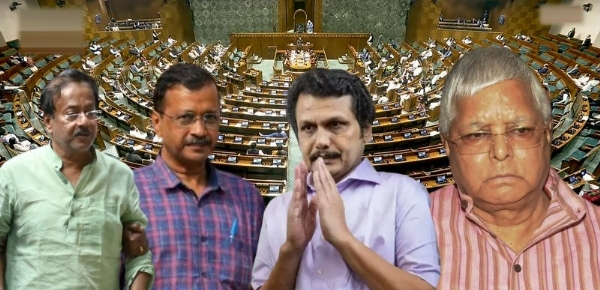
Against this backdrop, Union Home Minister Amit Shah introduced the Constitution (One Hundred and Thirtieth Amendment) Bill, 2025, in the Lok Sabha. In his words, elected representatives must “embody public trust and uphold standards of conduct beyond suspicion.” The bill marks an attempt to restore that lost integrity—ensuring that power does not shield the accused and that no leader is above the law.
Currently, Indian law disqualifies legislators only after conviction. Section 8 of the Representation of the People Act, 1951, bars those convicted for at least two years from holding office. But in India’s famously slow judicial process, convictions can take decades. This creates a vacuum: leaders remain in office, sometimes even from behind bars, while cases crawl through the courts.
The Constitution itself had no provision to remove a Prime Minister, Chief Minister, or minister merely because they were arrested or detained. Resigning upon arrest had long been a matter of political morality rather than constitutional compulsion. But as Shah highlighted, “many leaders refused to resign despite being jailed,” eroding that moral code.
The judiciary, too, recognised this gap. In Manoj Narula v. Union of India (2014), the Supreme Court noted there was no legal bar on appointing ministers with criminal charges, though it advised against it. In 2018, the Court again said it could not create such a law and urged Parliament to act. The Law Commission had recommended disqualification once charges were framed, but no government acted decisively.
The 130th Amendment Bill is the government’s response to this long-standing demand.
The bill proposes to amend Articles 75, 164, and 239AA of the Constitution. Its central rule is clear:
The mechanism varies slightly across posts:
Importantly, the bill includes a “reversibility clause.” If released from custody, the leader may be reappointed, making this step a temporary safeguard for institutional dignity rather than a permanent disqualification.
Several high-profile cases show how the absence of such a rule weakened governance:
Arvind Kejriwal: In 2024, the Delhi Chief Minister was arrested in a liquor policy scam. Refusing to resign, he declared he would “run the government from jail.” For six months, Delhi witnessed a constitutional crisis until he finally stepped down.
V. Senthil Balaji: The Tamil Nadu minister continued in office after his 2023 arrest in a cash-for-jobs scam, even after the High Court termed it a “constitutional travesty.” His repeated resignations and reappointments exposed the legislative vacuum.
Lalu Prasad Yadav: In 1997, he refused to step down after being arrested in the fodder scam, instead installing his wife Rabri Devi as Chief Minister while retaining control from behind bars.
A.R. Antulay: The Maharashtra Chief Minister held on despite indictment in a cement distribution scandal, resigning only after a High Court ruling.
Jyoti Priya Mallick: Arrested in 2023 in a multi-crore ration scam, the West Bengal minister remained in office for months before finally being removed under the Governor’s pressure.
Each of these cases illustrates how leaders exploited legal loopholes to cling to office, damaging governance and public trust.
The bill represents more than a legal innovation; it is a moral assertion. For decades, Indian politics relied on a convention that leaders accused of grave offences would step aside. That convention is now shattered. By formalising it into constitutional law, the government seeks to restore a standard once held sacred: that governance must be beyond suspicion.
The 130th Amendment Bill is a bold step to align India’s governance with its democratic ideals. By mandating the removal of leaders in custody for serious offences, it confronts the uncomfortable reality of criminalisation in politics. It ensures that those who hold the highest offices do not do so from the confines of a prison cell.
History has shown that without clear rules, resignation depends on political pressure or judicial intervention. With this bill, resignation becomes a constitutional mandate.
As Amit Shah declared, the essence of democracy is not merely in elections, but in the trust that citizens place in their leaders. That trust must not be betrayed. By institutionalising accountability, the bill seeks to rebuild faith in governance, remind leaders of their moral obligations, and ensure that India’s democracy remains clean, credible, and accountable.
Source: Vayuveg
Against this backdrop, Union Home Minister Amit Shah introduced the Constitution (One Hundred and Thirtieth Amendment) Bill, 2025, in the Lok Sabha. In his words, elected representatives must “embody public trust and uphold standards of conduct beyond suspicion.” The bill marks an attempt to restore that lost integrity—ensuring that power does not shield the accused and that no leader is above the law.
The Need for a Stronger Law
Currently, Indian law disqualifies legislators only after conviction. Section 8 of the Representation of the People Act, 1951, bars those convicted for at least two years from holding office. But in India’s famously slow judicial process, convictions can take decades. This creates a vacuum: leaders remain in office, sometimes even from behind bars, while cases crawl through the courts.
The Constitution itself had no provision to remove a Prime Minister, Chief Minister, or minister merely because they were arrested or detained. Resigning upon arrest had long been a matter of political morality rather than constitutional compulsion. But as Shah highlighted, “many leaders refused to resign despite being jailed,” eroding that moral code.
The judiciary, too, recognised this gap. In Manoj Narula v. Union of India (2014), the Supreme Court noted there was no legal bar on appointing ministers with criminal charges, though it advised against it. In 2018, the Court again said it could not create such a law and urged Parliament to act. The Law Commission had recommended disqualification once charges were framed, but no government acted decisively.
The 130th Amendment Bill is the government’s response to this long-standing demand.
Features of the 130th Amendment Bill
The bill proposes to amend Articles 75, 164, and 239AA of the Constitution. Its central rule is clear:
- If a Prime Minister, Chief Minister, or minister remains in custody for 30 consecutive days for an offence carrying at least five years of punishment, they must vacate office.
- This removal is automatic on the 32nd day, even if no resignation is tendered.
- The provision applies equally to Union ministers, state ministers, and ministers in Union Territories such as Delhi and Jammu & Kashmir.
The mechanism varies slightly across posts:
- Prime Minister: Removed by the President on the advice of the Council of Ministers.
- Chief Minister (State): Removed by the Governor.
- Chief Minister (Union Territory): Removed by the Lieutenant Governor.
Importantly, the bill includes a “reversibility clause.” If released from custody, the leader may be reappointed, making this step a temporary safeguard for institutional dignity rather than a permanent disqualification.
Illustrative Cases: Why This Law Matters
Several high-profile cases show how the absence of such a rule weakened governance:
Arvind Kejriwal: In 2024, the Delhi Chief Minister was arrested in a liquor policy scam. Refusing to resign, he declared he would “run the government from jail.” For six months, Delhi witnessed a constitutional crisis until he finally stepped down.
V. Senthil Balaji: The Tamil Nadu minister continued in office after his 2023 arrest in a cash-for-jobs scam, even after the High Court termed it a “constitutional travesty.” His repeated resignations and reappointments exposed the legislative vacuum.
Lalu Prasad Yadav: In 1997, he refused to step down after being arrested in the fodder scam, instead installing his wife Rabri Devi as Chief Minister while retaining control from behind bars.
A.R. Antulay: The Maharashtra Chief Minister held on despite indictment in a cement distribution scandal, resigning only after a High Court ruling.
Jyoti Priya Mallick: Arrested in 2023 in a multi-crore ration scam, the West Bengal minister remained in office for months before finally being removed under the Governor’s pressure.
Each of these cases illustrates how leaders exploited legal loopholes to cling to office, damaging governance and public trust.
Beyond Politics: A Shift Towards Clean Governance
The bill represents more than a legal innovation; it is a moral assertion. For decades, Indian politics relied on a convention that leaders accused of grave offences would step aside. That convention is now shattered. By formalising it into constitutional law, the government seeks to restore a standard once held sacred: that governance must be beyond suspicion.
The 130th Amendment Bill is a bold step to align India’s governance with its democratic ideals. By mandating the removal of leaders in custody for serious offences, it confronts the uncomfortable reality of criminalisation in politics. It ensures that those who hold the highest offices do not do so from the confines of a prison cell.
History has shown that without clear rules, resignation depends on political pressure or judicial intervention. With this bill, resignation becomes a constitutional mandate.
As Amit Shah declared, the essence of democracy is not merely in elections, but in the trust that citizens place in their leaders. That trust must not be betrayed. By institutionalising accountability, the bill seeks to rebuild faith in governance, remind leaders of their moral obligations, and ensure that India’s democracy remains clean, credible, and accountable.
Source: Vayuveg