The Kerala Story Row: National Awards and the Long History of Bias in Indian Cinema
25 Aug 2025 10:12:43
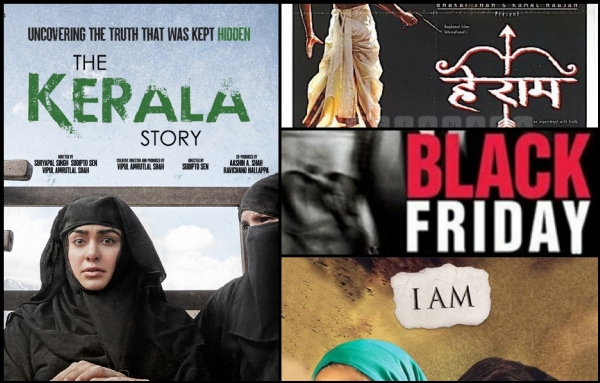
The uproar after The Kerala Story received honours at the recent National Film Awards is not about one film alone. It exposes a selective viewpoint cultivated in Indian cinema for years. For decades, many films have harshly criticised Hindu culture and practices—casting patriarchy, caste discrimination, and injustice as uniquely Hindu failings. Meanwhile, patriarchy, dogmatism, and discrimination within Islam and Christianity have rarely faced equal cinematic scrutiny. The Kerala Story shone a light on this neglected reality; hence, “progressive” groups dismissed it as “hate cinema,” even after it won awards. The resistance is not to craft, but to a Hindu perspective, finally reaching a national stage.
What happened?
On 1 August 2025, the Ministry of Information & Broadcasting announced the 71st National Film Awards: 447 works were honoured—332 feature films, 115 non-feature films, 27 writings, and 16 film critics. Within this list, The Kerala Story received Best Director (Sudipto Sen) and Best Cinematography (Prashantanu Mohapatra). Protests followed at once: “How can a controversial film be rewarded?” Labels like “Hindutva propaganda” were quickly applied. Yet across eras, films aligned with ruling ideas have been rewarded; the change today is that films articulating Hindu viewpoints are finally visible among awardees.
For long, a left-liberal ecosystem framing dominated cinema: Hindu traditions were painted as regressive or superstitious; caste injustice was pinned solely on Hindu society; depictions of Islamic extremism or Christian fundamentalism were softened or avoided. The outcome: a one-sided narrative.
After 2014, a modest shift began. Films such as Uri, The Tashkent Files, The Kashmir Files, and The Kerala Story presented nationalism, Hindu suffering within the country and cultural identity, creating a meltdown within the left-liberal ecosystem.
What was The Kerala Story about?
Released 5 May 2023, it portrays Hindu girls in Kerala ensnared in love-jihad, coerced into conversion, and recruited by ISIS. From its announcement, opponents alleged it would inflame communal hatred; supporters called it an eye-opener. The freshly announced national honours reignited debate. Kerala CM Pinarayi Vijayan condemned the award, calling the film fictional hate propaganda that foments discord in a peace-loving state. At FTII Pune, some students argued that rewarding such films privileges propaganda over art. None of this is new: controversies have accompanied awards before—often for films depicting Hindus as rioters or bigots.
However, the left-liberal ecosystem needs to remember that there have been controversial films that tried to manipulate the audience, creating propaganda. Here is a list of it.
Earlier Awarded/Controversial Films
Parzania (2005) — Dir. Rahul Dholakia
National Awards: Best Direction, Best Actress. Based on the 2002 Gujarat riots, it follows a Parsi family’s trauma and indicts state/societal failures.
Bombay (1995) — Dir. Mani Ratnam
National Awards: Best Cinematography (Rajiv Menon), Best Special Effects. A Hindu–Muslim love story set against the 1992–93 Mumbai riots, foregrounding communal violence and its human cost.
Hey Ram (2000) — Dir./Lead Kamal Haasan
Portrays a Hindu man’s spiral into anti-Muslim hatred post-Partition atrocities and his involvement in the Gandhi assassination plot; shows Hindu nationalists negatively while comparatively muting Partition-era Muslim violence.
Final Solution (documentary on 2002 Gujarat riots)
Initially refused CBFC approval for potentially heightening tensions; later cleared with an ‘A’ certificate in 2004. No National Award, but won at international forums (e.g., Berlin). Accused by critics of bias against Hindu organisations/state.
Black Friday (2007 release; made 2004) — on the 1993 Mumbai blasts.
I Am (2010) — Anthology including a Kashmiri Pandit displacement arc.
Critiqued here for downplaying organised Islamist terror by framing the exodus largely as administrative/systemic failure. National Awards (2012, 59th): Best Hindi Film; Best Lyrics (“Agar Zindagi,” Amitabh Bhattacharya).
Haider (2014) —
National Awards (2015): Five awards, including Best Dialogues (Vishal Bhardwaj), Best Music Director, Best Female Playback, Best Choreography, Best Costume Design. Criticised here for its depiction of the Indian Army and Kashmir.
Conclusion: The pushback to The Kerala Story signals discomfort from entrenched gatekeepers. Its recognition marks a turning: Indian cinema is, at last, making room for a plurality of voices—including a long-marginalised Hindu view.
What happened?
On 1 August 2025, the Ministry of Information & Broadcasting announced the 71st National Film Awards: 447 works were honoured—332 feature films, 115 non-feature films, 27 writings, and 16 film critics. Within this list, The Kerala Story received Best Director (Sudipto Sen) and Best Cinematography (Prashantanu Mohapatra). Protests followed at once: “How can a controversial film be rewarded?” Labels like “Hindutva propaganda” were quickly applied. Yet across eras, films aligned with ruling ideas have been rewarded; the change today is that films articulating Hindu viewpoints are finally visible among awardees.
For long, a left-liberal ecosystem framing dominated cinema: Hindu traditions were painted as regressive or superstitious; caste injustice was pinned solely on Hindu society; depictions of Islamic extremism or Christian fundamentalism were softened or avoided. The outcome: a one-sided narrative.
After 2014, a modest shift began. Films such as Uri, The Tashkent Files, The Kashmir Files, and The Kerala Story presented nationalism, Hindu suffering within the country and cultural identity, creating a meltdown within the left-liberal ecosystem.
What was The Kerala Story about?
Released 5 May 2023, it portrays Hindu girls in Kerala ensnared in love-jihad, coerced into conversion, and recruited by ISIS. From its announcement, opponents alleged it would inflame communal hatred; supporters called it an eye-opener. The freshly announced national honours reignited debate. Kerala CM Pinarayi Vijayan condemned the award, calling the film fictional hate propaganda that foments discord in a peace-loving state. At FTII Pune, some students argued that rewarding such films privileges propaganda over art. None of this is new: controversies have accompanied awards before—often for films depicting Hindus as rioters or bigots.
However, the left-liberal ecosystem needs to remember that there have been controversial films that tried to manipulate the audience, creating propaganda. Here is a list of it.
Earlier Awarded/Controversial Films
Parzania (2005) — Dir. Rahul Dholakia
National Awards: Best Direction, Best Actress. Based on the 2002 Gujarat riots, it follows a Parsi family’s trauma and indicts state/societal failures.
Bombay (1995) — Dir. Mani Ratnam
National Awards: Best Cinematography (Rajiv Menon), Best Special Effects. A Hindu–Muslim love story set against the 1992–93 Mumbai riots, foregrounding communal violence and its human cost.
Hey Ram (2000) — Dir./Lead Kamal Haasan
Portrays a Hindu man’s spiral into anti-Muslim hatred post-Partition atrocities and his involvement in the Gandhi assassination plot; shows Hindu nationalists negatively while comparatively muting Partition-era Muslim violence.
Final Solution (documentary on 2002 Gujarat riots)
Initially refused CBFC approval for potentially heightening tensions; later cleared with an ‘A’ certificate in 2004. No National Award, but won at international forums (e.g., Berlin). Accused by critics of bias against Hindu organisations/state.
Black Friday (2007 release; made 2004) — on the 1993 Mumbai blasts.
Based on Hussain Zaidi’s book Black Friday: The True Story of the Bombay Bomb Blasts, the film presents a largely one-sided account of the events before, during, and after the March 12, 1993 serial bombings in Mumbai. It explores the rise of radicalism, the underworld, and the networks of terrorism. With its use of real names, detailed depictions of incidents, and references to court proceedings, the film carries a strong documentary-like tone.
An attempt was made to release the film while the trial of the bomb blasts was still ongoing. In 2004, the Bombay High Court imposed a ban, ruling that portraying actual names of the accused and precise details of the events could prejudice the judicial process. As a result, the film remained stalled for nearly three years and was eventually released on February 9, 2007, after receiving clearance from the Supreme Court.
At the 54th National Film Awards (2007), Black Friday won the award for Best Editing (Anish Dixit).
I Am (2010) — Anthology including a Kashmiri Pandit displacement arc.
Critiqued here for downplaying organised Islamist terror by framing the exodus largely as administrative/systemic failure. National Awards (2012, 59th): Best Hindi Film; Best Lyrics (“Agar Zindagi,” Amitabh Bhattacharya).
Haider (2014) —
National Awards (2015): Five awards, including Best Dialogues (Vishal Bhardwaj), Best Music Director, Best Female Playback, Best Choreography, Best Costume Design. Criticised here for its depiction of the Indian Army and Kashmir.
Conclusion: The pushback to The Kerala Story signals discomfort from entrenched gatekeepers. Its recognition marks a turning: Indian cinema is, at last, making room for a plurality of voices—including a long-marginalised Hindu view.