Rethinking Human Rights: From Western Reaction to Integral Renewal
17 Sep 2025 11:50:21
-Chintan Mokashi
We at the Indian Human Rights Council observed the foundation day of the Council on 14 September 2025 at Ferguson College, Pune. It was a time for introspection and to review the activities of the Human Rights organisations worldwide. We believed we must ask not only what we have built but what we have overlooked. We must ask not only what we have protected but what we have left unattended. And above all, we felt it was time we must ask: Whose rights have we honoured, and whose rights have we ignored?
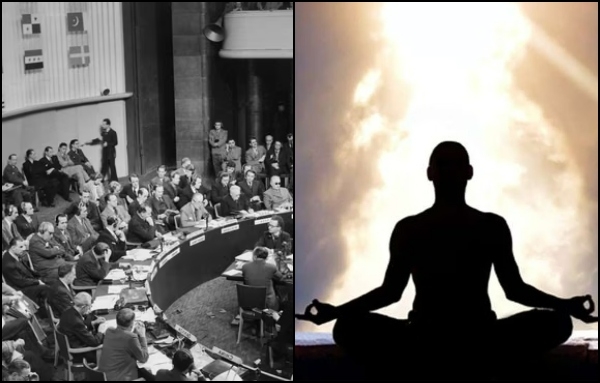
The modern architecture of human rights, as enshrined in the Universal Declaration of 1948, was born not from timeless wisdom—but from the ashes of war. It was a reactionary framework, forged in the aftermath of World War I and II, when the West sought to reclaim moral legitimacy after the horrors of fascism, genocide, and imperial collapse. But let us not forget: this model was drafted by victors, not victims. It was shaped by liberal Enlightenment ideals—individualism, secularism, and market freedom—while ignoring the communitarian, spiritual, and ecological values of non-Western civilizations.
As historian Samuel Moyn notes, “Human rights became the last utopia only after other utopias had failed.” But what kind of utopia excludes the wisdom of Ubuntu, Dharma, Tao?
The Western world has often spoken of rights with eloquence—and violated them with impunity.
• In Vietnam, napalm rained on villages while the rhetoric of freedom echoed in Washington.
• In Iraq, the language of liberation masked the destruction of sovereignty, culture, and life.
• In Afghanistan, the longest war in U.S. history ended not with peace, but with abandonment.
These were not aberrations. They were expressions of a colonial mindset, where human rights are selectively applied weaponised to justify regime change, economic domination, and cultural erasure.
Even today, the global South is lectured on democracy while enduring economic sanctions, drone warfare, and surveillance capitalism. The West speaks of dignity, yet profits from inequality.
The Western model assumes that one worldview fits all that liberal democracy is the final form of human governance. But this monism ignores the rich plurality of human experience.
In India, rights are not merely entitlements; they are expressions of Dharma, the cosmic order of duty, harmony, and interdependence. In Africa, the philosophy of Ubuntu teaches that “I am because we are”—a communal ethic of care and solidarity. In Indigenous traditions, the land, ancestors, and spirits are subjects of rights—not objects of exploitation.
To impose a single moral grammar on this diversity is not universalism it is epistemic violence.
Integral Humanism: A Civilizational Ethic of Human Rights
We, therefore, turn to the profound insights of Pandit Deendayal Upadhyaya, whose philosophy of Integral Humanism offers a compelling alternative to the Western model. Panditaji envisioned the human being as a fourfold unity—body, mind, intellect, and soul—each requiring nourishment and balance. He proposed that true development must harmonise:
• Dharma (moral duty)
• Artha (material well-being)
• Kama (emotional fulfillment)
• Moksha (spiritual liberation)
This holistic view stands in stark contrast to the Western model, which isolates rights to the individual’s material and political autonomy, often ignoring spiritual and communal dimensions.
“The ultimate goal of society must be the full development of the individual not just materially, but spiritually.” Said Pandit Deendayal Upadhyaya. Integral Humanism also critiques both Western capitalist individualism and Marxist collectivism as alien to the Indian ethos. It rejects their materialist bias and calls for a Dharma-centric justice system, where rights are embedded in relationships and responsibilities not adversarial legalism.
We must now envision a new architecture of human rights—one that is universal in aspiration, but plural in expression.
1. Plural Universality: Let us replace moral imperialism with consensusal dialogue. Rights must emerge from civilizational dialogue, not unilateral declarations.
2. Holistic Dignity: Human dignity is not just legal. It is spiritual, ecological, and cultural. The right to breathe clean air, to speak one’s ancestral tongue, to live in harmony with nature. These are not luxuries. They are sacred entitlements.
3. Ethical Sovereignty: Let us uphold sovereignty not as a shield for tyranny, but as a space for ethical self-determination. Accountability must come through peer review, moral diplomacy, and restorative justice—not coercive sanctions.
4. Integrated Rights Framework: We must dissolve the artificial divide between civil-political and socio-economic rights. Hunger is not less violent than censorship. Poverty is not less cruel than imprisonment.
India, with its ancient wisdom and plural ethos, can offer a Dharmic model of human rights one that:
• Anchors dignity in duty, compassion, and interdependence
• Honors collective well-being over atomized autonomy
• Sees humanity not as consumers or competitors, but as co-travelers on a shared journey
This model, deeply aligned with Integral Humanism, calls for Gram Swaraj, Swadeshi, and Sarvodaya—principles that empower communities to define their own models of justice and well-being.
As the Rig Veda proclaims: "Let noble thoughts come to us from all directions."
Let us heed this Vedic call—not merely in verse, but in the very architecture of our global ethics.
Human rights must no longer be the language of power. They must become the grammar of empathy. Let us build a world where rights are not dictated but discovered. Not imposed but invited. Not Western but human.
We at the Indian Human Rights Council observed the foundation day of the Council on 14 September 2025 at Ferguson College, Pune. It was a time for introspection and to review the activities of the Human Rights organisations worldwide. We believed we must ask not only what we have built but what we have overlooked. We must ask not only what we have protected but what we have left unattended. And above all, we felt it was time we must ask: Whose rights have we honoured, and whose rights have we ignored?
The Western Model: A Reaction, Not a Revelation
The modern architecture of human rights, as enshrined in the Universal Declaration of 1948, was born not from timeless wisdom—but from the ashes of war. It was a reactionary framework, forged in the aftermath of World War I and II, when the West sought to reclaim moral legitimacy after the horrors of fascism, genocide, and imperial collapse. But let us not forget: this model was drafted by victors, not victims. It was shaped by liberal Enlightenment ideals—individualism, secularism, and market freedom—while ignoring the communitarian, spiritual, and ecological values of non-Western civilizations.
As historian Samuel Moyn notes, “Human rights became the last utopia only after other utopias had failed.” But what kind of utopia excludes the wisdom of Ubuntu, Dharma, Tao?
Strategic Violations and Colonial Continuities
The Western world has often spoken of rights with eloquence—and violated them with impunity.
• In Vietnam, napalm rained on villages while the rhetoric of freedom echoed in Washington.
• In Iraq, the language of liberation masked the destruction of sovereignty, culture, and life.
• In Afghanistan, the longest war in U.S. history ended not with peace, but with abandonment.
These were not aberrations. They were expressions of a colonial mindset, where human rights are selectively applied weaponised to justify regime change, economic domination, and cultural erasure.
Even today, the global South is lectured on democracy while enduring economic sanctions, drone warfare, and surveillance capitalism. The West speaks of dignity, yet profits from inequality.
Civilizational Dissonance: The Limits of Liberal Monism
The Western model assumes that one worldview fits all that liberal democracy is the final form of human governance. But this monism ignores the rich plurality of human experience.
In India, rights are not merely entitlements; they are expressions of Dharma, the cosmic order of duty, harmony, and interdependence. In Africa, the philosophy of Ubuntu teaches that “I am because we are”—a communal ethic of care and solidarity. In Indigenous traditions, the land, ancestors, and spirits are subjects of rights—not objects of exploitation.
To impose a single moral grammar on this diversity is not universalism it is epistemic violence.
Integral Humanism: A Civilizational Ethic of Human Rights
We, therefore, turn to the profound insights of Pandit Deendayal Upadhyaya, whose philosophy of Integral Humanism offers a compelling alternative to the Western model. Panditaji envisioned the human being as a fourfold unity—body, mind, intellect, and soul—each requiring nourishment and balance. He proposed that true development must harmonise:
• Dharma (moral duty)
• Artha (material well-being)
• Kama (emotional fulfillment)
• Moksha (spiritual liberation)
This holistic view stands in stark contrast to the Western model, which isolates rights to the individual’s material and political autonomy, often ignoring spiritual and communal dimensions.
“The ultimate goal of society must be the full development of the individual not just materially, but spiritually.” Said Pandit Deendayal Upadhyaya. Integral Humanism also critiques both Western capitalist individualism and Marxist collectivism as alien to the Indian ethos. It rejects their materialist bias and calls for a Dharma-centric justice system, where rights are embedded in relationships and responsibilities not adversarial legalism.
Toward a New Model: Plural, Ethical, and Contextual
We must now envision a new architecture of human rights—one that is universal in aspiration, but plural in expression.
1. Plural Universality: Let us replace moral imperialism with consensusal dialogue. Rights must emerge from civilizational dialogue, not unilateral declarations.
2. Holistic Dignity: Human dignity is not just legal. It is spiritual, ecological, and cultural. The right to breathe clean air, to speak one’s ancestral tongue, to live in harmony with nature. These are not luxuries. They are sacred entitlements.
3. Ethical Sovereignty: Let us uphold sovereignty not as a shield for tyranny, but as a space for ethical self-determination. Accountability must come through peer review, moral diplomacy, and restorative justice—not coercive sanctions.
4. Integrated Rights Framework: We must dissolve the artificial divide between civil-political and socio-economic rights. Hunger is not less violent than censorship. Poverty is not less cruel than imprisonment.
The Dharmic Horizon: Bharat’s Contribution to Global Ethics
India, with its ancient wisdom and plural ethos, can offer a Dharmic model of human rights one that:
• Anchors dignity in duty, compassion, and interdependence
• Honors collective well-being over atomized autonomy
• Sees humanity not as consumers or competitors, but as co-travelers on a shared journey
This model, deeply aligned with Integral Humanism, calls for Gram Swaraj, Swadeshi, and Sarvodaya—principles that empower communities to define their own models of justice and well-being.
As the Rig Veda proclaims: "Let noble thoughts come to us from all directions."
आ नो भद्राः क्रतवो यन्तु विश्वतः
Let us heed this Vedic call—not merely in verse, but in the very architecture of our global ethics.
Human rights must no longer be the language of power. They must become the grammar of empathy. Let us build a world where rights are not dictated but discovered. Not imposed but invited. Not Western but human.