Census 2026–27: Modi’s Data Revolution and the Road to 2047
10 Jan 2026 08:38:48
A Vision Beyond Numbers
When Prime Minister Narendra Modi speaks of Viksit Bharat — a developed India by 2047 — he frames it as more than an economic milestone. It is a civilizational leap, a promise that when India celebrates 100 years of independence, it will stand shoulder to shoulder with the world’s most advanced nations. To reach that goal, the government believes reforms must be bold, disruptive, and data driven. The upcoming Census, scheduled in two phases between 2026 and 2027, is being cast as one of the most powerful instruments in this transformation.
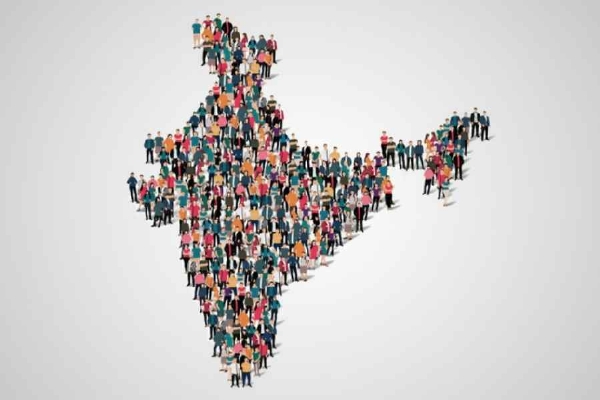
From Routine Count to Reform Engine
India’s Census has been conducted every ten years since 1872. Traditionally, it was a neutral exercise: enumerators with paper forms, households answering questions about names, ages, and occupations. But the 2026–27 Census is different. It is digital, geo tagged, and deeply integrated with the government’s broader reform agenda.
Instead of being a passive statistical snapshot, this Census is designed to be a living database — one that can be cross referenced with Aadhaar, voter lists, ration cards, and welfare schemes. In the government’s telling, it will expose duplication, identify illegal migration, and ensure resources reach the right households. In short, it is not just about counting people; it is about reshaping governance.
Modi’s Urgency: Why 2047 Cannot Wait
The draft narrative around the Census reflects Modi’s impatience. While 2047 is the symbolic target, the government is pushing reforms now. Past attempts — farm laws, CAA, NRC, UCC — faced fierce opposition. Each triggered protests, court battles, and political backlash. The Census, however, is harder to oppose. Who can object to counting people? By embedding reforms into the Census process, the government sidesteps confrontation while still advancing its agenda.
The Digital Leap
Enumerators will no longer carry paper forms. Instead, they will be equipped with tablets preloaded with parameters defined by ministries and states. Data entry will be standardized, encrypted, and geo tagged.
In Phase One (April–Sept 2026): Housing data i.e. toilets, kitchens, vehicles, appliances, household assets will all be mapped and geo tagged. While in Phase Two (Feb–Mar 2027) Population data — names, ages, marital status, education, caste, religion, employment will be gathered.
By March 2027, India will have the most detailed demographic and asset database in its history.
Geo Tagging: The Game Changer
Geo tagging is the heart of this Census. Each household will be digitally mapped, ensuring enumerators physically visit the location. This eliminates the old practice of filling forms from a village head’s house or relying on hearsay. For the government, geo tagging means precision: knowing not just how many people live in a house, but what assets they own, what resources they consume, and where exactly they are located. It is a tool for both welfare targeting and surveillance, depending on how it is used.
Opportunities: Data for Development
The upcoming Census presents significant opportunities for India’s development agenda. By linking census data with Aadhaar, leakages in welfare schemes such as PDS or MGNREGA, now restructured in its new avatar as VB-GRAM G, can be substantially reduced, ensuring that benefits reach the intended recipients. Geo-tagged housing data will provide precise guidance for infrastructure planning, helping to design roads, schools, hospitals, and utilities that match actual community needs. Detailed occupational information will serve as a vital input for skill development initiatives and job creation strategies, aligning education and employment policies with ground realities. At the same time, caste and religion data, if used transparently, could inform affirmative action policies and strengthen social equity. For Prime Minister Modi’s vision of a developed India by 2047, these opportunities are critical, as accurate and comprehensive data remains the foundation of effective policy-making.
Risks: Data, Privacy, and Politics
Yet the very ambition that makes this Census transformative also makes it controversial. Even with encryption under the Data Protection Act 2023, critics continue to worry about surveillance and the possibility of personal data being misused. Concerns also arise over political misuse, as linking census data to NRC or voter lists could inflame communal tensions and deepen divisions. Accuracy is another challenge, since resistance in sensitive areas may compromise the quality of information collected. Added to this is a trust deficit, with past controversies having eroded confidence and opposition parties framing the Census as a hidden NRC. Finally, legal challenges remain a looming possibility, as courts have previously upheld privacy rights and may scrutinize the expanded parameters of this exercise.
The NRC Shadow
The draft narrative openly connects the Census to NRC (National Register of Citizens). By cross checking census data with voter lists and Aadhaar, the government could identify discrepancies, duplicates, or illegal migrants. Detention centers, already being built in some states, add to the perception that the Census is a preparatory step for NRC.
For supporters, this is about national security and resource protection. For critics, it is about exclusion and fear. The Census thus sits at the intersection of governance and identity politics.
Modi’s Strategic Calculus
Why embed reforms in the Census? Because it is harder to oppose. Farm laws can be repealed, NRC can be stalled, but Census is routine. By transforming it into a reform engine, the government advances its agenda with less resistance.
This reflects Modi’s broader strategy: incremental pilots, stealth reforms, and data driven governance. Whether it is UCC in Uttarakhand, polygamy bans in Assam, or voter list scrutiny, reforms are being tested at state level before national rollout. The Census is the ultimate pilot — nationwide, comprehensive, and unavoidable.
International Context
Globally, India’s experiment is unique. Few countries attempt such detailed, geo tagged censuses. Japan, the US, and UK rely on surveys and estimates, but India is deploying millions of enumerators with tablets. This scale reflects both India’s population size and its ambition to be a digital governance leader.
India’s Aadhaar, UPI, and DBT systems are already global benchmarks. The Census extends this ethos: governance powered by data, delivered digitally, and scaled nationally.
The Census 2026–27 is more than a headcount. It is a political instrument, a developmental tool, and a strategic reform disguised as routine. For Modi, it is part of the roadmap to 2047 - a developed India built on data, precision, and control.
Whether it becomes a foundation for inclusive growth or a flashpoint for political conflict will depend on transparency, safeguards, and trust. But one thing is clear: when India counts itself in 2026–27, it will not just be counting people. It will be counting its future.
****
When Prime Minister Narendra Modi speaks of Viksit Bharat — a developed India by 2047 — he frames it as more than an economic milestone. It is a civilizational leap, a promise that when India celebrates 100 years of independence, it will stand shoulder to shoulder with the world’s most advanced nations. To reach that goal, the government believes reforms must be bold, disruptive, and data driven. The upcoming Census, scheduled in two phases between 2026 and 2027, is being cast as one of the most powerful instruments in this transformation.
From Routine Count to Reform Engine
India’s Census has been conducted every ten years since 1872. Traditionally, it was a neutral exercise: enumerators with paper forms, households answering questions about names, ages, and occupations. But the 2026–27 Census is different. It is digital, geo tagged, and deeply integrated with the government’s broader reform agenda.
Instead of being a passive statistical snapshot, this Census is designed to be a living database — one that can be cross referenced with Aadhaar, voter lists, ration cards, and welfare schemes. In the government’s telling, it will expose duplication, identify illegal migration, and ensure resources reach the right households. In short, it is not just about counting people; it is about reshaping governance.
Modi’s Urgency: Why 2047 Cannot Wait
The draft narrative around the Census reflects Modi’s impatience. While 2047 is the symbolic target, the government is pushing reforms now. Past attempts — farm laws, CAA, NRC, UCC — faced fierce opposition. Each triggered protests, court battles, and political backlash. The Census, however, is harder to oppose. Who can object to counting people? By embedding reforms into the Census process, the government sidesteps confrontation while still advancing its agenda.
The Digital Leap
Enumerators will no longer carry paper forms. Instead, they will be equipped with tablets preloaded with parameters defined by ministries and states. Data entry will be standardized, encrypted, and geo tagged.
In Phase One (April–Sept 2026): Housing data i.e. toilets, kitchens, vehicles, appliances, household assets will all be mapped and geo tagged. While in Phase Two (Feb–Mar 2027) Population data — names, ages, marital status, education, caste, religion, employment will be gathered.
By March 2027, India will have the most detailed demographic and asset database in its history.
Geo Tagging: The Game Changer
Geo tagging is the heart of this Census. Each household will be digitally mapped, ensuring enumerators physically visit the location. This eliminates the old practice of filling forms from a village head’s house or relying on hearsay. For the government, geo tagging means precision: knowing not just how many people live in a house, but what assets they own, what resources they consume, and where exactly they are located. It is a tool for both welfare targeting and surveillance, depending on how it is used.
Opportunities: Data for Development
The upcoming Census presents significant opportunities for India’s development agenda. By linking census data with Aadhaar, leakages in welfare schemes such as PDS or MGNREGA, now restructured in its new avatar as VB-GRAM G, can be substantially reduced, ensuring that benefits reach the intended recipients. Geo-tagged housing data will provide precise guidance for infrastructure planning, helping to design roads, schools, hospitals, and utilities that match actual community needs. Detailed occupational information will serve as a vital input for skill development initiatives and job creation strategies, aligning education and employment policies with ground realities. At the same time, caste and religion data, if used transparently, could inform affirmative action policies and strengthen social equity. For Prime Minister Modi’s vision of a developed India by 2047, these opportunities are critical, as accurate and comprehensive data remains the foundation of effective policy-making.
Risks: Data, Privacy, and Politics
Yet the very ambition that makes this Census transformative also makes it controversial. Even with encryption under the Data Protection Act 2023, critics continue to worry about surveillance and the possibility of personal data being misused. Concerns also arise over political misuse, as linking census data to NRC or voter lists could inflame communal tensions and deepen divisions. Accuracy is another challenge, since resistance in sensitive areas may compromise the quality of information collected. Added to this is a trust deficit, with past controversies having eroded confidence and opposition parties framing the Census as a hidden NRC. Finally, legal challenges remain a looming possibility, as courts have previously upheld privacy rights and may scrutinize the expanded parameters of this exercise.
The NRC Shadow
The draft narrative openly connects the Census to NRC (National Register of Citizens). By cross checking census data with voter lists and Aadhaar, the government could identify discrepancies, duplicates, or illegal migrants. Detention centers, already being built in some states, add to the perception that the Census is a preparatory step for NRC.
For supporters, this is about national security and resource protection. For critics, it is about exclusion and fear. The Census thus sits at the intersection of governance and identity politics.
Modi’s Strategic Calculus
Why embed reforms in the Census? Because it is harder to oppose. Farm laws can be repealed, NRC can be stalled, but Census is routine. By transforming it into a reform engine, the government advances its agenda with less resistance.
This reflects Modi’s broader strategy: incremental pilots, stealth reforms, and data driven governance. Whether it is UCC in Uttarakhand, polygamy bans in Assam, or voter list scrutiny, reforms are being tested at state level before national rollout. The Census is the ultimate pilot — nationwide, comprehensive, and unavoidable.
International Context
Globally, India’s experiment is unique. Few countries attempt such detailed, geo tagged censuses. Japan, the US, and UK rely on surveys and estimates, but India is deploying millions of enumerators with tablets. This scale reflects both India’s population size and its ambition to be a digital governance leader.
India’s Aadhaar, UPI, and DBT systems are already global benchmarks. The Census extends this ethos: governance powered by data, delivered digitally, and scaled nationally.
The Census 2026–27 is more than a headcount. It is a political instrument, a developmental tool, and a strategic reform disguised as routine. For Modi, it is part of the roadmap to 2047 - a developed India built on data, precision, and control.
Whether it becomes a foundation for inclusive growth or a flashpoint for political conflict will depend on transparency, safeguards, and trust. But one thing is clear: when India counts itself in 2026–27, it will not just be counting people. It will be counting its future.
****