India–US Trade Deal Collapse: Modi’s Refusal and the Recasting of Bilateral Relations
NewsBharati 11-Jan-2026 10:01:30 AM
Total Views |


In January 2026, the much anticipated multi billion dollar India–US trade deal was declared dead. Surprisingly, the reason was not economic disagreements but a political ego clash. The White House demanded that Prime Minister Narendra Modi personally call Donald Trump to finalise the deal. This was not about policy — it was about optics.
US officials, led by Commerce Secretary Howard Lutnick, revealed that Trump wanted a phone call as a symbolic gesture of submission.
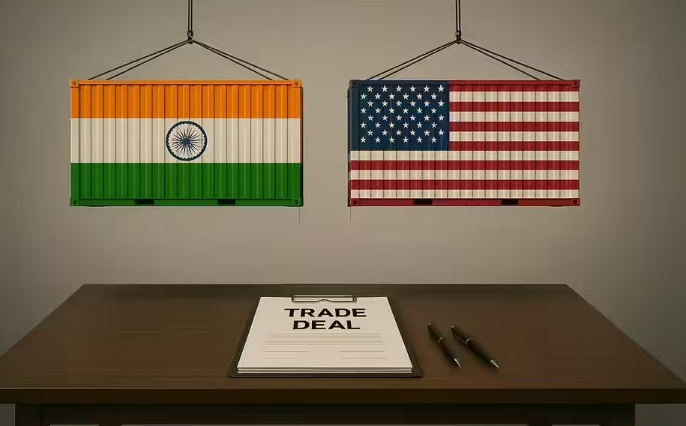
The demand was framed as a test of India’s willingness to “beg” for the deal. For Washington, it was about a photo op and Trump’s ego. For New Delhi, it was about sovereignty and dignity.
Modi chose silence. The phone at the White House never rang. By refusing to play into Trump’s theatrics, Modi signalled that India would not compromise its self-respect for economic gains. This decision was a calculated risk — rejecting short-term benefits to assert long-term independence.
India–US relations have historically oscillated between cooperation and mistrust. In the Cold War era, India’s non-alignment and ties with the Soviet Union kept Washington at arm’s length. But post 1991 liberalization, economic reforms opened India to US investment, laying the foundation for deeper engagement. Come 2014 and Modi’s rise coincided with renewed emphasis on defence, technology, and trade partnerships with the US.
Yet, despite these milestones, trade negotiations have often been fraught. Tariffs, market access, and visa policies repeatedly stalled progress. Against this backdrop, the 2025–26 trade deal was touted as a breakthrough — until it collapsed spectacularly.
The Ego Clause: Trump’s Demand
According to disclosures from US officials, the deal’s finalization hinged not on tariffs or quotas but on a symbolic gesture: Prime Minister Modi was expected to personally call Donald Trump. For Trump, the phone call was to be a triumphant line, a public relations coup showing India “coming to him.” For Modi, the demand was unacceptable — it implied submission rather than partnership. This clash of egos turned a multi billion dollar agreement into a test of sovereignty.
Despite domestic pressures — from business lobbies eager for US market access, and opposition voices ready to accuse him of surrender — Modi chose silence. No phone call was made; no symbolic concession was offered. By refusing, Modi killed the internal narrative that he bows before Trump. This was a deliberate political calculation: better to lose a deal than to lose face.
Domestic Pressures and Political Optics
Within India, critics had long accused Modi of being overly deferential to US presidents, citing his high profile diaspora rallies and personal diplomacy. The trade deal became a litmus test: would Modi “bend” to Trump’s ego? By refusing, Modi neutralized the opposition’s line of attack. He reframed the discourse: India negotiates as an equal, not as a supplicant.
Strategic Diversification: Europe Steps In
India quickly pivoted to alternative partners:
- EFTA deal signed — opening doors to Switzerland, Norway, Iceland, and Liechtenstein.
- UK and EU negotiations advanced — diversifying India’s trade portfolio.
Implications for Indo-US Relations
The collapse of the deal does not mean the end of India–US ties. Strategic convergence continues in defense (Quad, Indo Pacific cooperation), technology, and counterterrorism. But the episode underscores a new reality: India will not allow domestic politics or foreign egos to dictate its sovereignty. For Washington, it is a reminder that India is no longer a junior partner but a self confident power.
Conclusion: A Turning Point in Diplomacy
The India–US trade deal’s demise is more than a diplomatic spat. It is a watershed moment in India’s diplomatic evolution. Modi’s refusal to give Trump his “triumphant line” preserved India’s dignity. It killed the domestic narrative of surrender. It signaled to the world that India will engage on its own terms, even at the cost of short term economic gains. In the long arc of Indo US relations, this episode may be remembered not for the deal that died, but for the assertion of India’s self respect — a declaration that partnership must be built on equality, not submission. As India strengthens ties with Europe and asserts its independence, the world is witnessing the rise of a nation that refuses to beg, and insists on being treated as an equal.
US officials, led by Commerce Secretary Howard Lutnick, revealed that Trump wanted a phone call as a symbolic gesture of submission.
The demand was framed as a test of India’s willingness to “beg” for the deal. For Washington, it was about a photo op and Trump’s ego. For New Delhi, it was about sovereignty and dignity.
Modi chose silence. The phone at the White House never rang. By refusing to play into Trump’s theatrics, Modi signalled that India would not compromise its self-respect for economic gains. This decision was a calculated risk — rejecting short-term benefits to assert long-term independence.
India–US relations have historically oscillated between cooperation and mistrust. In the Cold War era, India’s non-alignment and ties with the Soviet Union kept Washington at arm’s length. But post 1991 liberalization, economic reforms opened India to US investment, laying the foundation for deeper engagement. Come 2014 and Modi’s rise coincided with renewed emphasis on defence, technology, and trade partnerships with the US.
Yet, despite these milestones, trade negotiations have often been fraught. Tariffs, market access, and visa policies repeatedly stalled progress. Against this backdrop, the 2025–26 trade deal was touted as a breakthrough — until it collapsed spectacularly.
The Ego Clause: Trump’s Demand
According to disclosures from US officials, the deal’s finalization hinged not on tariffs or quotas but on a symbolic gesture: Prime Minister Modi was expected to personally call Donald Trump. For Trump, the phone call was to be a triumphant line, a public relations coup showing India “coming to him.” For Modi, the demand was unacceptable — it implied submission rather than partnership. This clash of egos turned a multi billion dollar agreement into a test of sovereignty.
Despite domestic pressures — from business lobbies eager for US market access, and opposition voices ready to accuse him of surrender — Modi chose silence. No phone call was made; no symbolic concession was offered. By refusing, Modi killed the internal narrative that he bows before Trump. This was a deliberate political calculation: better to lose a deal than to lose face.
Domestic Pressures and Political Optics
Within India, critics had long accused Modi of being overly deferential to US presidents, citing his high profile diaspora rallies and personal diplomacy. The trade deal became a litmus test: would Modi “bend” to Trump’s ego? By refusing, Modi neutralized the opposition’s line of attack. He reframed the discourse: India negotiates as an equal, not as a supplicant.
Strategic Diversification: Europe Steps In
India quickly pivoted to alternative partners:
- EFTA deal signed — opening doors to Switzerland, Norway, Iceland, and Liechtenstein.
- UK and EU negotiations advanced — diversifying India’s trade portfolio.
- This reduced dependence on the US market and showcased India’s resilience.
The collapse of the deal does not mean the end of India–US ties. Strategic convergence continues in defense (Quad, Indo Pacific cooperation), technology, and counterterrorism. But the episode underscores a new reality: India will not allow domestic politics or foreign egos to dictate its sovereignty. For Washington, it is a reminder that India is no longer a junior partner but a self confident power.
Conclusion: A Turning Point in Diplomacy
The India–US trade deal’s demise is more than a diplomatic spat. It is a watershed moment in India’s diplomatic evolution. Modi’s refusal to give Trump his “triumphant line” preserved India’s dignity. It killed the domestic narrative of surrender. It signaled to the world that India will engage on its own terms, even at the cost of short term economic gains. In the long arc of Indo US relations, this episode may be remembered not for the deal that died, but for the assertion of India’s self respect — a declaration that partnership must be built on equality, not submission. As India strengthens ties with Europe and asserts its independence, the world is witnessing the rise of a nation that refuses to beg, and insists on being treated as an equal.

Chintan Mokashi
Chintan Mokashi is a Pune-based writer, journalist, and researcher. He specialises in cinema, world history, human rights, and corporate fraud examination. With a PG Diploma in Journalism from KC College, Mumbai and extensive experience in writing across diverse subjects, his work blends analytical depth with cultural insight. Fluent in Marathi and English, Chintan’s writing bridges historical context with contemporary relevance, offering readers a thoughtful and engaging perspective.