Rajendra Singh (Rajju Bhaiya): A scholar, who chose the nation
29 Jan 2026 16:51:19
In the long and sacred journey of the Rashtriya Swayamsevak Sangh, history occasionally presents personalities who do not merely lead an organisation but elevate its spirit. Prof. Rajendra Singh — affectionately known to millions of swayamsevaks as Rajju Bhaiya — was one such rare soul. A scholar of international standing, a saintly organiser, and a quiet revolutionary, he embodied the harmonious union of knowledge, character, and service.
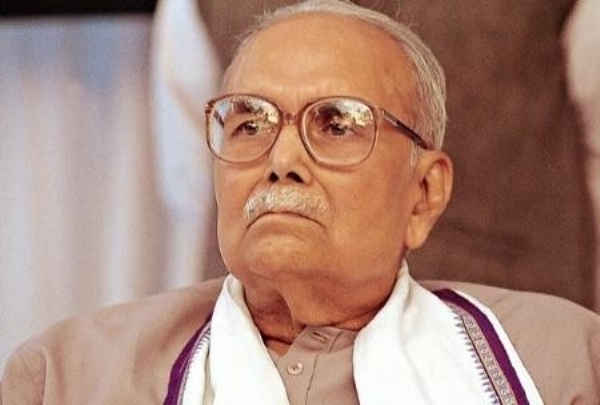
He was not a leader, who commanded through authority, nor an orator, who relied on rhetoric. Rajju Bhaiya led through example, through inner discipline, and through an unwavering commitment to Bharat Mata. His life stands as living proof that the highest intellectual achievement finds its true fulfilment only in national service.
Early life: Roots in sanskar
Born in 1922 in Shahjahanpur, Uttar Pradesh, Rajendra Singh grew up in an atmosphere shaped by traditional Indian values. His childhood was deeply influenced by discipline, simplicity, and a sense of duty — qualities that would later define his entire life. Even in his early years, he displayed exceptional brilliance. Science attracted him not merely as a subject but as a means to understand truth. His academic excellence eventually led him to Banaras Hindu University, one of the foremost centres of Indian intellectual life. But destiny had planned a larger laboratory for him — the laboratory of society.
A physicist of rare distinction
Prof. Rajendra Singh emerged as a brilliant physicist, earning widespread respect in academic circles. At BHU, he rose to become Head of the Physics Department, a position that promised global recognition, research prestige, and personal comfort. Students admired him not only for his mastery over physics but for his clarity of thought and moral authority. For many, he represented the ideal teacher — sharp intellect combined with deep compassion.
At a time when academic success often led Indian scholars away from national concerns, Rajju Bhaiya chose a different path. He never allowed education to become detached from society. Knowledge, for him, was not an instrument of personal elevation but a responsibility toward the nation.
Association with RSS: The awakening
Rajju Bhaiya came into contact with the Rashtriya Swayamsevak Sangh in his youth — an association that soon became the defining axis of his life. The discipline of the shakha, the spirit of collective nationalism, and the Sangh’s vision of cultural renaissance resonated deeply with his inner convictions. Unlike many who see ideology and profession as separate compartments, Rajju Bhaiya lived both simultaneously. He balanced his academic career by day and Sangh work by heart. Despite his stature as a professor, he never sought special privilege. In the Sangh, he was simply another swayamsevak — wearing the same uniform, participating in the same drills, and bowing before the same bhagwa dhwaj. This humility became his lifelong ornament.
From scholar to Pracharak
Gradually, national duty eclipsed personal ambition. When the call of the Sangh became clear, Rajju Bhaiya made the decisive choice — one that only a deeply rooted patriot can make. He renounced the comforts of academic life and became a full-time pracharak. This decision reflected not rejection of scholarship but its highest application. For him, the nation itself became the classroom; society, the experiment; character, the final result.
His scientific temperament enriched Sangh work. He approached organisation-building with method, clarity, and long-term vision. Wherever he worked, he strengthened training systems, intellectual engagement, and internal discipline.
A natural successor in the Sangh tradition
The Rashtriya Swayamsevak Sangh has always followed a unique leadership tradition — one based not on election, ambition, or publicity, but on inner consensus and moral authority. After the towering leadership of Balasaheb Deoras, the responsibility of guiding the Sangh fell upon Rajju Bhaiya in 1994, when he became the Sarsanghachalak. At the time, Bharat was passing through profound transition:
- Post-Cold War ideological uncertainty
- Rise of aggressive materialism
- Fragmentation of society on caste and identity lines
- Expansion of political Hinduism alongside intense opposition
The Sangh required a leader who could balance firmness with restraint, expansion with stability, and emotion with intellect. Rajju Bhaiya was that bridge.
Leadership marked by thought and service
As Sarsanghchalak, Rajju Bhaiya never attempted dramatic overhauls. His strength lay in quiet consolidation. He believed that true national reconstruction does not happen through slogans but through character formation. Under his guidance:
- Sangh work expanded deeper into rural Bharat
- Social outreach initiatives gained intellectual direction
- Educational and service-oriented organisations strengthened
- Dialogue with society became more refined and inclusive
He consistently emphasized that RSS is not a political movement, but a nation-building mission whose work transcends governments and elections. His speeches were thoughtful, measured, and deeply philosophical — drawing from Indian civilisational wisdom while addressing contemporary challenges.
Champion of social harmony
One of Rajju Bhaiya’s most significant contributions was his unwavering focus on Samajik Samrasta (social harmony). He believed that national unity could not be achieved merely by opposing external threats. Internal divisions — especially caste discrimination — had to be addressed honestly and spiritually. For him, Hindu society was not a collection of competing groups but a single organic entity bound by shared civilization.
He urged swayamsevaks to:
- Reach the most neglected sections of society
- Work without patronising attitudes
- Restore dignity, not dependency
- Practice equality in conduct, not merely in words
His approach was neither confrontational nor cosmetic. It was deeply rooted in dharma — reform through self-purification.
Simplicity that reflected strength
Despite occupying the highest post in the world’s largest voluntary organisation, Rajju Bhaiya lived with extraordinary simplicity.
No entourage.
No personal publicity.
No craving for recognition.
He travelled across the country, spoke softly, and lived austerely. Even in advanced age, his daily routine reflected discipline learned at shakha. Those who met him often remarked that in his presence, ego naturally dissolved. His humility was not cultivated — it was innate. For swayamsevaks, he was not merely “Sarsanghchalak ji” but Rajju Bhaiya — an elder brother who guided through affection.
A bridge between tradition and modernity
Rajju Bhaiya represented a rare synthesis:
- A modern scientist deeply rooted in Indian tradition
- A rational thinker with spiritual depth
- A nationalist without hostility
- A conservative without stagnation
He rejected blind imitation of the West while fully embracing scientific reasoning. He believed that Bharat’s renaissance would emerge not by rejecting modernity, but by Indianising it.
His life itself became the message:
- You can be modern without being rootless.
- You can be traditional without being regressive.
- The Final Years and Eternal Legacy
Due to declining health, Rajju Bhaiya stepped down as Sarsanghchalak in 2000, passing the responsibility to K. S. Sudarshan ji. Even after relinquishing office, he remained a guiding moral presence until his departure in 2003.
His passing was not merely the loss of a leader, but the departure of a conscience keeper of the Sangh.
Yet his legacy remains alive — in every shakha that blends intellect with discipline, in every swayamsevak who serves without seeking reward, and in every effort to unite society without arrogance.
Why Rajju Bhaiya matters today
In an age dominated by noise, ambition, and instant visibility, Prof. Rajendra Singh’s life teaches enduring lessons:
- Leadership is not about dominance, but responsibility
- Knowledge finds meaning only through service
- Nationalism without character is hollow
- True power flows from self-restraint
He proved that one can be a thinker and a doer, a scholar and a soldier, a leader and a servant — simultaneously.
Conclusion: A silent architect
Rajju Bhaiya may not occupy headlines or political debates, but his contribution forms part of the invisible foundation upon which modern India’s nationalist awakening stands. He belonged to that lineage of men who built institutions not for their lifetime, but for centuries. For swayamsevaks, remembering Rajju Bhaiya is not an act of nostalgia — it is a reminder of responsibility. Because his life quietly tells us:
The greatest leaders do not seek to be remembered.
They seek only to serve — and are remembered forever.
--