Sonia Gandhi’s ‘Tamasha’ Politics
There’s bound to be some tamasha when this book comes out,” she said
Total Views |


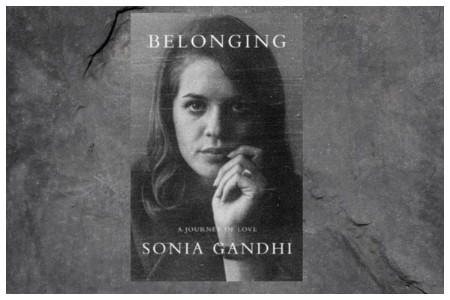
Sonia Gandhi’s choice of the word - tamasha to describe the anticipated reaction to her forthcoming memoir, Belonging: A Journey of Love, is more than a question of vocabulary. It raises a larger question about political temperament, public communication and the responsibilities that accompany decades of occupying a position of influence. When a senior political leader speaks publicly, words are not casual accessories. They convey an attitude, establish a tone and reveal how the speaker chooses to engage with criticism. Sonia Gandhi’s remark invites scrutiny precisely because a more measured expression could have conveyed the same thought without the accompanying suggestion of spectacle and commotion.
The question becomes particularly relevant when the speaker is a political figure of Sonia Gandhi’s standing.
The Ghostwriter Question
There is another dimension to this episode. If a memoir is developed with the assistance of professional writers, editors and publishing specialists, the language used to promote it deserves additional scrutiny. A ghostwriter’s involvement, however, should not be assumed without reliable confirmation. What is established is that the memoir has passed through a publishing process and that its Indian publication encountered an editorial dispute before HarperCollins India took over its release.
That background makes the choice of words an interesting question of editorial judgment. Was the expression selected deliberately to create a provocative headline? Was it intended to convey familiarity and spontaneity? Or was insufficient attention paid to how the word would be understood by a diverse Indian audience?
These are legitimate questions. A professional communications team dealing with a senior political leader should understand that vocabulary carries cultural associations. The issue is not whether Sonia Gandhi is entitled to speak in conversational language. She plainly is. The issue is whether the expression chosen was appropriate to the occasion and the stature of the person using it.
India is a multilingual society in which words acquire meaning through history, region, social context and everyday usage. Someone familiar with Indian linguistic traditions would recognise that tamasha, although widely used in ordinary conversation, can suggest a spectacle, a public commotion or unnecessary drama. It is not inherently an offensive word. Its suitability depends on the context.
But precisely because the word is so familiar, its implications should not be difficult to anticipate.
Six Decades in India: The Question of Cultural Sensitivity
Sonia Gandhi has lived in India for decades, participated in its political life and occupied positions of extraordinary influence within the Congress party. Her experience of Indian society is therefore an unavoidable part of any discussion about her public language.
It would be unfair to suggest that using one colloquial expression proves ignorance of Indian languages or culture. People who have lived in a country for generations can still make poor linguistic choices, while those who arrive from elsewhere can become deeply familiar with its cultural traditions.
Nevertheless, long public engagement creates expectations. A leader who has spent decades in Indian political life should be aware of the cultural nuances of commonly used expressions, particularly when speaking about a subject as personal and politically consequential as a memoir.
The criticism, therefore, is not about Sonia Gandhi’s birthplace or mother tongue. It is about the judgment expected of a person who has had ample opportunity to understand the country in which she built her public career.
Political stature should ordinarily encourage greater care in communication, not less. The higher the position, the greater the responsibility to anticipate how words will be received.
Why Begin with Anticipated Drama?
The more revealing aspect of the remark is its tone. Sonia Gandhi says that others have spent decades telling her story and that it is now her turn. That is a perfectly understandable reason to write a memoir. A person who believes that accounts of her life have been inaccurate is entitled to put forward her own recollections and invite readers to assess them. But the language surrounding that explanation matters.
Why describe the anticipated response as tamasha rather than public debate, controversy or differing interpretations? Why frame the reception of a personal account in terms that can be understood as anticipating a spectacle?
Perhaps the intention was merely conversational. Perhaps the expression was designed to attract attention. The available statement does not establish her private motive, and it would be speculative to claim otherwise. Yet the effect of a public statement can be examined independently of the speaker’s intentions.
The remark risks suggesting that disagreement is expected to become a performance rather than a substantive examination of the facts. If the memoir contains important revelations, readers will naturally debate them. If it challenges established accounts, historians and political observers may scrutinise its claims. That is an ordinary part of public life, not necessarily a tamasha.
A memoir is not beyond criticism simply because it is personal. Nor should criticism automatically be interpreted as hostility towards its author.
The Privilege of Political Power
The controversy also touches upon a broader question concerning political privilege. Sonia Gandhi has been one of the most influential figures in the Congress party for decades. Her position has given her considerable access to the national political conversation and the means to shape how her life and political legacy are presented.
With such influence comes a corresponding responsibility to engage with disagreement in a manner that respects the audience.
Privilege does not necessarily produce arrogance. Nevertheless, public figures can create an impression of dismissiveness when they treat anticipated criticism as little more than noise or spectacle. The distinction between confidence and condescension is often expressed through language.
The public is not merely an audience waiting for a political leader to tell its story. It has its own memories, interpretations and questions. Sonia Gandhi is entitled to present her account, but readers are equally entitled to examine it critically.
The relationship must remain one of mutual respect. A memoir cannot demand unquestioning acceptance, just as criticism cannot presume that every recollection is false.
The Gandhi Family and the Politics of Public Controversy
There is also an irony in the use of tamasha by a member of the Nehru-Gandhi family. The family has occupied the centre of Indian political debate for generations. Its public decisions, internal dynamics, political fortunes and personal tragedies have attracted enormous attention. Some of that scrutiny has been justified; some has been partisan; and some has inevitably crossed the boundaries of responsible public discussion.
Sonia Gandhi's own political journey has been inseparable from this continuing debate. Her memoir may provide fresh insight into events that have shaped the family and the Congress party. It may also invite renewed questions about decisions, relationships and political turning points.
The family cannot reasonably expect its history to be discussed only on its own terms. Nor can it be held responsible for every controversy surrounding it. But its members, having exercised such a significant role in national politics, must recognise that public scrutiny is an unavoidable consequence of that position.
Words Matter
The central issue is not whether Sonia Gandhi has the right to use the word tamasha. She does. Nor is it necessary to interpret the remark as proof of ignorance, arrogance or deliberate disrespect. Such conclusions go beyond what one statement can establish.
The more substantial criticism is that the word was an avoidable choice. A leader of her experience could have conveyed the same message with greater precision and restraint. The expectation is not artificial formality or polished English. It is an awareness that language has consequences, particularly when used by someone whose every public statement can become part of a wider political debate.
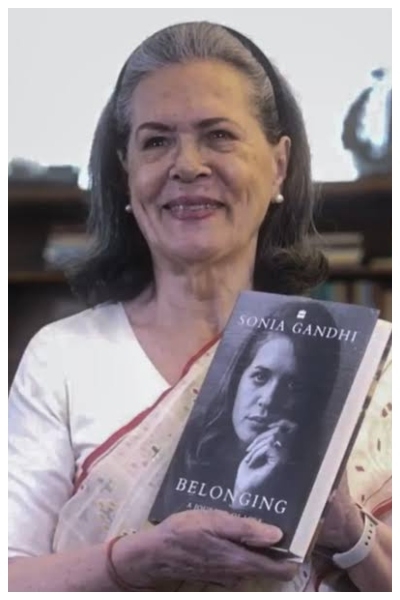
Sonia Gandhi wants to tell her story after decades in which others have interpreted her life. Her forthcoming memoir gives her that opportunity. But the manner in which she introduces it will inevitably influence how her message is received.
The ultimate test of Belonging: A Journey of Love will be the substance of its account, the credibility of its recollections and its contribution to understanding India's political history. Its author deserves a fair hearing, and its claims deserve serious scrutiny.
A public figure of Sonia Gandhi's stature should need neither theatrical language nor manufactured controversy to make her case. Facts, clarity and candour are more persuasive than provocation. When a lifetime in public life culminates in the opportunity to tell one's own story, the language chosen to introduce that story should elevate the discussion not reduce it to the very spectacle the speaker says is inevitable.
“There’s bound to be some tamasha when this book comes out,” she said, adding that others had spent decades telling her story and that it was now her turn. The statement was intended to convey her determination to present her own account of her life. But the choice of tamasha threatens to overshadow that message. A memoir offers an opportunity for reflection, clarification and the presentation of personal experiences. Why introduce it with language that anticipates public drama? Why approach a discussion about one’s life with an expression that can sound dismissive of the debate that may follow?
The question becomes particularly relevant when the speaker is a political figure of Sonia Gandhi’s standing.
The Ghostwriter Question
There is another dimension to this episode. If a memoir is developed with the assistance of professional writers, editors and publishing specialists, the language used to promote it deserves additional scrutiny. A ghostwriter’s involvement, however, should not be assumed without reliable confirmation. What is established is that the memoir has passed through a publishing process and that its Indian publication encountered an editorial dispute before HarperCollins India took over its release.
That background makes the choice of words an interesting question of editorial judgment. Was the expression selected deliberately to create a provocative headline? Was it intended to convey familiarity and spontaneity? Or was insufficient attention paid to how the word would be understood by a diverse Indian audience?
These are legitimate questions. A professional communications team dealing with a senior political leader should understand that vocabulary carries cultural associations. The issue is not whether Sonia Gandhi is entitled to speak in conversational language. She plainly is. The issue is whether the expression chosen was appropriate to the occasion and the stature of the person using it.
India is a multilingual society in which words acquire meaning through history, region, social context and everyday usage. Someone familiar with Indian linguistic traditions would recognise that tamasha, although widely used in ordinary conversation, can suggest a spectacle, a public commotion or unnecessary drama. It is not inherently an offensive word. Its suitability depends on the context.
But precisely because the word is so familiar, its implications should not be difficult to anticipate.
Six Decades in India: The Question of Cultural Sensitivity
Sonia Gandhi has lived in India for decades, participated in its political life and occupied positions of extraordinary influence within the Congress party. Her experience of Indian society is therefore an unavoidable part of any discussion about her public language.
It would be unfair to suggest that using one colloquial expression proves ignorance of Indian languages or culture. People who have lived in a country for generations can still make poor linguistic choices, while those who arrive from elsewhere can become deeply familiar with its cultural traditions.
Nevertheless, long public engagement creates expectations. A leader who has spent decades in Indian political life should be aware of the cultural nuances of commonly used expressions, particularly when speaking about a subject as personal and politically consequential as a memoir.
The criticism, therefore, is not about Sonia Gandhi’s birthplace or mother tongue. It is about the judgment expected of a person who has had ample opportunity to understand the country in which she built her public career.
Political stature should ordinarily encourage greater care in communication, not less. The higher the position, the greater the responsibility to anticipate how words will be received.
Why Begin with Anticipated Drama?
The more revealing aspect of the remark is its tone. Sonia Gandhi says that others have spent decades telling her story and that it is now her turn. That is a perfectly understandable reason to write a memoir. A person who believes that accounts of her life have been inaccurate is entitled to put forward her own recollections and invite readers to assess them. But the language surrounding that explanation matters.
Why describe the anticipated response as tamasha rather than public debate, controversy or differing interpretations? Why frame the reception of a personal account in terms that can be understood as anticipating a spectacle?
Perhaps the intention was merely conversational. Perhaps the expression was designed to attract attention. The available statement does not establish her private motive, and it would be speculative to claim otherwise. Yet the effect of a public statement can be examined independently of the speaker’s intentions.
The remark risks suggesting that disagreement is expected to become a performance rather than a substantive examination of the facts. If the memoir contains important revelations, readers will naturally debate them. If it challenges established accounts, historians and political observers may scrutinise its claims. That is an ordinary part of public life, not necessarily a tamasha.
A memoir is not beyond criticism simply because it is personal. Nor should criticism automatically be interpreted as hostility towards its author.
The Privilege of Political Power
The controversy also touches upon a broader question concerning political privilege. Sonia Gandhi has been one of the most influential figures in the Congress party for decades. Her position has given her considerable access to the national political conversation and the means to shape how her life and political legacy are presented.
With such influence comes a corresponding responsibility to engage with disagreement in a manner that respects the audience.
Privilege does not necessarily produce arrogance. Nevertheless, public figures can create an impression of dismissiveness when they treat anticipated criticism as little more than noise or spectacle. The distinction between confidence and condescension is often expressed through language.
The public is not merely an audience waiting for a political leader to tell its story. It has its own memories, interpretations and questions. Sonia Gandhi is entitled to present her account, but readers are equally entitled to examine it critically.
The relationship must remain one of mutual respect. A memoir cannot demand unquestioning acceptance, just as criticism cannot presume that every recollection is false.
The Gandhi Family and the Politics of Public Controversy
There is also an irony in the use of tamasha by a member of the Nehru-Gandhi family. The family has occupied the centre of Indian political debate for generations. Its public decisions, internal dynamics, political fortunes and personal tragedies have attracted enormous attention. Some of that scrutiny has been justified; some has been partisan; and some has inevitably crossed the boundaries of responsible public discussion.
Sonia Gandhi's own political journey has been inseparable from this continuing debate. Her memoir may provide fresh insight into events that have shaped the family and the Congress party. It may also invite renewed questions about decisions, relationships and political turning points.
The family cannot reasonably expect its history to be discussed only on its own terms. Nor can it be held responsible for every controversy surrounding it. But its members, having exercised such a significant role in national politics, must recognise that public scrutiny is an unavoidable consequence of that position.
If the objective is to correct what Sonia Gandhi considers inaccurate accounts, the strongest response is to provide verifiable facts, explain decisions and allow readers to draw their conclusions. That approach would give the memoir authority. A provocative expression may attract attention, but it cannot substitute for evidence or argument.
Words Matter
The central issue is not whether Sonia Gandhi has the right to use the word tamasha. She does. Nor is it necessary to interpret the remark as proof of ignorance, arrogance or deliberate disrespect. Such conclusions go beyond what one statement can establish.
The more substantial criticism is that the word was an avoidable choice. A leader of her experience could have conveyed the same message with greater precision and restraint. The expectation is not artificial formality or polished English. It is an awareness that language has consequences, particularly when used by someone whose every public statement can become part of a wider political debate.
Sonia Gandhi wants to tell her story after decades in which others have interpreted her life. Her forthcoming memoir gives her that opportunity. But the manner in which she introduces it will inevitably influence how her message is received.
The ultimate test of Belonging: A Journey of Love will be the substance of its account, the credibility of its recollections and its contribution to understanding India's political history. Its author deserves a fair hearing, and its claims deserve serious scrutiny.
A public figure of Sonia Gandhi's stature should need neither theatrical language nor manufactured controversy to make her case. Facts, clarity and candour are more persuasive than provocation. When a lifetime in public life culminates in the opportunity to tell one's own story, the language chosen to introduce that story should elevate the discussion not reduce it to the very spectacle the speaker says is inevitable.