"Ganga becomes Grandmother"! Assam CM shares beautiful chapter of their Rhino rescue story
The story began over two decades ago during the devastating 2004 Brahmaputra floods in Kaziranga National Park, where a stranded infant female rhino calf was saved and named as "Ganga".
Total Views |


Guwahati, Nov 1: In a historic moment for India's wildlife heritage, Assam’s Manas National Park has welcomed a new Greater One-Horned Rhino calf. The arrival marks a groundbreaking milestone, cementing a proud three-generation lineage that began with a dramatic rescue from the turbulent waters of the Brahmaputra River.
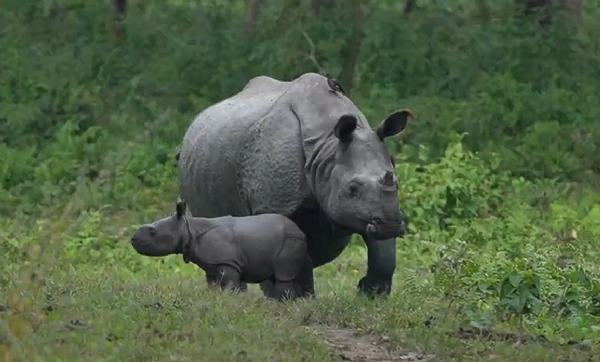
The heartwarming announcement was shared by Assam Chief Minister Himanta Biswa Sarma on X. "Remember Ganga, the rhino rescued from the Brahmaputra floods? She's now a granny," the Chief Minister posted enthusiastically. "Her daughter, Ganga-A (also recorded as Ganga-Ka), has given birth to an adorable calf at Manas National Park. One rescued rhino has become three generations thriving in the wild. That's what conservation looks like."
Remember Ganga, the rhino rescued from the Brahmaputra floods? She's now a granny.
— Himanta Biswa Sarma (@himantabiswa) October 31, 2026
Her daughter, Ganga-A, has given birth to an adorable calf at Manas National Park.
One rescued rhino has become three generations thriving in the wild. That's what conservation looks like pic.twitter.com/eSIWNJNREo
What's Ganga's story?
The story began over two decades ago during the devastating 2004 Brahmaputra floods in Kaziranga National Park, where a stranded infant female rhino calf was saved by the Assam Forest Department. Lovingly named "Ganga," the orphaned calf was raised and rehabilitated at the Center for Wildlife Rehabilitation and Conservation (CWRC).
In 2007, as part of a visionary strategy to repopulate protected sanctuaries, Ganga was translocated to Manas National Park. Proving the immense success of India’s wild-to-wild rehabilitation models, Ganga acclimated beautifully, giving birth to her first calf in the wild in 2013. Today, that legacy has come full circle with her daughter successfully birthing the third generation in the Bansbari forest range.
'Zero Poaching' as the new normal
For decades, global narratives painted a bleak picture of Indian wildlife, frequently dominated by headlines of rampant poaching and habitat loss. However, under the unrelenting leadership of the current administration, Assam has radically rewritten this script. By deploying sophisticated technology, raising specialized commandos, and empowering local forest guards, the state has achieved what was once deemed impossible; zero rhino poaching in Manas National Park for three consecutive years.
From an era where Manas saw its rhino population completely wiped out due to civil unrest, the park has staged a spectacular recovery and is now home to over 50 thriving rhinos.
Ganga’s expanding family stands as a living example to the grit, cultural reverence for nature, and political will powering India's conservation machinery. It proves to the world that when a nation protects its natural icons with unyielding resolve, one single act of rescue can successfully secure the future of an entire endangered species.