RSS remembers Swami Shraddhanand and Swami Laxmananand
Swami Shraddhanand was a freedom fighter, educationist, social reformer and a leading figure of the Shuddhi movement.
Total Views |


There are lives that do not end with death. They become sources of inspiration for generations, reminding society that courage, conviction and selfless service are greater than personal safety and comfort. Swami Shraddhanand and Swami Laxmananand Saraswati belonged to this rare tradition. Separated by time and geography, both dedicated their lives to social awakening, the protection of Dharma and the strengthening of Hindu society. Their sacrifices remain an enduring reminder that the preservation of a civilisation requires not merely pride in its past but commitment to its present and future.
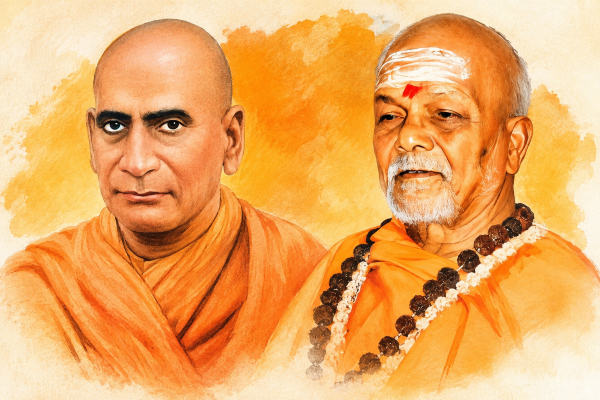
The Rashtriya Swayamsevak Sangh (RSS), through two separate statements issued by Sarkaryavah Dattatreya Hosabale at its Akhil Bharatiya Karyakari Mandal meeting in Indore, has specifically remembered these two saints. The statements are significant because they bring back into public memory personalities whose contributions deserve far greater recognition. They are not merely tributes to the past; they are calls to understand the responsibilities of the present.
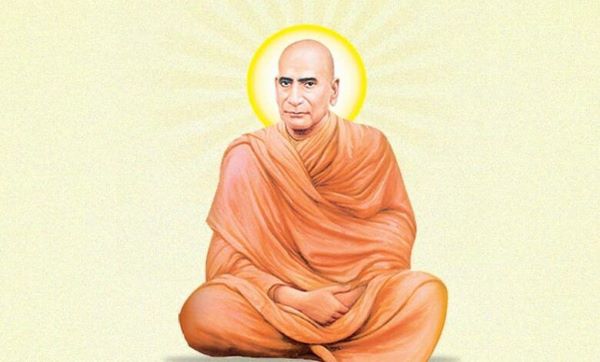
Swami Shraddhanand
Swami Shraddhanand was a freedom fighter, educationist, social reformer and a leading figure of the Shuddhi movement. His life was devoted to awakening a society facing the combined challenges of colonial domination, social discrimination and religious conversions. He understood that national freedom could not be separated from cultural self-confidence and social reform.
His establishment of Gurukul Kangri near Haridwar was an important intervention in the field of education. At a time when colonial education was steadily displacing indigenous systems of learning, he sought to create an institution rooted in Bharatiya traditions while remaining open to modern subjects. His vision was not confined to preserving ancient knowledge; it was about producing individuals equipped with knowledge, character and a sense of national responsibility.
Equally important was his commitment to social equality. His participation in the Vaikom movement against restrictions imposed on oppressed communities demonstrated that his understanding of Dharma was inseparable from social justice. Dr B.R. Ambedkar regarded him as a genuine well-wisher of socially and economically disadvantaged sections. This recognition is particularly significant because it places Shraddhanand's work within the wider struggle against social exclusion.
He also used journalism as an instrument of national awakening, publishing newspapers and journals including Tej, Veer Arjun and The Liberator. Through his writings, he challenged colonial authority and sought to awaken public consciousness. His work in the Shuddhi movement reflected his determination to ensure that those who wished to return to their ancestral faith were not denied that opportunity.
On December 23, 1926, Swami Shraddhanand was assassinated by Abdul Rashid in Delhi. Rashid gained access to the Swami's room on the pretext of discussing religious matters. When the attendant went to fetch water, he shot the Swami at point-blank range while he was confined to bed recovering from illness.Historical accounts connect the assassination to Shraddhanand's leadership of the Shuddhi movement, which facilitated the return to Hinduism of people who had converted to other faiths. His work had provoked strong opposition among sections hostile to the movement. The RSS statement itself describes Abdul Rashid as a religious fanatic and connects the killing to opposition to Shraddhanand's mission.
A life dedicated to service was silenced by violence, but his ideals survived. As the centenary of his martyrdom approaches, remembering him is also an opportunity to revisit his commitment to education, social reform, national self-respect and religious freedom.
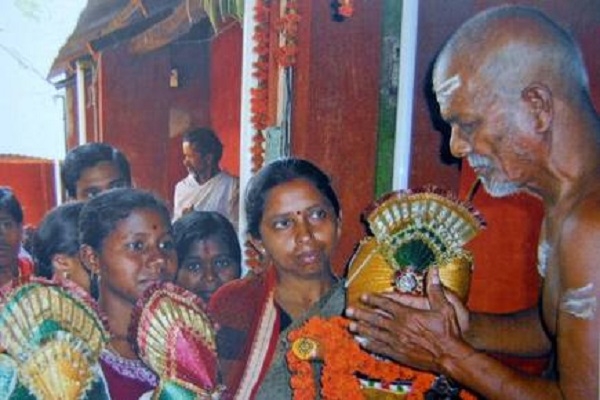
Swami Laxmananand
Swami Laxmananand Saraswati carried a similar spirit of dedication in a very different social setting. His life's work was concentrated among tribal communities in Kandhamal, Odisha. He did not approach their development merely as an economic exercise. He believed that material progress, education and cultural self-respect had to advance together.
His initiatives included Sanskrit education, women's bhajan centres, agricultural development, cow rearing and water conservation. He encouraged tribal communities to take pride in their traditions and strengthen their capacity for self-reliance. By connecting local cultural practices with a wider spiritual framework, he sought to reinforce their sense of identity and belonging.
His work was rooted in sustained engagement with people, not occasional expressions of concern. Education, social organisation and religious awareness were instruments through which he sought to strengthen communities from within. He continued his work despite repeated threats and attempts on his life.
On Janmashtami in August 2008, Swami Laxmananand and four of his disciples were murdered at the Jaleshpatta Ashram. His death was a grave loss, but it did not bring an end to the work he had undertaken. The memory of his service continues to inspire those committed to education, tribal welfare and cultural preservation.Swami Laxmananand Saraswati was assassinated on August 23, 2008, at Jaleshpatta Ashram in Kandhamal, Odisha. He was 84. Four of his associates were also killed in the attack.
The investigation attributed the conspiracy and killings to CPI (Maoist) cadres. Maoist leader Sabyasachi Panda publicly acknowledged the killing in an interview with journalists in October 2008. He said the Swami had ignored their warnings to stop his activities against religious conversions and cow slaughter. He also claimed that sections of Christian and Dalit communities had pressured the Maoists to eliminate him. These were Panda's claims, not proof of collective responsibility.
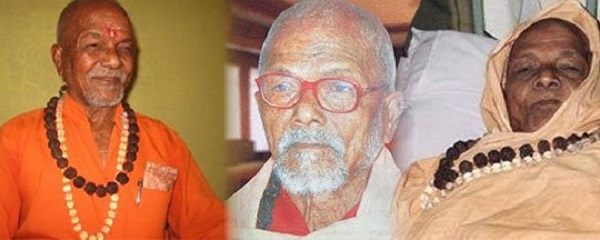
Swami Laxmananand
The principal explanation given by the Maoist leader was the Swami's opposition to religious conversion and his activities among tribal communities in Kandhamal. His work to strengthen Hindu religious and cultural identity had generated serious tensions in the region. The Justice A.S. Naidu Commission later examined religious conversion, Maoist activity and socio-economic tensions among several factors contributing to the situation. In September 2013, a trial court convicted seven people in the murder case and sentenced them to life imprisonment. In August 2026, a special court acquitted Maoist leader D. Keshab Rao alias Azad, holding that the prosecution had failed to establish his involvement beyond reasonable doubt.
Their relevance today is unmistakable. India is undergoing rapid economic, technological and social transformation. Yet development cannot be measured only through infrastructure, income or material progress. It must also be reflected in the confidence of communities, access to quality education, social harmony and the preservation of cultural traditions. The lives of these saints remind us that progress and civilisational continuity need not be competing objectives.
The RSS has specifically recalled both personalities at a time when society needs to remember the people who translated conviction into action. Such remembrance should not remain confined to commemorative statements or anniversary observances. Their work deserves to be studied, discussed and carried forward through education, social service, community participation and the strengthening of vulnerable sections.
A century may separate us from the martyrdom of Swami Shraddhanand, while nearly two decades have passed since the assassination of Swami Laxmananand. But time has not diminished the questions their lives raise. What gives a society its strength? What sustains its identity? And who will step forward when service demands courage and sacrifice?
Their lives offer a compelling answer. A society remains alive when its people are willing to serve beyond self-interest, defend their convictions without abandoning their responsibilities and work tirelessly for the dignity of others. The greatest tribute to these two saints would be to carry forward that spirit. Their bodies were mortal; the ideals for which they lived must not be.