What types of warehouses benefit most from double deep reach trucks?
Total Views |


As warehousing operations grow more complex, businesses are under constant pressure to store more goods within the same footprint while maintaining speed and safety. This is where specialised material handling equipment becomes essential. Among the various options available, double deep reach trucks stand out for warehouses that need to maximise storage density without compromising accessibility. However, these trucks are not suitable for every facility.
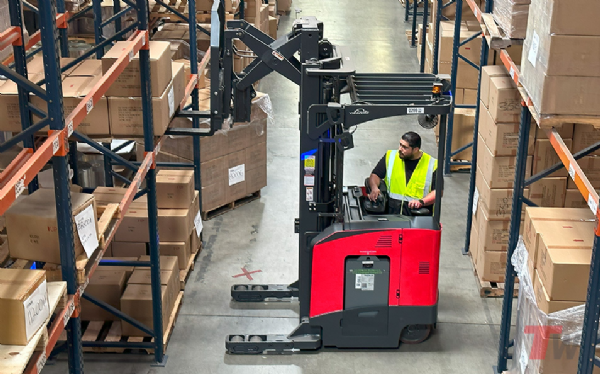
Identifying the warehouse types that gain the most value from this equipment allows decision-makers to plan investments or rental choices more effectively.
Understanding Double Deep Reach Trucks
Double deep reach trucks are designed to handle pallets stored two positions deep on each side of an aisle. Unlike conventional reach trucks that access only the front pallet, these trucks extend further to retrieve pallets stored behind the first row. This capability allows warehouses to reduce the number of aisles and significantly increase storage capacity.
They are typically used in high-rack environments and are best suited for operations where space optimisation is a priority and pallet handling follows a planned system.
High-Density Storage Warehouses
Warehouses that operate with high storage density are among the biggest beneficiaries of double deep reach trucks. Facilities where floor space is limited or expensive often aim to store maximum inventory vertically rather than expanding outward.
By reducing aisle requirements, double deep racking systems paired with reach trucks allow such warehouses to increase pallet positions without structural changes. This makes them ideal for urban distribution centres, industrial parks, and facilities operating in space-constrained locations.
Warehouses With Medium to Low SKU Variety
Double deep storage works best when pallet access does not need to be immediate for every individual unit. Warehouses that store large volumes of similar products benefit greatly from this setup.
Examples include:
● FMCG warehouses storing bulk quantities of the same product line
● Beverage and bottling plants
● Raw material storage for manufacturing units
In these environments, pallets are often moved in batches, making it practical to retrieve the front pallet before accessing the rear one.
Cold Storage and Temperature-Controlled Warehouses
Cold storage facilities face higher construction and operating costs due to insulation, refrigeration, and energy requirements. Maximising storage within the available cubic space is therefore critical.
Double deep reach trucks help cold storage warehouses store more pallets within the same chilled area, reducing the need for expansion and lowering per-unit storage costs. Their ability to operate efficiently in narrow aisles also helps maintain stable temperatures by minimising door openings and movement time.
Warehouses With Predictable Inventory Rotation
Facilities that follow FIFO or controlled inventory rotation schedules can effectively integrate double deep systems. While LIFO is more common in double deep racking, careful planning and warehouse management systems can still support FIFO operations for certain product categories.
Warehouses supplying retail chains, organised distribution networks, or long-term contracts often have predictable movement patterns. In such cases, the reduced selectivity of double deep storage is not a drawback but a manageable trade-off for higher space efficiency.
Third-Party Logistics and Contract Warehousing
Third-party logistics providers often manage inventory for multiple clients within the same facility. For contracts involving bulk storage and long dwell times, double deep reach trucks offer a cost-efficient solution.
Many logistics operators prefer flexible equipment models, opting for a double deep reach truck and forklift on rent rather than ownership. This allows them to scale equipment based on contract size, seasonality, and client requirements without heavy capital investment.
Companies like Godrej RenTRUST support such models by offering professionally maintained rental fleets, making it easier for logistics providers to access specialised equipment without long-term commitments.
Warehouses With Skilled Operators and Safety Systems
Operating double deep reach trucks requires trained operators who can handle extended reach mechanisms safely and accurately. Warehouses that already invest in operator training, safety protocols, and digital monitoring systems are better positioned to adopt this equipment.
Facilities with warehouse management systems, racking inspection routines, and clear traffic management plans can fully utilise the benefits of double deep reach trucks while maintaining operational safety.
Double deep reach trucks are a powerful solution for warehouses focused on maximising storage density, controlling costs, and making better use of vertical space. They are particularly effective in high-density storage facilities, cold warehouses, bulk inventory operations, and contract logistics environments with predictable movement patterns.
When supported by trained operators and the right rental or procurement strategy, these trucks can significantly enhance warehouse efficiency. For businesses exploring flexible access to such equipment, established material handling rental providers play an important role in enabling scalable and cost-effective operations without long-term asset ownership.
By aligning warehouse type, inventory profile, and handling strategy, organisations can determine whether double deep reach trucks are the right fit for their operational goals.
Identifying the warehouse types that gain the most value from this equipment allows decision-makers to plan investments or rental choices more effectively.
Understanding Double Deep Reach Trucks
Double deep reach trucks are designed to handle pallets stored two positions deep on each side of an aisle. Unlike conventional reach trucks that access only the front pallet, these trucks extend further to retrieve pallets stored behind the first row. This capability allows warehouses to reduce the number of aisles and significantly increase storage capacity.
They are typically used in high-rack environments and are best suited for operations where space optimisation is a priority and pallet handling follows a planned system.
High-Density Storage Warehouses
Warehouses that operate with high storage density are among the biggest beneficiaries of double deep reach trucks. Facilities where floor space is limited or expensive often aim to store maximum inventory vertically rather than expanding outward.
By reducing aisle requirements, double deep racking systems paired with reach trucks allow such warehouses to increase pallet positions without structural changes. This makes them ideal for urban distribution centres, industrial parks, and facilities operating in space-constrained locations.
Warehouses With Medium to Low SKU Variety
Double deep storage works best when pallet access does not need to be immediate for every individual unit. Warehouses that store large volumes of similar products benefit greatly from this setup.
Examples include:
● FMCG warehouses storing bulk quantities of the same product line
● Beverage and bottling plants
● Raw material storage for manufacturing units
In these environments, pallets are often moved in batches, making it practical to retrieve the front pallet before accessing the rear one.
Cold Storage and Temperature-Controlled Warehouses
Cold storage facilities face higher construction and operating costs due to insulation, refrigeration, and energy requirements. Maximising storage within the available cubic space is therefore critical.
Double deep reach trucks help cold storage warehouses store more pallets within the same chilled area, reducing the need for expansion and lowering per-unit storage costs. Their ability to operate efficiently in narrow aisles also helps maintain stable temperatures by minimising door openings and movement time.
Warehouses With Predictable Inventory Rotation
Facilities that follow FIFO or controlled inventory rotation schedules can effectively integrate double deep systems. While LIFO is more common in double deep racking, careful planning and warehouse management systems can still support FIFO operations for certain product categories.
Warehouses supplying retail chains, organised distribution networks, or long-term contracts often have predictable movement patterns. In such cases, the reduced selectivity of double deep storage is not a drawback but a manageable trade-off for higher space efficiency.
Third-Party Logistics and Contract Warehousing
Third-party logistics providers often manage inventory for multiple clients within the same facility. For contracts involving bulk storage and long dwell times, double deep reach trucks offer a cost-efficient solution.
Many logistics operators prefer flexible equipment models, opting for a double deep reach truck and forklift on rent rather than ownership. This allows them to scale equipment based on contract size, seasonality, and client requirements without heavy capital investment.
Companies like Godrej RenTRUST support such models by offering professionally maintained rental fleets, making it easier for logistics providers to access specialised equipment without long-term commitments.
Warehouses With Skilled Operators and Safety Systems
Operating double deep reach trucks requires trained operators who can handle extended reach mechanisms safely and accurately. Warehouses that already invest in operator training, safety protocols, and digital monitoring systems are better positioned to adopt this equipment.
Facilities with warehouse management systems, racking inspection routines, and clear traffic management plans can fully utilise the benefits of double deep reach trucks while maintaining operational safety.
Double deep reach trucks are a powerful solution for warehouses focused on maximising storage density, controlling costs, and making better use of vertical space. They are particularly effective in high-density storage facilities, cold warehouses, bulk inventory operations, and contract logistics environments with predictable movement patterns.
When supported by trained operators and the right rental or procurement strategy, these trucks can significantly enhance warehouse efficiency. For businesses exploring flexible access to such equipment, established material handling rental providers play an important role in enabling scalable and cost-effective operations without long-term asset ownership.
By aligning warehouse type, inventory profile, and handling strategy, organisations can determine whether double deep reach trucks are the right fit for their operational goals.