India Fought to Protect Its Dairy at the Border. Why Is It Quiet at the Genetic Gate?
Total Views |


India did something remarkable in recent trade negotiations. It refused to open its dairy sector to foreign imports.
That decision was not protectionism. It was realism.
Dairy in India is not just business. It is a livelihood for over 80 million rural households. It is daily cash flow for women. It is nutritional security for children. It is decentralized economic power.
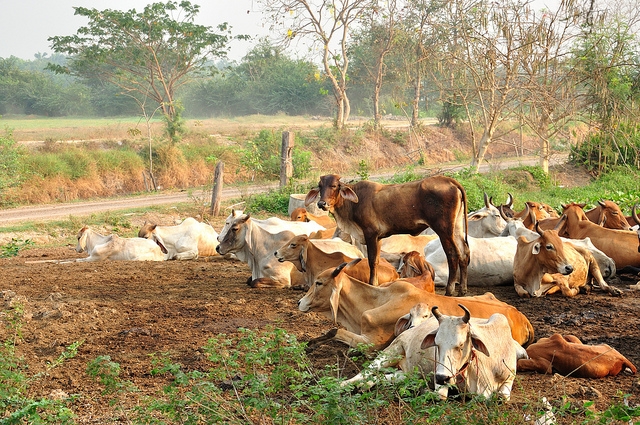
Institutions like the National Dairy Development Board and the cooperative movement symbolized by Amul built this strength brick by brick - village by village.
But sovereignty cannot end at customs checkpoints.
It must extend to the breeding shed.
The Real Question No One Is Asking
Reports of foreign philanthropic funding for artificial insemination centres in parts of Maharashtra are being framed as development assistance.
But here is the sharper question:
Who shapes the genetic future of India’s cattle?
Because breeding is not clerical work. It is strategic architecture.
Control breeding, and you control:
● Which breeds expand
● Which traits dominate
● Which genetic lines fade
● Who owns breeding data
● Who influences long-term dairy economics
You don’t need to import milk if you can influence the biology that produces it.
Dairy Should Not be a foreign NGO Playground
India already runs one of the largest artificial insemination programmes in the world through the Rashtriya Gokul Mission and state veterinary systems.
We are not a country discovering livestock science for the first time.
So the obvious question emerges:
Why must strategic breeding infrastructure rely on external philanthropic capital?
Is the fifth-largest economy in the world short of money?
Or is it short of conviction?
The Climate Narrative and the “Fixing” of Cows
Globally, cattle are increasingly framed as methane emitters. Major global foundations, including the Bill & Melinda Gates Foundation, openly speak of “fixing” cows - through dietary supplements, productivity optimization, and future gene-editing research.
But India’s cattle are not industrial livestock units.
They are heat-resilient, multi-functional assets embedded in rural ecology.
They provide milk, yes - but also dung for regenerative agriculture, draft power in some regions, and financial resilience in uncertain monsoons.
Viewing them purely through emission metrics reduces a civilizational asset to a climate statistic.
Genetic Direction Is Economic Direction
Artificial insemination is not morally good or bad.
It is powerful.
And power requires governance.
Past waves of aggressive crossbreeding already produced consequences:
● Heat intolerance
● Fertility decline
● Veterinary dependency
● Rising input costs
Productivity improved - but resilience eroded in places.
Now ask:
Are we entering another phase where yield and climate compliance override indigenous resilience?
Are breeding priorities being quietly aligned to global narratives rather than Indian realities?
These are not paranoid questions. They are sovereign ones.
Trade Sovereignty Without Genetic Sovereignty Is Hollow
India rightly resists dairy imports at trade tables.
But what is the value of tariff protection if genetic direction is influenced elsewhere?
Border control without biological control is incomplete sovereignty.
Food systems are not software platforms. They cannot be “pivoted” easily once direction shifts.
Genetic change is slow, compounding, and difficult to reverse.
India Does Not Need Permission to Protect Its Cattle
This is not about rejecting global collaboration.
It is about refusing casual dependency in a sector that feeds the nation.
If artificial insemination infrastructure needs expansion, Indian CSR can fund it. Cooperative networks can fund it. Public-private Indian capital can fund it.
Dairy built India’s rural stability.
It should not become a laboratory for external frameworks that may not fully align with our agrarian complexity.
Let Us Learn From Our History
And sovereignty, if it means anything, must begin at the level of food.
That decision was not protectionism. It was realism.
Dairy in India is not just business. It is a livelihood for over 80 million rural households. It is daily cash flow for women. It is nutritional security for children. It is decentralized economic power.
Institutions like the National Dairy Development Board and the cooperative movement symbolized by Amul built this strength brick by brick - village by village.
But sovereignty cannot end at customs checkpoints.
It must extend to the breeding shed.
The Real Question No One Is Asking
Reports of foreign philanthropic funding for artificial insemination centres in parts of Maharashtra are being framed as development assistance.
But here is the sharper question:
Who shapes the genetic future of India’s cattle?
Because breeding is not clerical work. It is strategic architecture.
Control breeding, and you control:
● Which breeds expand
● Which traits dominate
● Which genetic lines fade
● Who owns breeding data
● Who influences long-term dairy economics
You don’t need to import milk if you can influence the biology that produces it.
Dairy Should Not be a foreign NGO Playground
India already runs one of the largest artificial insemination programmes in the world through the Rashtriya Gokul Mission and state veterinary systems.
We are not a country discovering livestock science for the first time.
So the obvious question emerges:
Why must strategic breeding infrastructure rely on external philanthropic capital?
Is the fifth-largest economy in the world short of money?
Or is it short of conviction?
The Climate Narrative and the “Fixing” of Cows
Globally, cattle are increasingly framed as methane emitters. Major global foundations, including the Bill & Melinda Gates Foundation, openly speak of “fixing” cows - through dietary supplements, productivity optimization, and future gene-editing research.
But India’s cattle are not industrial livestock units.
They are heat-resilient, multi-functional assets embedded in rural ecology.
They provide milk, yes - but also dung for regenerative agriculture, draft power in some regions, and financial resilience in uncertain monsoons.
Viewing them purely through emission metrics reduces a civilizational asset to a climate statistic.
Genetic Direction Is Economic Direction
Artificial insemination is not morally good or bad.
It is powerful.
And power requires governance.
Past waves of aggressive crossbreeding already produced consequences:
● Heat intolerance
● Fertility decline
● Veterinary dependency
● Rising input costs
Productivity improved - but resilience eroded in places.
Now ask:
Are we entering another phase where yield and climate compliance override indigenous resilience?
Are breeding priorities being quietly aligned to global narratives rather than Indian realities?
These are not paranoid questions. They are sovereign ones.
Trade Sovereignty Without Genetic Sovereignty Is Hollow
India rightly resists dairy imports at trade tables.
But what is the value of tariff protection if genetic direction is influenced elsewhere?
Border control without biological control is incomplete sovereignty.
Food systems are not software platforms. They cannot be “pivoted” easily once direction shifts.
Genetic change is slow, compounding, and difficult to reverse.
India Does Not Need Permission to Protect Its Cattle
This is not about rejecting global collaboration.
It is about refusing casual dependency in a sector that feeds the nation.
If artificial insemination infrastructure needs expansion, Indian CSR can fund it. Cooperative networks can fund it. Public-private Indian capital can fund it.
Dairy built India’s rural stability.
It should not become a laboratory for external frameworks that may not fully align with our agrarian complexity.
Let Us Learn From Our History
India was not weakened historically only by military force.
It was weakened when economic systems became dependent.
Today the risks are subtler.
They operate through supply chains, standards, narratives, and genetics.
India showed spine at the border.
Now it must show clarity at the root.
Because once the genetic trajectory of a livestock system is set, it shapes decades of rural economics.