Repeated mobs, repeated deaths: Hindus persecution continues unchecked in Bangladesh
Total Views |


In January, the Bangladesh-led Unity Council, by the chief adviser ,claimed investigations had identified 645 incidents involving minorities in 2025 but categorised only 71 as communal, labelling the remaining 574 as non-communal. However, a leading minority rights body, the Bangladesh Hindu Buddhist Christian Unity Council slammed the government and said it was downplaying attacks on minorities by classifying most incidents as “non-communal”.
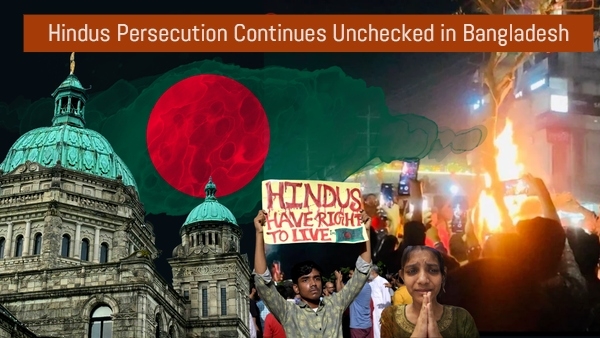
Communal violence remained widespread in Bangladesh in 2025, with 522 incidents reported during the year, including 61 murders. It said the violence resulted in 66 deaths and included 28 cases of violence against women, including rape and gang rape. It also recorded 95 attacks on places of worship and 102 attacks on minority homes and business establishments. It said fear and insecurity continue to prevail among religious and ethnic minorities, particularly women, youth and small business owners, forcing many families into internal displacement.
And particularly, the killings of Hindus have become the latest expression of a long-running pattern of persecution faced by the Hindu minority. Within less than a month, at least twelve Hindus were killed, many through mob violence and extrajudicial punishment, underscoring how quickly minorities become exposed when political unrest intersects with religious radicalism and institutional failure.
Those killed include Dipu Chandra Das, Amrit Mondal (also known as Samrat), Dilip Bormon, Prantosh Kormokar, Utpol Sarkar, Zogesh Chandra Roy, Suborna Roy, Shanto Das, Ripon Kumar Sarkar, Pratap Chandra, Swadhin Chandra and Polash Chandra. While the government have attempted to present each death as a separate criminal episode, the pattern reveals systematic vulnerability.
Several killings followed blasphemy allegations, a charge that has become a powerful tool for targeting Hindus. Such accusations often emerge without evidence, formal complaints or investigation, yet they are sufficient to incite mobs and legitimise extreme violence. In other cases, victims were accused of extortion or criminal conduct, but the outcome remained the same: mob justice replaced lawful arrest and judicial process.
The killing of Dipu Chandra Das, a Hindu garment worker in Mymensingh district, exemplifies this dynamic. Accused of making derogatory remarks about Islam during a workplace event, he was assaulted by a mob, tied to a tree, hanged and set on fire. Investigators later stated that no direct evidence of blasphemy was found, highlighting how easily unverified claims can escalate into public execution when state safeguards collapse.
Similarly, Amrit Mondal was beaten to death in Rajbari district, with authorities later emphasising his alleged criminal background to dismiss any communal angle. Yet regardless of allegations, his death at the hands of a mob rather than through arrest reinforced a widespread perception among Hindus that due process is often denied when the accused belongs to a minority community.
These killings unfolded amid widespread protests and political instability that strained law enforcement and administrative capacity across multiple districts.
The persecution of Hindus in Bangladesh is defined by repetition: repeated allegations, repeated mobs, repeated deaths and repeated official assurances that fail to alter outcomes. The killings of Hindu minorities are not anomalies; they are part of an established pattern in which political unrest, radical mobilisation and anti-India posturing converge, leaving minorities acutely vulnerable.
Until allegations religious or criminal are addressed through lawful mechanisms and minorities are protected irrespective of political expediency, the persecution of Hindus in Bangladesh will persist.
Communal violence remained widespread in Bangladesh in 2025, with 522 incidents reported during the year, including 61 murders. It said the violence resulted in 66 deaths and included 28 cases of violence against women, including rape and gang rape. It also recorded 95 attacks on places of worship and 102 attacks on minority homes and business establishments. It said fear and insecurity continue to prevail among religious and ethnic minorities, particularly women, youth and small business owners, forcing many families into internal displacement.
And particularly, the killings of Hindus have become the latest expression of a long-running pattern of persecution faced by the Hindu minority. Within less than a month, at least twelve Hindus were killed, many through mob violence and extrajudicial punishment, underscoring how quickly minorities become exposed when political unrest intersects with religious radicalism and institutional failure.
Those killed include Dipu Chandra Das, Amrit Mondal (also known as Samrat), Dilip Bormon, Prantosh Kormokar, Utpol Sarkar, Zogesh Chandra Roy, Suborna Roy, Shanto Das, Ripon Kumar Sarkar, Pratap Chandra, Swadhin Chandra and Polash Chandra. While the government have attempted to present each death as a separate criminal episode, the pattern reveals systematic vulnerability.
Several killings followed blasphemy allegations, a charge that has become a powerful tool for targeting Hindus. Such accusations often emerge without evidence, formal complaints or investigation, yet they are sufficient to incite mobs and legitimise extreme violence. In other cases, victims were accused of extortion or criminal conduct, but the outcome remained the same: mob justice replaced lawful arrest and judicial process.
The killing of Dipu Chandra Das, a Hindu garment worker in Mymensingh district, exemplifies this dynamic. Accused of making derogatory remarks about Islam during a workplace event, he was assaulted by a mob, tied to a tree, hanged and set on fire. Investigators later stated that no direct evidence of blasphemy was found, highlighting how easily unverified claims can escalate into public execution when state safeguards collapse.
Similarly, Amrit Mondal was beaten to death in Rajbari district, with authorities later emphasising his alleged criminal background to dismiss any communal angle. Yet regardless of allegations, his death at the hands of a mob rather than through arrest reinforced a widespread perception among Hindus that due process is often denied when the accused belongs to a minority community.
These killings unfolded amid widespread protests and political instability that strained law enforcement and administrative capacity across multiple districts.
The persecution of Hindus in Bangladesh is defined by repetition: repeated allegations, repeated mobs, repeated deaths and repeated official assurances that fail to alter outcomes. The killings of Hindu minorities are not anomalies; they are part of an established pattern in which political unrest, radical mobilisation and anti-India posturing converge, leaving minorities acutely vulnerable.
Until allegations religious or criminal are addressed through lawful mechanisms and minorities are protected irrespective of political expediency, the persecution of Hindus in Bangladesh will persist.