Then vs Now: How Maharashtra rewrote its investment story at Davos
Total Views |


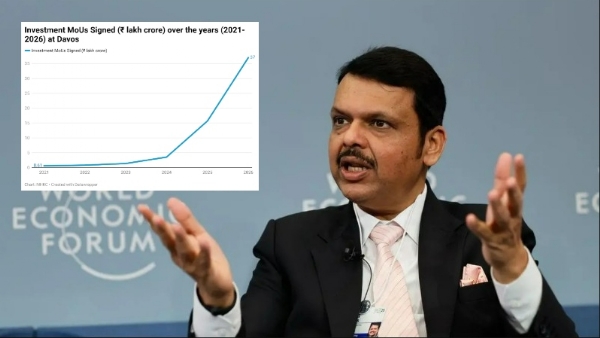
In 2021, Maharashtra signed MoUs worth ₹61,000 crore at the Davos Summit. Five years later, that figure has surged to ₹37 lakh crore, an almost 61-fold increase. This dramatic jump did not happen by chance. It reflects a fundamental shift in vision, political will, and a clear roadmap for the future. These are all essential pillars for the state’s long-term growth.
What happened at the Davos 2026 summit?
Out of the 10 states representing India, Maharashtra topped by securing the largest investment commitments. The state signed as many as 81 MoUs of Rs 30 lakh crore, of which 83% are FDI proposals having the potential to create 43 lakh jobs. The 83% of the agreements involve direct FDI, with investments coming from 18 countries. Another 16% of the investments are through foreign technology partnerships. The contributing countries include the United States, the United Kingdom, Singapore, Japan, Switzerland, Sweden, the Netherlands, Norway, Italy, Germany, France, Austria, the UAE, Spain, Canada, and Belgium, among others.
The companies that inked pacts range from OpenAI, and data centre major Iron Mountain, Princeton Data Group, Ghostworks, Volkswagen, Skoda, Brookfield, ArcelorMittal, Finman Global, Essar, STT Telemedia, Bosch, CapitaLand and even Coca-Cola, while the Indian giants are Tatas, Reliance, JBL, Adani groups.
Some of these Indian companies operate in over 165 countries worldwide. The investments cover high-growth and future-ready sectors such as Quantum Computing, Artificial Intelligence (AI), Global Capability Centres (GCCs), Data Centres, Healthcare, Food Processing, Green Steel, Urban Development, Shipbuilding, Fintech, Logistics and Digital Infrastructure
The state has also entered into institutional collaborations with organisations such as JICA, JBIC, the University of California, the University of Berkeley, and Stanford University’s Stanford Biodesign program, further strengthening Maharashtra’s innovation and technology ecosystem.
Then vs Now: How Maharashtra’s investment story changed?
Over the last five years, Maharashtra at the World Economic Forum's Davos Summit has undergone a significant transformation, both in scale and in substance. What was once a modest, uncertain and scattered investment outreach has evolved into one integrated investment drive in the world. The numbers say so.
A major highlight was the performance of the Mumbai Metropolitan Region Development Authority (MMRDA), which alone secured agreements worth ₹19 lakh crore. These investments are tied to large-scale, future-oriented projects such as the proposed Third Mumbai smart city in the Raigad–Pen region, Innovation City, hyperscale data centres, and green industrial corridors.
Sectoral distribution
Fadnavis presented a clear vision of Maharashtra’s future, which is moving beyond traditional IT services to become a global hub for AI, fintech, green industry, and digital infrastructure. The state signed a landmark MoU with US-based Supervity AI to set up the world’s first AI Global Capability Centre in Mumbai’s BKC, focused on advanced “agentic AI” systems that can run business operations independently. This step places Maharashtra among the early movers in AI-first enterprise models being adopted worldwide.
At the same time, Fadnavis pushed strong investments in green steel, logistics, fintech, and data centres to meet rising global demand while ensuring balanced regional growth in Vidarbha. From a ₹1.1 lakh crore green steel project by ArcelorMittal to a ₹2.28 lakh crore fintech city project in MMR, and large logistics and data-centre investments generating lakhs of jobs, the strategy reflects development with scale, sustainability, and global standards. Together, these moves underline Fadnavis’s “Vikas” approach, which is building a future-ready Maharashtra that attracts global capital, creates employment, and strengthens the state’s position in the new digital economy.
Regional Development: The Rise of Third Mumbai and Beyond
A central theme of the Davos 2026 engagements was the strategic redistribution of industrial activity across the state to ensure balanced regional growth. While the Mumbai Metropolitan Region continues to attract the highest density of investment, the government has used the summit to establish industries in the developing regions as well.
Reality Check: Are MoUs Delivering Now? & Why Davos?
There are always questions being raised by the current Opposition that, although the ministers sign these MoUs with big giants, are they really being implemented on the ground. So, the answer is yes, especially in the case of last year's summit.
Notably, the realisation rate of the previous year’s (2025) MoUs stood at an impressive 75%. It is also important to recognise that setting up large industrial projects typically takes a minimum of four to five years, making immediate full-scale execution unrealistic.
On the other hand, when it comes to the MoUs signed by the Opposition during its own tenure, no clear statements or data have been provided regarding their implementation status. This contrast speaks of the Opposition’s double standards.
Speaking of the Opposition, it once again stirred controversy by questioning why the government was going to Davos to sign MoUs, arguing that such agreements could have been concluded domestically, much like it did last year. This year, too, it was quick to pounce.
Congress Rajya Sabha MP and general-secretary (communications) Jairam Ramesh posted on X that "the Maharashtra CM goes to Davos and signs an MoU with a company owned by a minister’s son". He added, pointedly, "Did it really have to be signed in Switzerland, or is there some hidden meaning in this odd event?" Mumbai Congress chief and MP Varsha Gaikwad also slammed these “Indian-with-Indian” MoUs in Davos as unnecessary and a waste of public funds.
First of all, the Opposition seems not to remember that it too had travelled to Davos to sign similar MoUs while in power. Second, it should be noted that Davos functions as a global credibility platform, where investment commitments, whether from Indian or foreign companies, carry greater international validation and visibility. Many Indian firms operating at Davos are multinational in nature, bringing with them global capital, foreign clients and integration into international supply chains, a sentiment echoed by the Chief Minister. "Though some of the companies with whom we signed MoUs are Indian, they have a presence in more than a hundred countries across the world. They bring a foreign direct investment component through partnership with global franchises”, he said.
Overall, it is important to note that these MoUs strengthened the position of Maharashtra by converting global investor interest into formal commitments and building long-term confidence, as Maharashtra has consistently ranked as India’s top state for foreign direct investment, accounting for a significant share of the country’s total inflows. And, this in turn, supports Maharashtra’s ambition to become a $1 trillion economy by driving export growth, expanding manufacturing’s share in GDP, and positioning the state as a technology and innovation leader.
What happened at the Davos 2026 summit?
Out of the 10 states representing India, Maharashtra topped by securing the largest investment commitments. The state signed as many as 81 MoUs of Rs 30 lakh crore, of which 83% are FDI proposals having the potential to create 43 lakh jobs. The 83% of the agreements involve direct FDI, with investments coming from 18 countries. Another 16% of the investments are through foreign technology partnerships. The contributing countries include the United States, the United Kingdom, Singapore, Japan, Switzerland, Sweden, the Netherlands, Norway, Italy, Germany, France, Austria, the UAE, Spain, Canada, and Belgium, among others.
The companies that inked pacts range from OpenAI, and data centre major Iron Mountain, Princeton Data Group, Ghostworks, Volkswagen, Skoda, Brookfield, ArcelorMittal, Finman Global, Essar, STT Telemedia, Bosch, CapitaLand and even Coca-Cola, while the Indian giants are Tatas, Reliance, JBL, Adani groups.
Some of these Indian companies operate in over 165 countries worldwide. The investments cover high-growth and future-ready sectors such as Quantum Computing, Artificial Intelligence (AI), Global Capability Centres (GCCs), Data Centres, Healthcare, Food Processing, Green Steel, Urban Development, Shipbuilding, Fintech, Logistics and Digital Infrastructure
The state has also entered into institutional collaborations with organisations such as JICA, JBIC, the University of California, the University of Berkeley, and Stanford University’s Stanford Biodesign program, further strengthening Maharashtra’s innovation and technology ecosystem.
Then vs Now: How Maharashtra’s investment story changed?
Over the last five years, Maharashtra at the World Economic Forum's Davos Summit has undergone a significant transformation, both in scale and in substance. What was once a modest, uncertain and scattered investment outreach has evolved into one integrated investment drive in the world. The numbers say so.
A major highlight was the performance of the Mumbai Metropolitan Region Development Authority (MMRDA), which alone secured agreements worth ₹19 lakh crore. These investments are tied to large-scale, future-oriented projects such as the proposed Third Mumbai smart city in the Raigad–Pen region, Innovation City, hyperscale data centres, and green industrial corridors.
Sectoral distribution
Fadnavis presented a clear vision of Maharashtra’s future, which is moving beyond traditional IT services to become a global hub for AI, fintech, green industry, and digital infrastructure. The state signed a landmark MoU with US-based Supervity AI to set up the world’s first AI Global Capability Centre in Mumbai’s BKC, focused on advanced “agentic AI” systems that can run business operations independently. This step places Maharashtra among the early movers in AI-first enterprise models being adopted worldwide.
At the same time, Fadnavis pushed strong investments in green steel, logistics, fintech, and data centres to meet rising global demand while ensuring balanced regional growth in Vidarbha. From a ₹1.1 lakh crore green steel project by ArcelorMittal to a ₹2.28 lakh crore fintech city project in MMR, and large logistics and data-centre investments generating lakhs of jobs, the strategy reflects development with scale, sustainability, and global standards. Together, these moves underline Fadnavis’s “Vikas” approach, which is building a future-ready Maharashtra that attracts global capital, creates employment, and strengthens the state’s position in the new digital economy.
Regional Development: The Rise of Third Mumbai and Beyond
A central theme of the Davos 2026 engagements was the strategic redistribution of industrial activity across the state to ensure balanced regional growth. While the Mumbai Metropolitan Region continues to attract the highest density of investment, the government has used the summit to establish industries in the developing regions as well.
Reality Check: Are MoUs Delivering Now? & Why Davos?
There are always questions being raised by the current Opposition that, although the ministers sign these MoUs with big giants, are they really being implemented on the ground. So, the answer is yes, especially in the case of last year's summit.
Notably, the realisation rate of the previous year’s (2025) MoUs stood at an impressive 75%. It is also important to recognise that setting up large industrial projects typically takes a minimum of four to five years, making immediate full-scale execution unrealistic.
On the other hand, when it comes to the MoUs signed by the Opposition during its own tenure, no clear statements or data have been provided regarding their implementation status. This contrast speaks of the Opposition’s double standards.
Speaking of the Opposition, it once again stirred controversy by questioning why the government was going to Davos to sign MoUs, arguing that such agreements could have been concluded domestically, much like it did last year. This year, too, it was quick to pounce.
Congress Rajya Sabha MP and general-secretary (communications) Jairam Ramesh posted on X that "the Maharashtra CM goes to Davos and signs an MoU with a company owned by a minister’s son". He added, pointedly, "Did it really have to be signed in Switzerland, or is there some hidden meaning in this odd event?" Mumbai Congress chief and MP Varsha Gaikwad also slammed these “Indian-with-Indian” MoUs in Davos as unnecessary and a waste of public funds.
First of all, the Opposition seems not to remember that it too had travelled to Davos to sign similar MoUs while in power. Second, it should be noted that Davos functions as a global credibility platform, where investment commitments, whether from Indian or foreign companies, carry greater international validation and visibility. Many Indian firms operating at Davos are multinational in nature, bringing with them global capital, foreign clients and integration into international supply chains, a sentiment echoed by the Chief Minister. "Though some of the companies with whom we signed MoUs are Indian, they have a presence in more than a hundred countries across the world. They bring a foreign direct investment component through partnership with global franchises”, he said.
Overall, it is important to note that these MoUs strengthened the position of Maharashtra by converting global investor interest into formal commitments and building long-term confidence, as Maharashtra has consistently ranked as India’s top state for foreign direct investment, accounting for a significant share of the country’s total inflows. And, this in turn, supports Maharashtra’s ambition to become a $1 trillion economy by driving export growth, expanding manufacturing’s share in GDP, and positioning the state as a technology and innovation leader.