Nation First, Faith Later! Understanding the Sangh’s Minority Discourse
In his writings, Guruji keeps on underlining the fact that, “the Sangh has never advocated ill-treatment of any minority. And that all those who live in this land, with loyalty to the nation, are a part of the national life.”
NewsBharati 07-Feb-2026 19:06:38 PM
Total Views |


Few organisations in modern India have been as persistently misunderstood as the Rashtriya Swayamsevak Sangh (RSS). Nowhere is this misunderstanding deeper than in how the Sangh’s relationship with minorities is perceived. Popular narratives, that are largely shaped by ideological opponents, reduce the RSS to a caricature characterized with rigidity, exclusive, and hostile to non-Hindus. Yet a serious engagement with Sangh literature, writings by the leaders, and lived historical experiences tells a far more layered story that deserves to be understood directly, without any inherited prejudice.
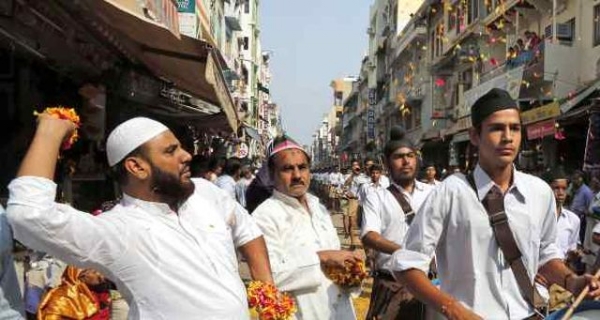
The RSS was founded in 1925 by Dr. K.B. Hedgewar at a time when the Indian society was fractured by colonial policies, communal violence, and internal social divisions. Dr. Hedgewar’s concern was not theological dominance but social cohesion and national self-confidence. According to the Sangh thought, “Hindu” was not merely a religious label but a civilisational identity, an umbrella under which diverse customs, sects, languages, and ways of worship had coexisted for centuries. This distinction is crucial, and it is often deliberately ignored in polemical readings.
One of the clearest articulations of the Sangh’s approach to minorities comes from M.S. Golwalkar, often referred to as ‘Guruji’. In his writings, Guruji keeps on underlining the fact that, “the Sangh has never advocated ill-treatment of any minority. And that all those who live in this land, with loyalty to the nation, are a part of the national life.”
This idea of ‘national unity’ over ‘religious antagonism’ has remained a consistent refrain in Sangh discourse.
Another often overlooked chapter lies in the Sangh’s engagement with Christian and tribal communities. The work of Vanvasi Kalyan Ashram, inspired by Sangh philosophy, focused on education, healthcare, and cultural dignity among tribal populations,many of whom had experienced aggressive missionary activity that sought to alienate them from their civilisational roots. The Sangh’s response to this was not of coercion but that of cultural confidence, where schools, hostels, and social service rooted in respect for local traditions were encouraged. Even critics acknowledge that these efforts relied more on persuasion and service than force.
Perhaps the strongest counter to the “RSS versus minorities” binary comes from the Sangh’s own repeated invitation to dialogue. Muslim Rashtriya Manch (MRM), founded with the support of senior RSS leaders, emerged from the belief that India’s Muslims are not outsiders but inheritors of this land’s history. The MRM openly encourages Muslims to engage with the Sangh, read its literature, attend shakhas if they wish, and judge the organisation by experience, instead of any hearsay. This initiative directly contradicts the idea of inherent hostility.
Importantly, the RSS has never claimed perfection. Internal writings acknowledge social shortcomings, caste prejudices, regional biases, and communication gaps. But unlike ideological movements that deny fault, the Sangh’s approach has been reform from within, grounded in daily self-discipline rather than abstract moral posturing.
Left-leaning literature often interprets the RSS through the lens of Western identity politics, where majority assertion is automatically framed as oppression. Sangh literature, by contrast, speaks the language of civilisation, continuity, and responsibility. It asks minorities not to abandon their faiths but to see themselves as stakeholders in a shared national destiny.
Hence, in order to understand the Sangh’s perspective about minorities, it is important to read the Sangh in its own words, observe its work on the ground, and engage directly with its people. Preconceived hostility benefits neither India nor its communities. Understanding, even when accompanied by disagreement, is the first step toward a more honest national conversation.
The RSS has never demanded to be believed blindly. Rather it has always asked only to be understood fairly, without any prejudices or preconceived biases.
--
Himali Nalawade
Himali Nalawade is associated with News Bharati as an Author since a considerable period. She is mostly linked with researched articles from the areas of Defence, Defence Infrastructure and Culture-Religion. Along with her Masters in Mass Communication and Journalism after her graduation in History, she has also studied Diploma in Underwater Archaeology and Diploma in Indology.