A generation in service of another generation
NewsBharati 11-Mar-2026 11:29:03 AM
Total Views |


How service is executed in organisations
The army is functionally divided into different departments with specific roles. These are usually referred to as corps. It could be the armoured corps or the supply corps, for instance.
There are broadly two blobs, one called the services and the other called arms.
The services are there to support the arms. They are typically for logistics, ordinance and medical cover.

ASC is the Army Service Corps, which is the backbone for food, rations and Fuel of all types. It is responsible for the end-to-end logistics, procurement, and distribution of essential supplies, including food, fuel, oil, lubricants (FOL), clothing, and ammunition, to ensure combat readiness.
The Army Ordnance Corps (AOC) acts as the primary material management and logistics arm of the Indian Army, ensuring combat readiness by procuring, storing, and issuing a vast range of equipment, ammunition, and clothing. Often described as the "force behind the force" that ensures soldiers never run out of essential gear.
Corps of Electronics and Mechanical Engineers (EME) for repairs and maintenance of all equipment, including vehicles and tanks.
Army Medical Corps (AMC) provides medical services right from medical cover to the smallest unit to very large hospitals in both war and peacetime.
There are other smaller supporting elements too, but the largest four are ASC, AOC, AMC and EME.
I would like to draw an analogy of this service's attitude in the modern society that we have transformed into.
The elders in the society are a support system for the Gen Next
Parents have always been a support system for children, from generation to generation. In the decades of 50’s, 60’s and 70’s, the support was more in the advisory capacity and emotional anchorage, where children when in difficulty of any type would take advise from their parents who had worldly wisdom who had a very good way to handle even delicate family disputes or an altercation, difference of opinions, amongst siblings, spouses or within a family regarding grandchildren. This was called ‘salah mash Wara’. The young generation who had their parents till they themselves became elderly, say in their 50s and 60’s, considered themselves to be lucky to have them at hand for consulting on very important and delicate issues. Often discussed together on a dining table or the sitting room this was a very big emotional support. Many still remember the parental advice even today. You often hear ‘my mother always said…’. moral compass was all the time fed and oiled by parents, and that is what was known as good parenting and ‘family values.’
Mothers were a great learning encyclopedia. Even if not very educated, the children were prepared to learn basic values from their mothers.
“God could not be everywhere, and therefore he made mothers." - Rudyard Kipling
Fathers also had a very positive role to play. Amitabh Bachchan many times quotes his father’s advice and says ‘Babuji said this’, no qualms calling him as he addressed him- ‘Babuji’ never said ‘dad, pop or father.’
These were words of wisdom.
I remember Mr Bachchan saying ‘babuji kehte thei – jo maan ka wo achcha, jo maan ka nahi wo aur bhi achcha’. Which had such a deep meaning. It means ‘when you want something and get it, it is good, but if you get something else, it would be better’. So true, I have observed this in my own life; that once one way is blocked, God gives you something which is better. The other way of saying it, by the elders, is ‘God has something better in store for you’. Even if it does not happen, see the spirit behind it, and the feeling of comfort.
Even Anupam Kher talks very affectionately and with so much of reverence about his late father.
Film star Akshay Kumar drew strength from his mother. He often credited her for his success and stability.
Akshay wrote on social media, "Even in this day and age, you're the only one whose one hand on my head can comfort me in troubled times because I know there's nothing I can't do with your blessings maa".
These are in the broader sense ‘sanskars’. Values can be and must be taught by parents.
Based on her public interviews and personal reflections, journalist Palki Sharma Upadhyay has often spoken about her upbringing, noting that her mother was a significant influence who taught her to be independent and to challenge herself. she has frequently cited her mother's role as a teacher and manager of household affairs as a foundational pillar of her upbringing and work ethic.
A two-way street
Why in a family four boys become totally different persona as they grow up? One becomes a doctor, the other a police officer, third a successful lawyer and rises to become a judge and one fellow becomes a goon or a smuggler. Same home, same environment, same food, same parents, same genes and parents passed on good values to all four. Then why the difference? There is no simple answer to this.
One most important difference could be that if parents give Sanskar, the child has to take the Sanskar no.
Here too, there are words of wisdom as one cannot understand the power of creation and Almighty.
“Haath ki paanch ungliyan barabar nahi hoti.” All five fingers of a hand are not same.
Things have changed drastically in era of modernisation
The most serious challenge today is that everyone feels they are wise. You have a 23-year-old mentoring a 22-year-old- give me a break. The young generation, popularly called Gen Z, is a ‘know-all’ generation- at least they think so. The quote below says it all.
“When I was a boy of 14, my father was so ignorant I could hardly stand to have the old man around. But when I got to be 21, I was astonished at how much the old man had learned in seven years.”
― Mark Twain
Nanny mothers- they always serve
As you have services in the Army, who are the providers? The parents today are no longer advisors; they are service providers. Children do not want to take advice- it is a strict no-no. Don’t tell me what is right or wrong, just get things done for me.
I was surprised when talking to a mother (a widow) of a student joining the MBA program in our institute. She had come to ‘settle’ her kid, yes, kid (24-year-old hulk of a man), all the way from Dehradun, changing two trains. Why have you come I asked ‘Bachche ko settle karna hai, uska kamra theek karna hai, bistar lagana hai’ Oh my god, what is happening? He was standing in front of me, taller than me at 6 feet plus. No shame.
Tech-savvy sons of mothers treat them as CSP (cellular service provider) I thought.
When you watch movies like ‘IKKIS’ where a young 21-year-old Indian army officer, 2nd lt Arun Khetarpal, just out of training academy goes to war with Pakistan on the western front and single-handedly destroys several enemy tanks and then finally being martyred earning a PVC, one wonders where such guys have vanished now. Today, a 21-year-old will expect his mother to change his diaper too!
A Family man
Once married, the parents are there to do babysitting too. They are expected to bring home-cooked food too.
Even servicing of air conditioners, cars and repairs are outsourced to parents- they are ASC, AOC, EME, AMC rolled into one- IPC (Indian Parental corps).
Foreign Service
Indian parents who go abroad do complete -Bartan, jhadoo, pochcha- (BJP) for their sons and daughters. The workload is clearly defined, and you'd better do it ‘emotional love’ or ‘emotional atyachaar’? Your call.
Today, divorces happen at the drop of a hat. No need to get involved, in this case they are independent and take their own decisions. No ‘mashwara please’. Advise to bhool jao.
Ghar ghar ki kahani. Every second home, this goes on, and one friend said, ‘Our generation laid beds for our parents and now we do it for our children’.
Divorce tera chchakar maa baap lagate hain. Is it something emotional or more than what meets the eye?
The bottom line
With phrases like “you’re lucky I even talk to you” and “I don’t even know why I come over,” selfish adult kids manipulate their parents' innate desire to spend time together, while subsequently guilt-tripping them into getting what they want. Whether it’s financial support or some other request, setting boundaries in this relationship is essential. No parent should be forced to do anything for their adult child, especially when they’re not met with an ounce of gratitude.
“Emotional blackmail is an attempt to manipulate another person by using guilt, anger, and sometimes pity to force that person into doing something they might not otherwise do.” ― Christopher Kingler,
The army is functionally divided into different departments with specific roles. These are usually referred to as corps. It could be the armoured corps or the supply corps, for instance.
There are broadly two blobs, one called the services and the other called arms.
The services are there to support the arms. They are typically for logistics, ordinance and medical cover.
ASC is the Army Service Corps, which is the backbone for food, rations and Fuel of all types. It is responsible for the end-to-end logistics, procurement, and distribution of essential supplies, including food, fuel, oil, lubricants (FOL), clothing, and ammunition, to ensure combat readiness.
The Army Ordnance Corps (AOC) acts as the primary material management and logistics arm of the Indian Army, ensuring combat readiness by procuring, storing, and issuing a vast range of equipment, ammunition, and clothing. Often described as the "force behind the force" that ensures soldiers never run out of essential gear.
Corps of Electronics and Mechanical Engineers (EME) for repairs and maintenance of all equipment, including vehicles and tanks.
Army Medical Corps (AMC) provides medical services right from medical cover to the smallest unit to very large hospitals in both war and peacetime.
There are other smaller supporting elements too, but the largest four are ASC, AOC, AMC and EME.
I would like to draw an analogy of this service's attitude in the modern society that we have transformed into.
The elders in the society are a support system for the Gen Next
Parents have always been a support system for children, from generation to generation. In the decades of 50’s, 60’s and 70’s, the support was more in the advisory capacity and emotional anchorage, where children when in difficulty of any type would take advise from their parents who had worldly wisdom who had a very good way to handle even delicate family disputes or an altercation, difference of opinions, amongst siblings, spouses or within a family regarding grandchildren. This was called ‘salah mash Wara’. The young generation who had their parents till they themselves became elderly, say in their 50s and 60’s, considered themselves to be lucky to have them at hand for consulting on very important and delicate issues. Often discussed together on a dining table or the sitting room this was a very big emotional support. Many still remember the parental advice even today. You often hear ‘my mother always said…’. moral compass was all the time fed and oiled by parents, and that is what was known as good parenting and ‘family values.’
Mothers were a great learning encyclopedia. Even if not very educated, the children were prepared to learn basic values from their mothers.
“God could not be everywhere, and therefore he made mothers." - Rudyard Kipling
Fathers also had a very positive role to play. Amitabh Bachchan many times quotes his father’s advice and says ‘Babuji said this’, no qualms calling him as he addressed him- ‘Babuji’ never said ‘dad, pop or father.’
These were words of wisdom.
I remember Mr Bachchan saying ‘babuji kehte thei – jo maan ka wo achcha, jo maan ka nahi wo aur bhi achcha’. Which had such a deep meaning. It means ‘when you want something and get it, it is good, but if you get something else, it would be better’. So true, I have observed this in my own life; that once one way is blocked, God gives you something which is better. The other way of saying it, by the elders, is ‘God has something better in store for you’. Even if it does not happen, see the spirit behind it, and the feeling of comfort.
Even Anupam Kher talks very affectionately and with so much of reverence about his late father.
Film star Akshay Kumar drew strength from his mother. He often credited her for his success and stability.
Akshay wrote on social media, "Even in this day and age, you're the only one whose one hand on my head can comfort me in troubled times because I know there's nothing I can't do with your blessings maa".
These are in the broader sense ‘sanskars’. Values can be and must be taught by parents.
Based on her public interviews and personal reflections, journalist Palki Sharma Upadhyay has often spoken about her upbringing, noting that her mother was a significant influence who taught her to be independent and to challenge herself. she has frequently cited her mother's role as a teacher and manager of household affairs as a foundational pillar of her upbringing and work ethic.
A two-way street
Why in a family four boys become totally different persona as they grow up? One becomes a doctor, the other a police officer, third a successful lawyer and rises to become a judge and one fellow becomes a goon or a smuggler. Same home, same environment, same food, same parents, same genes and parents passed on good values to all four. Then why the difference? There is no simple answer to this.
One most important difference could be that if parents give Sanskar, the child has to take the Sanskar no.
Here too, there are words of wisdom as one cannot understand the power of creation and Almighty.
“Haath ki paanch ungliyan barabar nahi hoti.” All five fingers of a hand are not same.
Things have changed drastically in era of modernisation
The most serious challenge today is that everyone feels they are wise. You have a 23-year-old mentoring a 22-year-old- give me a break. The young generation, popularly called Gen Z, is a ‘know-all’ generation- at least they think so. The quote below says it all.
“When I was a boy of 14, my father was so ignorant I could hardly stand to have the old man around. But when I got to be 21, I was astonished at how much the old man had learned in seven years.”
― Mark Twain
Nanny mothers- they always serve
As you have services in the Army, who are the providers? The parents today are no longer advisors; they are service providers. Children do not want to take advice- it is a strict no-no. Don’t tell me what is right or wrong, just get things done for me.
I was surprised when talking to a mother (a widow) of a student joining the MBA program in our institute. She had come to ‘settle’ her kid, yes, kid (24-year-old hulk of a man), all the way from Dehradun, changing two trains. Why have you come I asked ‘Bachche ko settle karna hai, uska kamra theek karna hai, bistar lagana hai’ Oh my god, what is happening? He was standing in front of me, taller than me at 6 feet plus. No shame.
Tech-savvy sons of mothers treat them as CSP (cellular service provider) I thought.
When you watch movies like ‘IKKIS’ where a young 21-year-old Indian army officer, 2nd lt Arun Khetarpal, just out of training academy goes to war with Pakistan on the western front and single-handedly destroys several enemy tanks and then finally being martyred earning a PVC, one wonders where such guys have vanished now. Today, a 21-year-old will expect his mother to change his diaper too!
A Family man
Once married, the parents are there to do babysitting too. They are expected to bring home-cooked food too.
Even servicing of air conditioners, cars and repairs are outsourced to parents- they are ASC, AOC, EME, AMC rolled into one- IPC (Indian Parental corps).
Foreign Service
Indian parents who go abroad do complete -Bartan, jhadoo, pochcha- (BJP) for their sons and daughters. The workload is clearly defined, and you'd better do it ‘emotional love’ or ‘emotional atyachaar’? Your call.
Today, divorces happen at the drop of a hat. No need to get involved, in this case they are independent and take their own decisions. No ‘mashwara please’. Advise to bhool jao.
They decide to split, and it is done in a split second -‘bachey gaye bhaad main’. This is my life- parents' life does not matter- they are the supply corps at home. AMC too-if someone is sick, you take care- I am too busy earning. ‘I have to be professional, you know’ the practical ‘gyan’. In case of alimony, parents sometimes get caught up. After all, aapki saving kaab kaam ayengi. To start a startup, you mess with the happiness of parents, borrow money and poop off. You don’t care if he dies of a heart attack. ‘Baap ka insurance hai na’.
Divorce tera chchakar maa baap lagate hain. Is it something emotional or more than what meets the eye?
The bottom line
With phrases like “you’re lucky I even talk to you” and “I don’t even know why I come over,” selfish adult kids manipulate their parents' innate desire to spend time together, while subsequently guilt-tripping them into getting what they want. Whether it’s financial support or some other request, setting boundaries in this relationship is essential. No parent should be forced to do anything for their adult child, especially when they’re not met with an ounce of gratitude.
“Emotional blackmail is an attempt to manipulate another person by using guilt, anger, and sometimes pity to force that person into doing something they might not otherwise do.” ― Christopher Kingler,
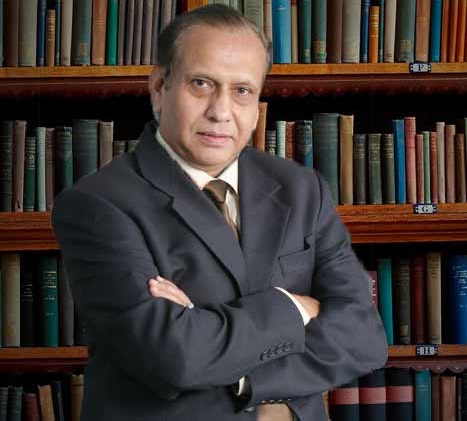
Virender Kapoor
A thinker, educationist and an inspirational guru. Kapoor is an Indian who wears many hats. An educationist of repute, he was the Director of a prestigious management Institute under the Symbiosis umbrella. He has emerged as a leading think tank in human behavior, motivation and success. As a celebrity author, his name appears with the likes of Thomas Friedman and Dale Carnegie. He has authored more than 30 books as of now which are on Amazon worldwide and several of his books are in the pipeline.