India’s response on Khamenei killing: Poor foreign policy or strategic calm?
NewsBharati 11-Apr-2026 14:30:34 PM
Total Views |


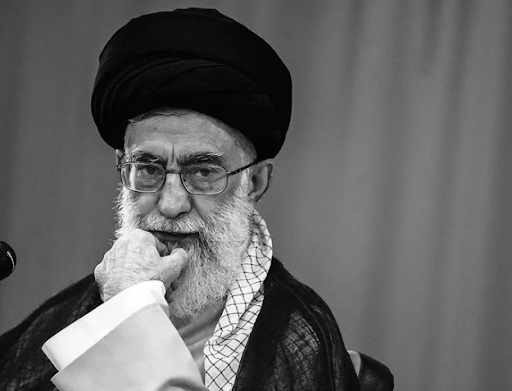
The killing of Iran’s supreme leader Ali Khamenei in a reported US-Israel strike triggered sharp global reactions. Several countries condemned the act outright, calling it a violation of international law. Several others expressed concern over regional instability.
India took a different approach. It neither condemned the strike nor supported it. It simply offered condolences and called for calm. This quiet response drew criticism domestically. Opposition groups and Islamists accused India of abandoning traditional foreign policy values. India's response needs careful examination to understand if it was poor foreign policy or strategic silence.
 India’s response was a careful, deliberate choice. It was shaped by several competing interests and pressures. It was not unprecedented. New Delhi often avoids taking sharp moralistic positions in complex geopolitical conflicts involving especially major powers. Instead, it emphasizes restraint, dialogue, and stability.
This approach reflects a long-standing diplomatic principle: Avoid public alignment in conflicts where national interests intersect with multiple competing actors. In the instant case of Khamanei’s killing, the situation involved Iran, US, and Israel. All are significant to India in different ways.
India's careful response is rooted in balancing valued relationships on both sides of this conflict. Iran matters to India for oil, trade routes, and projects like Chabahar Port. The US and Israel are key partners in defence, technology, and global diplomacy. India condemning the strike would have effectively criticised Washington and Tel Aviv. Supporting the strike would have affected India’s ties with Tehran. Hence, staying neutral was not indecision but an act of preserving relationships with all three intact.
Already, West Asia is one of the most unstable regions in the world. The killing of a figure as significant as Khamenei could easily push things toward a much larger conflict. India has a lot at stake here, not just economically, but demographically. Millions of Indian citizens live and work across Gulf countries. Any escalation could directly impact their safety and livelihoods.
By not taking a side, India has taken the position of not being a party to the conflict. This enables it to evacuate its citizens, talk with multiple sides, or adjust trade and energy ties as the situation develops.
Within India, Khamenei's killing immediately attracted protests and personal condemnations. This reflected the emotional and religious connections some minority communities have with Iran and its leadership. India taking a strong stance either way could have stirred up tensions domestically. A condemnation might have been seen as taking sides on religious grounds. Endorsement of strike could have provoked a different kind of backlash. India's restrained response kept a sensitive situation from bleeding into domestic politics and communal discourse.
India’s Foreign Secretary signing the condolence acknowledges the gravity of the event and maintains respect for Iran as a state. Also, the absence of condemnation avoids assigning direct blame or taking potential sides.
At its core, this reflects how foreign policy has changed. It is less about standing on principle publicly and more about managing relationships and outcomes behind the scenes. A strongly worded statement rarely changes what actually happens on the ground in conflicts like these. What matters more is whether a country can protect its citizens, safeguard its interests, and stay relevant to all sides. Hence, what looks like silence can be the most deliberate choice a country makes.
India’s response to the killing of Ali Khamenei sits at the intersection of diplomacy, strategy, and domestic considerations. It reflects the constraints of operating in a multipolar world where relationships are layered and conflicts interconnected. It was carefully designed to avoid escalation, preserve strategic autonomy, and maintain room for maneuvering. In an increasingly complex global environment, such calibrated ambiguity is becoming the norm.
Another often overlooked layer in the debate is the complexity of Khamenei’s relationship with India. Iran and India have maintained functional diplomatic ties. On multiple occasions, Khamenei had commented on issues like Kashmir and broader Muslim politics. His positions hardly aligned with India’s interests. India’s decision to offer condolences without explicitly condemning the killing is a subtle but significant diplomatic signal.
Thiscareful, ‘understated’ messaging is quite common in modern diplomacy. Countries often signal their positions indirectly instead of loud public statements. It gives them more room to manoeuvre. Some countries issued strong condemnations. Many others called for stability rather than making moral or legal judgments. This puts India's response in perspective. India was not alone in its restraint. It was part of a broader pattern of countries quietly putting their strategic interests first.
At its core, this reflects how foreign policy has changed. It is less about standing on principle publicly and more about managing relationships and outcomes behind the scenes. A strongly worded statement rarely changes what actually happens on the ground in conflicts like these. What matters more is whether a country can protect its citizens, safeguard its interests, and stay relevant to all sides. Hence, what looks like silence can be the most deliberate choice a country makes.
India’s response to the killing of Ali Khamenei sits at the intersection of diplomacy, strategy, and domestic considerations. It reflects the constraints of operating in a multipolar world where relationships are layered and conflicts interconnected. It was carefully designed to avoid escalation, preserve strategic autonomy, and maintain room for maneuvering. In an increasingly complex global environment, such calibrated ambiguity is becoming the norm.
Siddhi Somani
Siddhi Somani is known for her satirical and factual hand in Economic, Social and Political writing. Having completed her post graduation in Journalism, she is currently engaged in completing her Masters in Politics. The author meanwhile is also exploring her hand in analytics and statistics.