What drives a man to rape, knowing that he'll eventually face the law? Horrific mindset documented
And beyond the fear of punishment, what compels them to disrespect the very Shakti they worship and revere during other times of the year?
NewsBharati 16-May-2026 09:17:40 AM
Total Views |


I feel saddened to write this, but it is a reality many women silently live with. Ask any woman today, regardless of her age, how safe she feels around men. Some may immediately say “completely safe,” but many others, perhaps the majority, will pause before answering, even if they want to say the same. That pause speaks volumes. It reflects a discomfort and constant vigilance that forces women to stay alert almost 24/7, at workplaces, schools, colleges, public spaces, and, in some unfortunate cases, even within their own homes. (Delhi gang rape case)
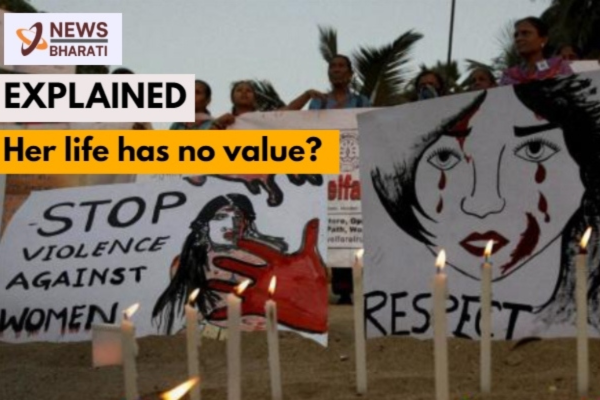
The recent Delhi rape case has once again raised troubling questions, questions that often seem to have no clear answers.
A 30-year-old woman was gang-raped inside a private sleeper bus by the driver and conductor. The incident reportedly took place on the night of May 11 in the Saraswati Vihar Nangloi area of West Delhi. According to police sources and media reports, the woman was returning home from work when she approached a man standing near the bus to ask for the time. She was then forced into the bus, after which the driver and conductor sexually assaulted her while the vehicle moved toward Nangloi.
Delhi Police have arrested both accused and seized the bus. An FIR has also been registered under sections related to rape and gang rape under the Bharatiya Nyaya Sanhita (BNS). Yet, another crucial question remains unanswered: what drives some men to commit such horrific crimes despite knowing they will eventually face the law? And beyond the fear of punishment, what compels them to disrespect the very Shakti they worship and revere during other times of the year?
Another research framework on sexual violence explains that, in some offenders, sexual desire becomes fused with dominance and aggression motivations.
There are also documented cases where convicted offenders or serial rapists spoke about motives during interrogations or prison interviews. In the 2012 Nirbhaya gang rape case, in which a young woman was similarly raped in a running bus on Delhi streets by 5-6 criminals, one of the convicts ended up blaming the victim.
In a report documented by the BBC, the accused Mukesh said it was the victim's fault that she was roaming around with her male friend that late at night. Sending chills down the spine, he added that the woman was 'indecent' and that such women need to be taught a 'lesson'.
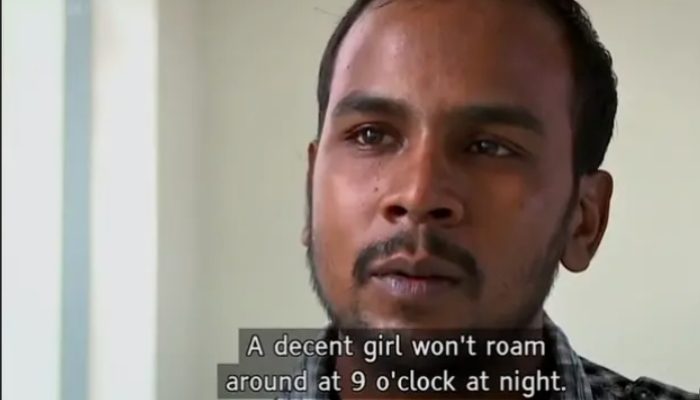
He further added that the victim shouldn't have fought back and allowed the rape to happen. "When being raped, she shouldn't fight back. She should just be silent and allow the rape. Then they'd have dropped her off after 'doing her', and only hit the boy," he said.
"The death penalty will make things even more dangerous for girls. Now, when they rape, they won't leave the girl as we did. They will kill her. Before, they would rape and say, 'Leave her, she won't tell anyone.' Now, when they rape, especially the criminal types, they will just kill the girl. Death," he was quoted as saying.
Another rapist she interviewed confessed that he raped a five-year-old girl and muffled her screams with his big hand. Udwin says that the accused, Gaurav, had a half-smile playing on his face throughout the interview. When asked what height she was, the accused blatantly stood to show that she stood somewhere close to her knees. His answer to the next question sent chills. Udwin asked him how he could move from merely imagining it to actually carrying it out, despite her height, her eyes, her screams; he looked at her as if her question itself made no sense.
"She was a beggar girl. Her life was of no value," he said.
Women today are, in many ways, forced to “buy” safety through everyday choices. It can mean paying extra for cabs instead of using public transport late at night, choosing costlier but safer neighborhoods or hostels, carrying pepper spray or personal alarms, avoiding certain clothes, routes, timings, or places, spending on self-defense classes or secure transport, or staying on calls with friends while walking alone. Even something as basic as mentally mapping escape routes and exits has become routine.
And the cost is not just financial. Women also pay emotionally and mentally, through lost freedom, constant vigilance, interrupted peace of mind, and the exhausting burden of always asking themselves: “Am I safe here?”
The deeper problem goes beyond safety alone; it lies in how society views a woman’s identity and worth. From the moment a girl is born, her existence is often questioned in ways a boy’s never is. In many places, the birth of a daughter is still not celebrated. Her education is still sometimes treated as a burden rather than an investment. Even when she is educated, she is still conditioned first to become a “good homemaker” and taught to keep her dreams limited.
Perhaps that is why so many women today strive for so-called financial independence, not just for success, but to buy a home, a space of their own, a space where they can finally live on their own terms. Without any burden. Without any pressure. This conditioning runs deep. It creates a society where a woman’s life, choices, and freedom are valued less, while men are often taught that their lives and authority matter more. The real question is, when will this picture change? Will it ever truly?
One inappropriate stare from a man is enough to push a woman into a spiral of self-doubt and fear. “Am I dressed oddly? Why is he looking at me like that? Am I safe here? Should I leave? Will he follow me or say something? Did I do something wrong?” All these thoughts can arise from just a disturbing stare. If something as seemingly small as that can create such anxiety, imagine the trauma faced by women who endure physical assault, unwanted touching, obscene messages, stalking, or forced and uninvited associations. (Delhi gang rape case)
The recent Delhi rape case has once again raised troubling questions, questions that often seem to have no clear answers.
A 30-year-old woman was gang-raped inside a private sleeper bus by the driver and conductor. The incident reportedly took place on the night of May 11 in the Saraswati Vihar Nangloi area of West Delhi. According to police sources and media reports, the woman was returning home from work when she approached a man standing near the bus to ask for the time. She was then forced into the bus, after which the driver and conductor sexually assaulted her while the vehicle moved toward Nangloi.
Delhi Police have arrested both accused and seized the bus. An FIR has also been registered under sections related to rape and gang rape under the Bharatiya Nyaya Sanhita (BNS). Yet, another crucial question remains unanswered: what drives some men to commit such horrific crimes despite knowing they will eventually face the law? And beyond the fear of punishment, what compels them to disrespect the very Shakti they worship and revere during other times of the year?
One major review published in Clinical Psychology Review found that men with a higher likelihood of committing rape were more likely to hold “rape-supportive attitudes,” blame victims, and connect sex with power and aggression. It also found that they are less knowledgeable about the negative impact of rape on the victims. "These men tend to misperceive cues emitted by women in heterosexual interactions; fail to generate inhibitory self-verbalizations to suppress association of sex and aggression; and have more coercive, sexual fantasies," it adds.
Another research framework on sexual violence explains that, in some offenders, sexual desire becomes fused with dominance and aggression motivations.
There are also documented cases where convicted offenders or serial rapists spoke about motives during interrogations or prison interviews. In the 2012 Nirbhaya gang rape case, in which a young woman was similarly raped in a running bus on Delhi streets by 5-6 criminals, one of the convicts ended up blaming the victim.
In a report documented by the BBC, the accused Mukesh said it was the victim's fault that she was roaming around with her male friend that late at night. Sending chills down the spine, he added that the woman was 'indecent' and that such women need to be taught a 'lesson'.
"Housework and housekeeping are for girls, not roaming in discos and bars at night doing wrong things, wearing wrong clothes. About 20% of girls are good," he said as he added that it was "people's right to teach them a lesson."
Convict Mukesh who raped woman in Delhi bus in 2012 (Image-BBC)
He further added that the victim shouldn't have fought back and allowed the rape to happen. "When being raped, she shouldn't fight back. She should just be silent and allow the rape. Then they'd have dropped her off after 'doing her', and only hit the boy," he said.
"The death penalty will make things even more dangerous for girls. Now, when they rape, they won't leave the girl as we did. They will kill her. Before, they would rape and say, 'Leave her, she won't tell anyone.' Now, when they rape, especially the criminal types, they will just kill the girl. Death," he was quoted as saying.
BBC's woman journalist Leslee Udwin, who interviewed the convict, later defined the convict as a psychopath, but also stated that these chilling thoughts, about women, about their alleged societal behaviour, were unfortunately coming from an ordinary, apparently normal, and certainly unremarkable man.
Another rapist she interviewed confessed that he raped a five-year-old girl and muffled her screams with his big hand. Udwin says that the accused, Gaurav, had a half-smile playing on his face throughout the interview. When asked what height she was, the accused blatantly stood to show that she stood somewhere close to her knees. His answer to the next question sent chills. Udwin asked him how he could move from merely imagining it to actually carrying it out, despite her height, her eyes, her screams; he looked at her as if her question itself made no sense.
"She was a beggar girl. Her life was of no value," he said.
Women today are, in many ways, forced to “buy” safety through everyday choices. It can mean paying extra for cabs instead of using public transport late at night, choosing costlier but safer neighborhoods or hostels, carrying pepper spray or personal alarms, avoiding certain clothes, routes, timings, or places, spending on self-defense classes or secure transport, or staying on calls with friends while walking alone. Even something as basic as mentally mapping escape routes and exits has become routine.
And the cost is not just financial. Women also pay emotionally and mentally, through lost freedom, constant vigilance, interrupted peace of mind, and the exhausting burden of always asking themselves: “Am I safe here?”
The deeper problem goes beyond safety alone; it lies in how society views a woman’s identity and worth. From the moment a girl is born, her existence is often questioned in ways a boy’s never is. In many places, the birth of a daughter is still not celebrated. Her education is still sometimes treated as a burden rather than an investment. Even when she is educated, she is still conditioned first to become a “good homemaker” and taught to keep her dreams limited.
Perhaps that is why so many women today strive for so-called financial independence, not just for success, but to buy a home, a space of their own, a space where they can finally live on their own terms. Without any burden. Without any pressure. This conditioning runs deep. It creates a society where a woman’s life, choices, and freedom are valued less, while men are often taught that their lives and authority matter more. The real question is, when will this picture change? Will it ever truly?

Siddhi Somani
Siddhi Somani is known for her satirical and factual hand in Economic, Social and Political writing. Having completed her post graduation in Journalism, she is currently engaged in completing her Masters in Politics. The author meanwhile is also exploring her hand in analytics and statistics.