Mustafaabad becomes Dharampura, Islampura as Krishan Nagar; Here's why Pakistan is renaming places to Hindu and Sikh names in Lahore
New signboards with the restored names have already started appearing across Lahore over the past two months. Nine locations have officially reverted so far.
Total Views |


Almost 80 years after Partition split the Indian subcontinent, Lahore in today's Pakistan is reclaiming its past, putting Hindu, Sikh, Jain, and colonial-era names back on its streets and localities that had long been replaced with Islamic or Pakistani identities.
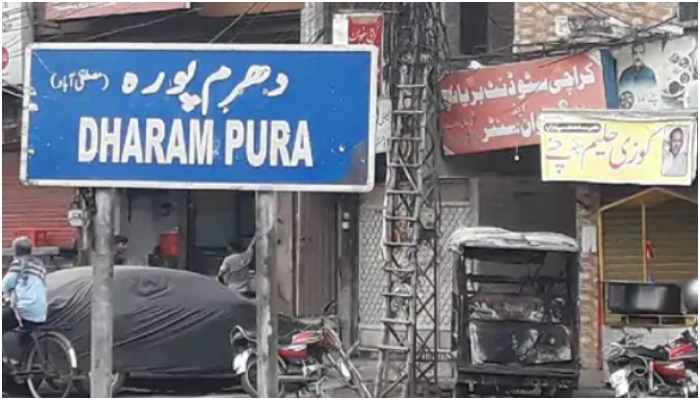
New signboards with the restored names have already started appearing across Lahore over the past two months. Nine locations have officially reverted so far, among them Lakshmi Chowk, Davis Road, Queens Road, and the famous Lawrence Gardens, which had been renamed Bagh-e-Jinnah.
As per the reports, Lahore sits just 50 kilometres from Amritsar and was once a shared cultural home for Punjabis of all faiths. Its bazaars, colleges, gardens, temples, gurdwaras, and shrines belonged to an undivided Punjab, before 1947 tore it in two.
Today, Lahore has over 100 recognised heritage structures, with restoration work underway on dozens of colonial-era sites. Sikh-era buildings linked to Maharaja Ranjit Singh's empire are being revived, and at Lahore Fort, a painting of Princess Bamba Sutherland, the last descendant of the Sikh royal family, has been restored.
Lashari noted that earlier attempts to install a statue of Maharaja Ranjit Singh had faced vandalism, but said the mood in recent years has grown more open and inclusive.
The revival also reaches into Lahore's sporting history. Nawaz Sharif has proposed restoring the city's historic cricket grounds and the old wrestling arena at Minto Park. Before Partition, the grounds produced cricket legends on both sides, Pakistan's Inzamam-ul-Haq and India's Lala Amarnath among them. The park's demolished akhara once hosted legendary wrestlers like Gama Pehalwan and Imam Bakhsh, and its grounds echoed every year with Dussehra celebrations by Lahore's Hindu families.
Islampura in Lahore has been renamed as Krishan Nagar again; Babri Masjid Chowk has been renamed as Jain Mandir Chowk; Sunnat Nagar has returned to Sant Nagar, and Mustafaabad is once again Dharampura. This is part of Pakistan's Punjab government's push to restore Lahore's pre-Partition heritage. The initiative was approved at a Punjab Cabinet meeting chaired by Chief Minister Maryam Nawaz, a Punjab government official confirmed to the PTI news agency.
New signboards with the restored names have already started appearing across Lahore over the past two months. Nine locations have officially reverted so far, among them Lakshmi Chowk, Davis Road, Queens Road, and the famous Lawrence Gardens, which had been renamed Bagh-e-Jinnah.
But for many Lahoris, these names never really went away. "People still call them by the old names," said Kamran Lashari, former Director-General of the Walled City of Lahore. He said the restoration effort embraces Lahore's layered identity, Muslim, Sikh, Hindu, Christian, and colonial all at once.
As per the reports, Lahore sits just 50 kilometres from Amritsar and was once a shared cultural home for Punjabis of all faiths. Its bazaars, colleges, gardens, temples, gurdwaras, and shrines belonged to an undivided Punjab, before 1947 tore it in two.
Partition changed everything. Hindu and Sikh families fled or were driven out amid the violence. Over the following decades, streets and landmarks tied to non-Muslim or British history were steadily renamed. Yet Lahore never fully let go of its older self. Shopkeepers, rickshaw drivers, tea sellers, and ordinary residents kept the old names alive in daily conversation, regardless of what official signboards said.
Today, Lahore has over 100 recognised heritage structures, with restoration work underway on dozens of colonial-era sites. Sikh-era buildings linked to Maharaja Ranjit Singh's empire are being revived, and at Lahore Fort, a painting of Princess Bamba Sutherland, the last descendant of the Sikh royal family, has been restored.
Lashari noted that earlier attempts to install a statue of Maharaja Ranjit Singh had faced vandalism, but said the mood in recent years has grown more open and inclusive.
The revival also reaches into Lahore's sporting history. Nawaz Sharif has proposed restoring the city's historic cricket grounds and the old wrestling arena at Minto Park. Before Partition, the grounds produced cricket legends on both sides, Pakistan's Inzamam-ul-Haq and India's Lala Amarnath among them. The park's demolished akhara once hosted legendary wrestlers like Gama Pehalwan and Imam Bakhsh, and its grounds echoed every year with Dussehra celebrations by Lahore's Hindu families.