The bomb blast that shook Delhi and the nation has brought to the forefront new and serious challenges regarding the selection of terrorists, their modus operandi, and the use of lethal material. The active participation of highly educated individuals in terrorist activities is particularly concerning. This article reviews the current challenges and suggests some comprehensive measures to curb terrorist incidents.
The Incident and New Challenges
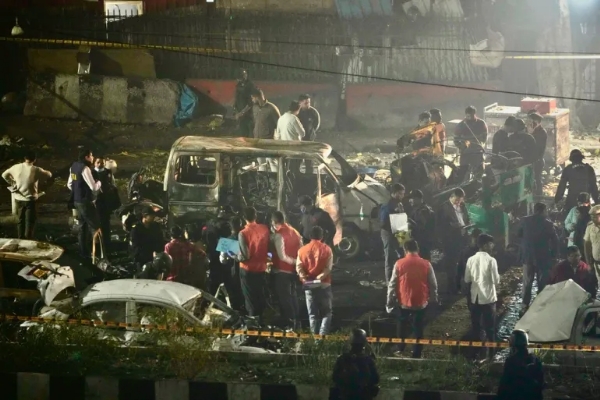
On the evening of November 10th, a powerful explosion near the Red Fort resulted in the death of 13 innocent people. The National Investigation Agency (NIA) is currently investigating the blast.
Serious Concerns
Highly Educated Accused: Many arrested accused, such as Dr. Umar Nabi (a professor at Al-Falah University), Dr. Mujammil Ahmed Ganai, and Dr. Shaheen Sayeed, are all doctors or highly educated individuals. They possess medical as well as computer skills. Al-Qaeda chief Osama bin Laden and his associates were also highly educated. This proves that the notion that terrorism is solely linked to poverty or illiteracy is false.
Use of Women: Dr. Shaheen Sayeed was an activist of the newly formed women's organization, 'Jamaat-ul-Mominat'. The banned organization 'Jaish-e-Mohammed' created this group to recruit women for terrorist acts in India following 'Operation Sindoor'. Like ISIS, 'Jaish-e-Mohammed' is now using women for attacks and suicide missions.
Explosives and Arms: 2,900 kg of explosives, arms, and other materials were seized from the house of Dr. Ganai in Faridabad. This massive quantity of explosives indicates that the terrorists had been stockpiling them for many months.
Cross-Border Assistance: The statements of the accused revealed that arms were sent from Pakistan with the help of drones in the border areas of Gujarat to acquire weaponry.
Comprehensive Counter-Terrorism Measures
Given the nature and network of terrorism, measures at a single level are insufficient. The following multi-dimensional and comprehensive steps are necessary:
Strengthening Technology and Cyber Security
Control over Social Media: Terrorists are misusing privacy-focused social media platforms like WhatsApp. It is necessary to establish international rules and policies to overcome the hurdles faced by sovereign nations' security agencies in obtaining information.
Use of Indigenous Technology: Encourage the increased use of secure indigenous platforms and apps developed by Indians, such as ‘Zoho Mail’ and ‘Arattai’. This will prevent national data from falling into the hands of foreign administrations and make it easier for security agencies to gather information.
Financial Transactions: Establish strict laws and a Technical Surveillance system to stop the trade of drugs and arms using virtual currencies (Cryptocurrency) like Bitcoin.
Human Intelligence and Community Participation
Human Intelligence (HUMINT): Information based solely on technology is insufficient. Terrorists often use false names and codes. Therefore, the system for gathering secret information on the ground with the help of individuals (Human Intelligence) needs to be more trained and strengthened.
Integration of the Muslim Community: The fight against terrorism requires a unified effort from all sections of society. The Muslim community, which believes in democracy, must step forward to condemn religious fundamentalism and misconduct. They should make special efforts to report information about people spreading extremist ideas in their vicinity to security agencies.
Police Mitra (Friend of Police) Scheme: It is crucial to involve common people as ‘Police Mitra’ and train them to be vigilant and provide information about suspicious individuals and activities to security agencies.
Legal and Administrative Reforms
Tenant Information: It must be mandatory for landlords to provide tenant information to the police, and strict legal action should be taken against those who fail to do so. This will ensure that terrorists cannot rent places for residence due to financial greed.
Regulation of Explosive Material: All vendors selling the chemical components, timers, and metal sheets required for explosives must be legally obligated to report to the police whom they sold the material to, and this should be regularly inspected.
Vehicle Inspection and Purchase: Regular vehicle inspections should be carried out at various points to prevent the transport of explosives. Also, strict rules must be introduced to curb the practice of giving false addresses when purchasing a vehicle and its easy acceptance.
Need for a Long-Term Blueprint
In this context, some significant measures are necessary:
Increasing Security and Intelligence Monitoring in Universities:
Appoint experienced intelligence experts instead of relying on general staff as Security Officers.
Identifying and Destroying Sources of Radical Propaganda:
Strong Cyber-Intelligence is required to manage online radicalism, social media networks, and encrypted communication.
Community-Level Awareness and Responsibility:
The Muslim community and its leadership must take an active role in stopping the brainwashing of youth.
Stopping Ideology-Based Intervention in Educational Institutions:
Some institutions have become centers of fundamentalism. Their audit, monitoring, and reform are mandatory.
Rehabilitation and De-radicalization Programs:
Formulate a national-level policy for scientific, psychological, and community-based rehabilitation.
Initiatives at the Education Level
Focus must be placed on the following in schools and higher education institutions:
- Education in Tolerance and Equality
- Curriculum Inclusion: Include values of tolerance, multiculturalism, and secularism in the school curriculum. There should be lessons teaching respect for all religions and cultures.
- Critical Thinking: Encourage students to analyze information and to view any claim or ideology with a critical perspective. This will help them protect themselves from the false propaganda of radical ideologies.
- Moral and Civic Education: Make young people aware of their duties and rights as responsible citizens. Implement programs that foster love and loyalty towards the nation.
Teacher Training
Train teachers to identify the 'signs of radicalization'. Teachers should have the capacity to recognize if a student's mental and behavioral direction is changing.
Peace Education: Train teachers in non-violent methods of conflict resolution and maintaining a peaceful atmosphere in the classroom.
Constructive Use of Technology
Provide Digital Literacy to students to combat the false and radical ideas spreading on the internet and social media.
Offer education focused on Higher Education and Professional Skills so that young people are engaged in constructive work, their social and economic status improves, and they are less likely to fall into the trap of radicalism.
Initiatives at the Social Level
Combining educational efforts with social initiatives will make the fight against terrorism more effective:
Community Dialogue and Trust Building
Interfaith Dialogue: Organize regular dialogue sessions and discussions for people of different faiths and communities, which will help dispel misunderstandings and increase mutual respect.
Youth Empowerment: Engage youth in constructive activities such as sports, arts, and social service. Provide Counselling Centres where they can express their problems and seek help.
Involvement of Credible Muslim Leaders: Actively encourage liberal, educated, and peace-loving Muslim religious leaders and thinkers to speak out against radicalism. They should disseminate information that refutes extremist ideologies to the general public.
Economic and Social Justice
Equal Opportunities: Provide equal economic and job opportunities so that youth from any community do not turn to radicalism due to unemployment and discrimination.
Inclusivity: Implement special government schemes and social initiatives to bring marginalized and neglected sections of society into the mainstream. This will reduce their sense of deprivation.
Social Media Activism
Positive Messaging: Run a Counter-Narratives Campaign on social media to counter radicalism by spreading messages of peace, love, and unity. This should use creative and inspirational videos, articles, and posts.
Fact-Checking: Establish fact-checking centers and voluntary groups to verify the truth of Fake News and inflammatory information being circulated on social media, helping people distinguish between truth and falsehood.
Fighting terrorism and radicalism is not just the responsibility of security agencies but a collective responsibility of the entire society. It is only through education and social cohesion that this threat can be overcome.
Final Thoughts
Education is not a cure for radicalism. The illusion that economic development or higher education will keep people away from religious extremism must now be dispelled. Whether it's 9/11 in America or 10/11 in Delhi, this is the lesson that needs to be learned. The only effective solution to completely eradicate the threat of terrorism is for government agencies, security forces, and ordinary citizens to work in unity and oppose radical ideology at the social and ideological level.
White-collar Jihad is becoming the biggest and most complex threat to India's internal security. It symbolizes a new phase of terrorism—where the enemy is not a gunman, but an educated 'Jihadi' holding a laptop, stethoscope, engineering degree, or research papers. To face this new challenge, India requires a combined response from society, the state, and the security system. The battle of White-collar Jihad is a battle of ideology—and to win it, awareness, intellectual vigilance, and national integration are essential.
--