The Vedic Ancestry of Kashmir - Part II: Scriptures, Saraswats & Sanatana
How ancient is Kashmir in the civilisation of Bharat? Did she feature in the Vedic civilisation which is the oldest recorded ? How far back can Her ancestry be traced?
NewsBharati 14-Jul-2025 15:57:32 PM
Total Views |


UNESCO HONOUR FOR VEDIC KASHMIR
On 18th April 2025, the VEDIC HERITAGE OF KASHMIR was HONOURED ON A GLOBAL PLATFORM.

Fig 1. Generic Global News Headlines , (iStock image licensed to Dr. U. K. Sharma)
NEWS HEADLINES BLAZED
“Bhagavad Gita, Natyashastra get Unesco honour, PM calls it 'proud moment’'’
“In a historic recognition of India’s cultural and philosophical legacy, the Bhagavad Gita and Bharat Muni’s Natyashastra have been inscribed in Unesco’s Memory of the World Register.”
“The Bhagavad Gita, a revered scripture and spiritual guide, and Natyashastra, an ancient treatise on performing arts, have long been considered pillars of India’s intellectual and cultural identity.” (Ref. 1).
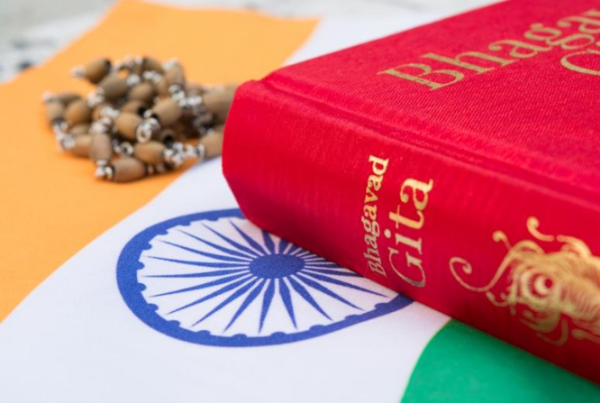
Fig. 2. The Bhagavad Gita and the Indian Tricolour, (iStock image licensed to Dr. U.K.Sharma).
It IS indeed a proud moment for ALL INDIANS!!!
WHAT do the NATYASHASTRA and the BHAGAVAD GITA have to do with the Vedic heritage of Bharat’s Kashmir?
The Natyashastra, honoured by UNESCO, was written by Bharata Muni, who LIVED IN ANCIENT KASHMIR AROUND THE 5TH CENTURY BC. (Reference follows in Part III of this article).
The BHAGAVAD GITA, enunciated in the epic Mahabharata, has close links to Kashmir as shown by intense and in-depth study carried out by our scholars (covered later on in this article).
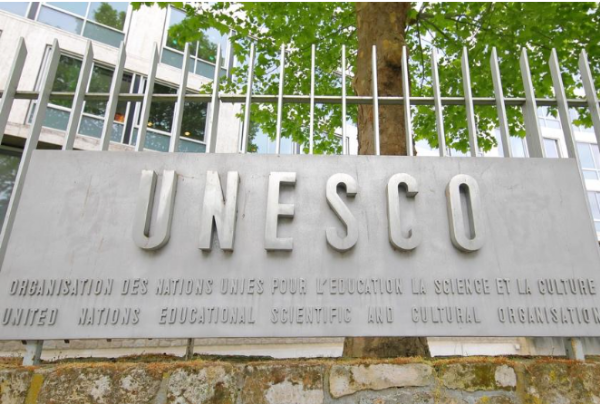
Fig.3. UNESCO Headquarters, PARIS, (iStock images, licensed to Dr. U. K. Sharma).
The RIGVEDA TOO has featured in the UNESCO MEMORY OF THE WORLD REGISTER. Thirty manuscripts (one of which is on birch bark) from the Rigveda were listed by UNESCO in 2007 in its Memory of the World Register, (Ref. 2). Birch bark was used only in Kashmir, which has close connection with the Rigveda.
Let us proceed to discover more about Ancient Kashmir.
Recapitulated here are my CONCLUDING REMARKS of PART I of this article
“It is to be noted that the intellectual systems of traditional India, the ancient civilization that flourished around the river Sindhu have developed in the land of Kashmir. (Ref. 2).”
In this instalment (Part II) of "THE VEDIC ANCESTRY OF KASHMIR", I explore our SCRIPTURES, the SARASWATS and our SANATANA, inextricably linked with Kashmir and our Motherland.
In a subsequent Part III which follows, I shall share accounts of the intellectual prowess, the artistic accomplishments, and the depth of knowledge of grammar, literature, astronomy, medicine, mathematics, philosophy that Ancient Kashmiri Hindus were reputed worldwide for.
VEDIC CULTURE OF KASHMIR AND THE SARASVATI CIVILISATION
IT ALL BEGAN WITH THE RIGVEDA.
“ …..the first record of an organised and developed society was the Vedic culture that arose in ancient India with the Indus Sarasvati civilisation, and then spread out from there in all directions around the world.” (Ref. 3).
“In the basin of this Rigvedic Sarasvati, westwards up to the Indus and even down to Gujarat, there flourished in the third millennium BCE a mighty civilization which in many ways overshadowed some of the other contemporary civilizations of the ancient world…
…. the civilization that was at its peak in the Sarasvati basin and beyond in the 3rd millennium BCE and had its roots deep into the 5th millennium BCE, if not earlier” (Ref. 4).
“The people of India were …… some of the most civilized in the world, primarily because of their sophisticated level of consciousness and gentleness towards one another caused by their training in the principles of the Vedic spiritual culture.” (Ref. 5).
“…… out of all the cultures of the world, it is India that ……. remains the oldest living culture in the world. …….. India’s timeless Dharmic tradition, and its advancements, which were already in existence before the credits of its wonders were attempted to be taken by outsiders.” (Ref. 6).
“According to Sir George Grierson (1851-1941) author of " Linguistic survey of India,”
‘For up to two thousand years Kashmir has been the house of Sanskrit learning and
from this small valley they have issued masterpieces of history, poetry, romance,
fable and philosophy.’” (Ref. 7).
“For 5000 years of recorded history, The Kashmiri Pandits, the first inhabitants of the Valley of Kashmir, have managed to maintain its peaceful traditions of rich culture and heritage. Kashmir is revered amongst the Kashmiri Pandits and other Saraswats (who fled Kashmir during the times of Islamic persecution) as Shardapeeth or the Abode of the Goddess of Learning and Fine Arts.” (Ref. 8).
“‘14. Nazki, Ayaz Rasool (2009), "The most ancient known temple of Sharda is to be found in ruins in the Pakistan-administered part of Kashmir…… at the confluence of three rivers in the Jehlum valley. Dr. Nazki believes the site dates back at least 5,000 years and that there was established at the site a kind of ancient university.", International Seminar: Society, Culture and Politics in the Karakoram Himalayas, Sher-i-Kashmir University of Agricultural Sciences’ (Ref. 9).
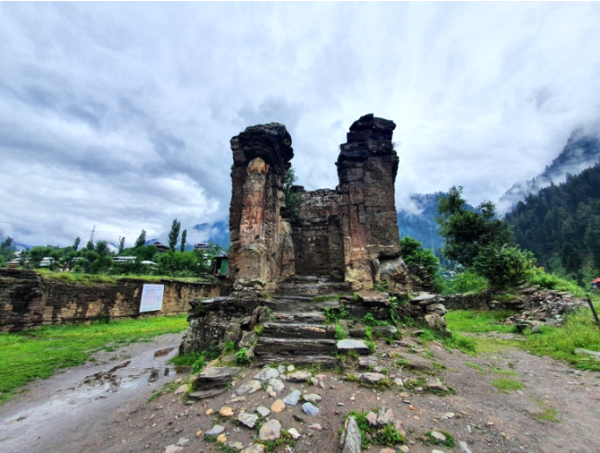
Fig. 4. Ruins of Sharda Peeth, Sharda University in Neelum Valley. (iStock images, licensed to Dr. U. K. Sharma)
“During their five thousand years of history, they (Kashmiri Pandits) had made great contributions to world civilization in such diverse fields as religion, art, architecture, metallurgy, music and other forms of art.”(Ref. 8).
“In the realm of philosophy, art, poetry, mathematics, astronomy etc. Kashmir is regarded as the incubator of intellectuals and thinkers.”
“Sharada Peeth was both a temple i.e. a worshipping place and an educational institution. The earliest theory of its origins dates it to over 5,000 years ago, the time of the earliest records of Neolithic sites in the flood plains of the Kashmir Valley.” (Ref. 10).
History records that this 5000 years old (perhaps older) gentle Vedic civilisation of thinkers, philosophers, and intellectuals paid a very heavy price for being peace loving and abjuring violence, and were invaded by marauding barbarians for the immense wealth that was accumulated by this civilisation. The Peeth, which lay in ruins after the depredations of Islamic invaders, was destroyed by the enemy some years ago to make way for a coffee shop for their fighters.
“Many temples and shrines had been destroyed post 1359, when Islamic invasions started in earnest.” (Ref. 7).
“……. (It was) the wealth of India that drew the barbaric Arabs to the country, and then let the half-civilized Tartars to overrun it.” (Ref. 5).
In order to comprehend the magnitude of the loss of intellectual, artistic and philosophical development and achievements suffered through Islamic invasion, one needs to first of all trace how Ancient the Civilisation of Bharat and of Kashmir really is.
THE TRUE AGE OF THE CIVILISATION OF BHARAT AND KASHMIR
The birth of Kashmir occurred nestled in the arms of Bharat as she was being formed as a landmass, as seen in Part I. Kashmir was, has been, is and will continue to be an inseparable part of Bharat, Her Motherland. She was the birthplace of a Culture and Faith that began almost 10,000 years ago, and continues undaunted, unchanged and unshaken even today.
How ancient is Kashmir in the civilisation of Bharat? Did she feature in the Vedic civilisation which is the oldest recorded ? How far back can Her ancestry be traced? Handicapped by loss of written attestation, it is the painstaking study by contemporary scholars, of our scriptures and manuscripts, and the travelogues and records written by world renowned figures that provide insights to these questions.
OLDEST MENTION OF KASHMIR IN VEDIC SCRIPTURES
Megh Kalyanasundaram has tabulated the occurrence of the word Kasmira in The Rigveda, Yujurveda, SamaVeda and Atharveda, as also in Vedangas and Upvedas, attesting to the place held by Kashmir in Ancient Vedic scriptures, and the importance of the region to Sanatana Dharma.
He has also assiduously listed the multiple mentions of Kasmira in The Mahabharata (Ref. 11).
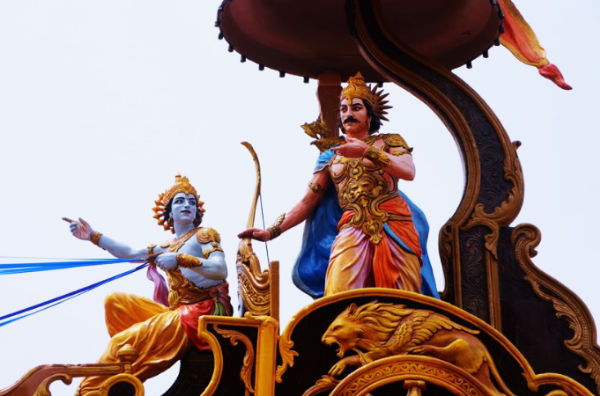
Fig. 5. Lord Krishna as a charioteer, preaching to Arjuna in the Mahabharata war. (iStock images, licensed to Dr. U.K.Sharma).
In the Chapter of divine virtues of the Bhagavad Gita, enunciated during the Mahabharata war, Lord Krishna explains to Arjuna,
“pitāham asya jagato
mātā dhātā pitāmahaḥ
vedyaṁ pavitram oṁ-kāra
ṛk sāma yajur eva ca”
“I am the father of this universe, the mother, the support and the grandsire. I am the object of knowledge, the purifier and the syllable Om. I am also the Ṛg, the Sāma and the Yajur Vedas.” (Ref. 12).
This mention of the Rigveda in the Mahabharata establishes that the Rigveda is older than the Mahabharata war. The mention of Kasmira in the Rigveda is thus the oldest scriptural mention, preceding the Mahabharata.
Which brings us to the question, “How old is the Rigveda, and how old is the Mahabharata”?
DATING THE RIGVEDA
“THE PREHISTORIC DATE OF VEDIC BEGINNINGS”
“…….. B. B. Radhakrishna of the Geological Society of India (1999) … explains that the Rig Veda relates how Himalayan glaciers broke up to release the water which flowed out in seven major rivers (Sapta Sindhu). ……. in the Late Pleistocene era of about 10,000 years ago, which also means that the Rig Veda contained compositions that date back 10,000 years. 7
“ …. the Greek historians of Pliny and Arrian place the date of Vedic civilization somewhere near 6676 or 6777 BCE.” (or around 8000 to 10,000 years ago).” (Ref. 13).
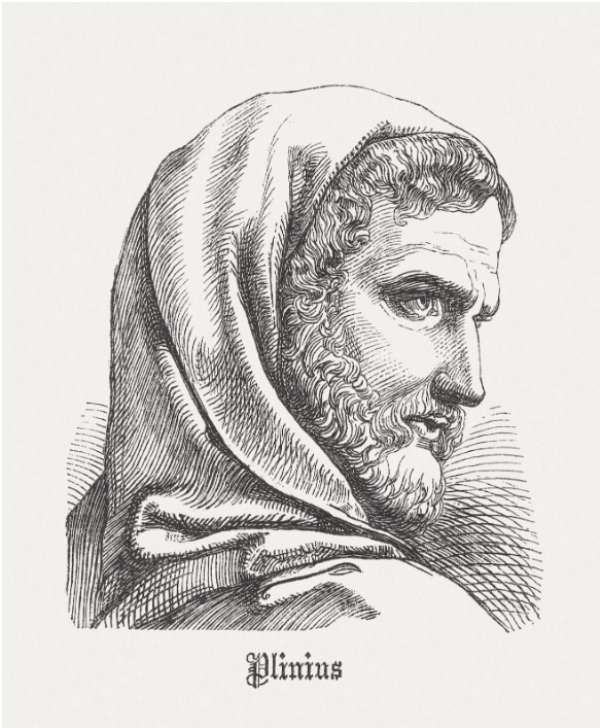
Fig. 6. Woodcut of Pliny The Elder. (iStock images, licensed to Dr. U. K. Sharma).
(This author’s note: PLEISTOCENE era is a Geological term for the ICE AGE; coinciding with the PALAEOLITHIC era, an archaeological term, that occurred around 11,700 years ago.)
“In 1985 ……………. the Indian National Science Academy …. published a volume, History of Astronomy in India wherein the Harappan civilization and the Brahmana period are correlated, and the Rig Veda is dated to about 7th millennium B.C.” (Ref. 14).
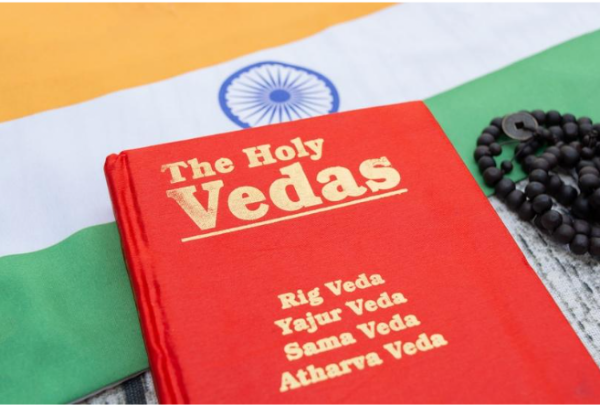
Fig. 7. Holy Vedas on Indian Tricolour, (iStock images, licensed to Dr. U. K. Sharma).
“The Rig-Veda, the first and most important of the Vedas, was delivered by great sages at Lake Manasarovar ‘dozens of thousands of years ago’ (Ref. 15).
“…… Rigved... was a product of a well-settled civilization going back to 8000 B.C. and beyond on the basis of astronomical dating and supported by archaeological excavations... the more antique date of 10,000 B. C. proposed for Rigved or Vedic culture seemed more plausible in view of the epi-paleolithic agricultural and proto-agricultural civilizations going back to the same period.” 8 (Ref. 16).
It is clear now that Kashmir appears in Bharat’s Vedic scriptures 8000 to 10,000 years ago.
What was Kashmir’s relationship to Bharatvarsha, the land of Bharata ?
This too has been elucidated by Megh Kalyanasundaram, (Ref. 11).
He says “…. 63 verses (6.10.5-68) occur in Bhismaparva Jambukhandavinirmanaparva (6.10)…..”
Sanjaya (to Dhritarashtra), “…. starts by listing names of mountains (6.10.10-12), then rivers (6.10.13-36), and finally, starting from 6.10.37 onwards …………. janapada-s (loosely, district or county). One of the janapada-s he names, in 6.10.52 ……… is Kasmirah.”
This establishes that in the Mahabharat, Kashmir is considered as a part of Bharatvarsha.” (Ref. 17).
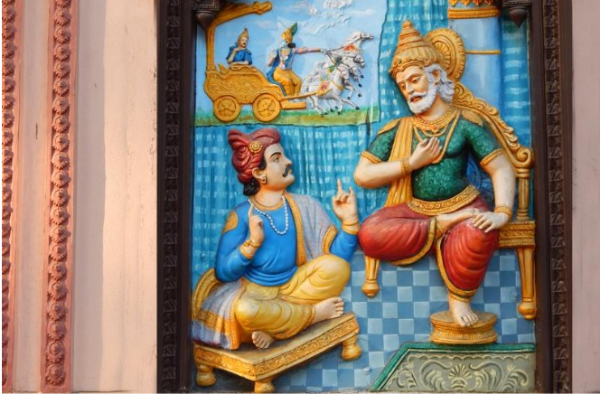
Fig. 8. Sanjaya narrating the Mahabharat war to Dhritarashtra – wall art in Ramkrishna Math, Hyderabad India. (iStock image licensed to Dr. U.K.Sharma).
The Mahabharata also mentions the town of Rajouri in Kashmir.
“According to the Mahabharata, the capital of the Kambojas was at Rajapura, which was once identified by Huian Tsang as the town of Rajaori, in the south east of Poonch district” (Ref. 18).
(*This author’s note: Hieun Tsang was a well known Chinese pilgrim scholar, who visited India in the 7th century AD and recorded his observations in the form of a travelogue, a singular and reliable source of information on the subject.)
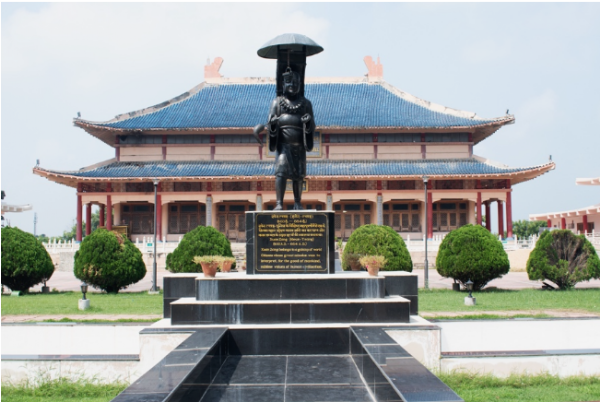
Fig. 9. Statue of scholar Hieun Tsang, at the Hieun Tsang Memorial Hall, Nalanda, Bihar.
The memorial plaque reads: “Xuan Zang (Hieun Tsang) (603 A.D. to 664 A.D.) Xuan Zang belongs to a galaxy of world citizens whose great mission was to interpret, for the good of mankind, sublime values of human civilization.” (iStock images, licensed to Dr. U. K. Sharma).
DATING THE MAHABHARATA
In an erudite and highly impressive astronomical analysis Dr. P. V. Vartak has derived the date of the Mahabharata War as 16th October 5561 BC. (Ref. 19).
“……… early references to Kashmir can also be found in Mahabharata in Sabha Parva and in puranas like Matsya Purana, Vayu Purana, Padma Purana, Vishnu Purana, and Vishnudharmottara Purana.” (Ref. 20, 21).
Kashmir thus finds mention in our scriptures dating from 5000 to 10,000 BC, as a part of Her Motherland, Bharatvarsha.
RIGVEDA, RICE and the RIVER SARASVATI- links to KASHMIR
Continuing from Part I of this series of articles on the Vedic Ancestry of Kashmir, I had traced the timeline until the cultivation of rice by the inhabitants of the Kashmir valley.
Recapitulated below:
‘7,500 BP – RICE IS CULTIVATED IN KASHMIR VALLEY
“Wild rice cultivation appeared in the Bolan* and Ganges valley regions of northern India as early as 5000 BCE and by this period agricultural communities had become quite widespread in Kashmir region.”
(* = west boundary of Indus Valley region)
(21) Ref.: Subhodeep Mukhopadhyay, ‘
As mentioned above (Ref.16), the Rigveda itself can be dated to around 10,000 BC based on ‘the epi-paleolithic agricultural and proto-agricultural civilizations going back to the same period.’
RIGVEDIC ERA KASHMIR CULTIVATED RICE
In fact, rice cultivation in Kashmir was done as far back as in Rigvedic times.
“Archaeological evidence Rice”
“…..Oryza sativa. ….. rice has been …. grown in Kashmir since time immemorial. It strongly suggests that the wild rice was grown and eaten during Rigvedic times (c. 8000 BC).” (Ref. 22).
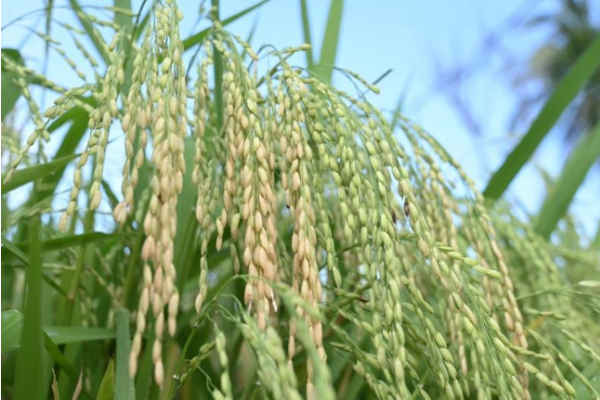
Fig. 10. Close up of rice crop in field. (iStock images licensed to Dr. U. K. Sharma).
International travellers, records of the Greeks and others, all testify to the fact that rice was cultivated in Kashmir.
Megasthenes included observations on the people and lands of Kashmir during his ambassadorial travels, “Kashmir is a fertile and populous region, where the people cultivated wheat, barley, rice, millet, sesame, and various fruits.” (Ref. 23).
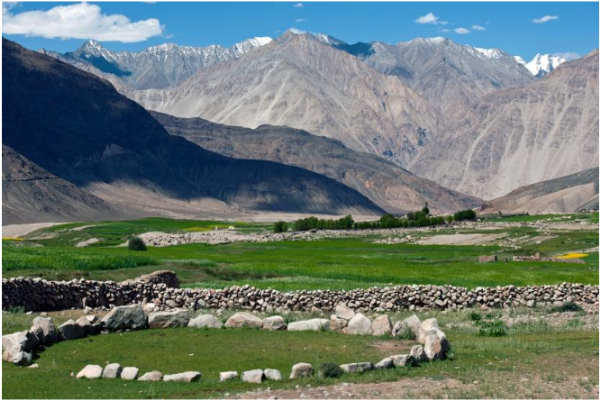
Fig. 11. Rice fields in Jammu and Kashmir region. (iStock images licensed to Dr. U. K. Sharma).
Further evidence of cultivation of rice in Neolithic to Megalithic era in Kashmir has been found by the Archaeological Survey of India (ASI) from traces of rice grains in the Gufkral caves (Ref 24), and along with Kashmir, in other parts of Bharat (Refs. 25, and 26).
THE RIVER SARASVATI and KASHMIR
“The Kashmir valley and Indus-Sarasvati basin was very friendly for wheat, barley and rice cultivation and provided a solid platform for surplus production.
“…. botanical remains … from Harappan civilization includes ….. evidence of presence of same plants in both cultures.
“The evidence of copper objects during the Neolithic phase of Kashmir Neolithic suggests a long interaction between the Harappan civilization and Neolithic cultures ….. from the fourth millennium BC onwards”
“…. both cultural was contemporary and having the import and export trade contacts.” (Ref. 26).
“Evidence is also available of the close contact between the people of the Saraswati civilization and people of Kashmir which flourished along the river Vitasta (Jehlum)…
“The Vedic Grah-Sutras and Kalpa- Sutras were adopted for the Kashmiri Pandits, by Laugaksha Muni, a great sage, sometime in the first millennium B.C.” (Ref. 27).
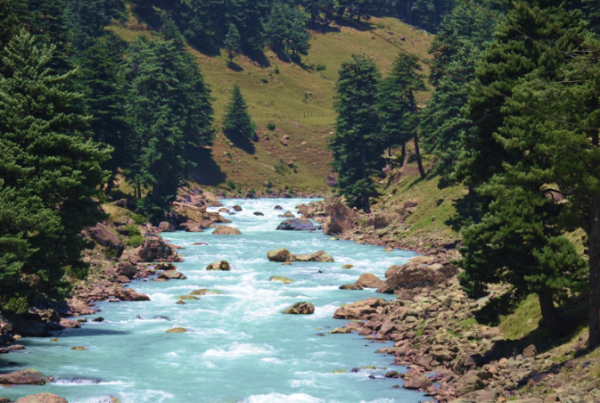
Fig. 12. River Vitasta- Jhelum. (iStock images licensed to Dr. U. K. Sharma).
From the above research data, it is therefore clear that;
The Rigveda records the cultivation of rice possibly around 10,000 BC.
Around 7000-8000 BC the Neolithic people in Kashmir began to transform into agriculturists and to cultivate the land for food.
Rice was cultivated in Indus Valley basin and Ganges Valley basin since Vedic times. The Indus Valley civilisation, now known as Sindhu Sarasvati civilisation, was proficient in cultivation of wheat, barley, and rice, resulting in a surplus in grain production
The civilisation of Ancient Kashmir and the Saraswati Civilisation grew similar crops, and were either in close contact or were settlements of the same Vedic civilisation.
This is borne out by the fact that around 1000 BC, Vedic Sutras were adopted for Kashmiri Pandits, (also see Ref. 28 below).
“Hindus of Kashmir valley claim themselves to be Saraswat Brahmins and trace their ancestry to the Saraswat Brahmins living along the course of the legendary river Saraswati, which formed the cradle of Vedic civilization of India. …… In Rig Veda, Saraswati is praised as the Mother among rivers;
‘Ambitame, Naditame, Devitame, Saraswati.’ …….“the greatest of goddesses, the greatest of mothers, the greatest of rivers”.
“…… the river Saraswati flowed down a north-westernly course, in northern India from “Himalaya” to the “Rann of Kutch” in ancient times.”
“Recent excavations at Dholavira and other places have revealed figures of ocean-going vessels providing clues to the navigability of the dried up river …..”
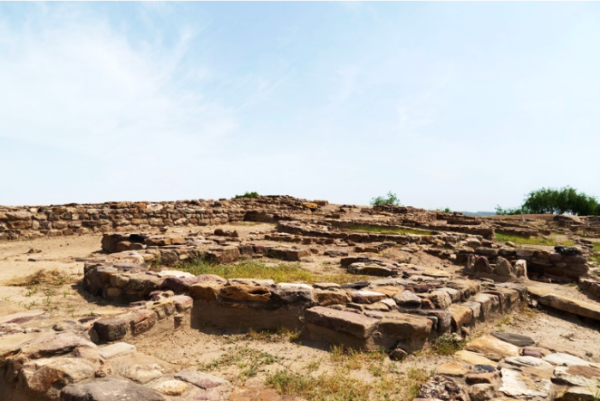
Fig.13. Excavation site at Dholavira, Gujarat. (iStock images licensed to Dr. U. K. Sharma).
“… "The existence of 1600 km long dry river bed/ buried channel/ paleo channel, varying in width from three to twelve kilometres, extending from Sirnoor Hills in Himachal Pradesh to Rann of Kutch, has been confirmed by the study of both black and white and coloured satellite images by experts… and the scientists of Central Arid Zone Research Institute, … ISRO and others …..”
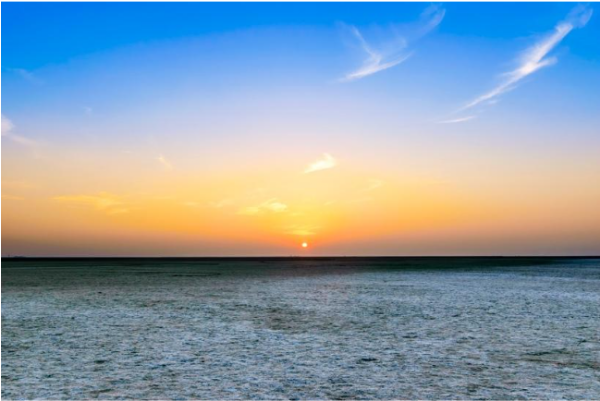
Fig. 14. Rann of Kutch; View of the ocean, into which the river Saraswati flowed in ancient times. (iStock images licensed to Dr. U. K. Sharma)
“ ……. the mighty Saraswati river disappeared ……. The inhabitants from the bank migrated to far off places, like Kashmir, Western Punjab, Rajasthan, Gujarat, Maharashtra, Karnataka and even as far as Kerala, along the west coast some of whom still call themselves as Saraswat Brahmins or Saraswats.”
“There is enough ground to believe that the people of Kashmir formed a part of Saraswati civilization…. The human skeletons found at Burzahom in Kashmir point to a common ancestry of the people of northern India, who in the ancient times lived along the banks of the river Saraswati.” (Ref. 28).
(For more on Burzahom, Ref Part I of this article)
“in 1921-22, two officials of the Archaeological Survey of India – Rakhal Das Banerjee & Daya Ram Sahni – excavated the archaeological sites of Mohenjodaro and Harappa……. revealed ….. around 5000 years ago, a Bronze Age civilization flourished in the Indian Sub-continent …. ”
“ …. Michel Danino of Indian Institute of Technology, Gandhinagar has provided the evidence that more than 63% of the archaeological sites are located in the banks of River Saraswati and River Drishadvati. …… the nomenclature Indus-Saraswati Civilization is appropriate.” (Ref. 29).
KASHMIRI SARASWATS – MARITIME TRADE AND EXPANSION
“The earliest reference to maritime activities in India occurs in Rigveda, ‘Do thou whose countenance is turned to all side send off our adversaries, as if in a ship to the opposite shore: do thou convey us in a ship across the sea for our welfare (Rigveda, 1, 97, 7 and 8).’
“Indian boat technology and navigational knowledge goes back to the III Millennium BC”. (Ref. 30).
“At its peak, the Indus-Sarasvati civilization had outposts overseas and an extensive trading network supported by a large merchant navy. Harappan seals have been found in Oman, Mesopotamia and the Maldives”. (Ref. 15).
“The reason for the rise of India’s ancient Saraswati-Indus civilization was also international trade which was mostly done via sea route.”
“There is also clear evidence of what type of ships were built by the people living on the banks of Saraswati and Indus rivers around 4500 years ago”
“….. excavations show that cotton clothes were exported by the people of the Saraswati Indus Civilization. We have recovered a bundle of cotton cloth from Umma, an ancient city of the Sumerian civilization, which bears the seal of the Saraswati Indus Civilization” (Ref. 31).
“……… very great interest attaches to the fragments of cotton textiles recovered at Mohenjo-daro. These provide the earliest evidence of a crop and industry for which India has long been famous.”
“Timber and precious woods, ivory, lapis lazuli, gold, and luxury goods ….. were among the goods sent to Mesopotamia ….. and cotton textiles and chickens, major products of the Indus region not native to Mesopotamia”. (Ref. 32).
“According to the latest excavations the Northern most site of Harappan civilization is Manda, Akhnoor in Jammu & Kashmir and the southern most Daimabad in Maharashtra. ……. The Harappan civilization covers an area of about 12,50,000 sq.km.”
“Akhnoor was the last Harappan city from where the Harappans used to collect timber.” (Ref. 33).
“Indus Valley cities lived by trade….. Traders brought the materials workers needed, and took away finished goods to trade in other cities…. cedar tree wood was floated down the rivers from Kashmir and the Himalayas.” (Ref. 34).
“Manda ……. the northernmost limit of the Harappan civilisation…….. considered a site established to procure wood from Himalayan Sub hills and send it downriver to other towns of the Indus Valley Civilisation. [11].” (Ref. 35).
Kashmiris have always considered themselves as members of the Sarasvati Civilisation, calling themselves ‘Saraswats’, and DNA studies from skeletons at Burzahom have confirmed this.
The Sarasvati civilisation were expert maritime navigators and traded by this route with distant civilisations.
Kashmir was the northernmost part of the Sindhu-Sarasvati Civilisation, and participated in trade through supply of cedar wood and other export items by maritime route to domestic and overseas customers.
Now let us understand how, and why this is of utmost importance to Sanatan Dharma today.
SANATANA – THE INDIC CIVILISATION CONTINUES
THE IMPORTANCE OF KASHMIR TO BHARAT and SANATANA EVEN TODAY
The importance of Kashmir to the denizens of Bharat, and the aeons old Sanatana Dharma, lies in the CONTINUITY of the Civilisation, the thoughts, the traditions , the values, the daily prayers, the routines of landmark events in Life- births, marriages, deaths, and other nuances of daily living. Our civilisation is acknowledged as one of the oldest CONTINUOUS civilisations in the world today. Others have come and gone, but the Hindu civilisation of Bharat has prevailed for millennia, surviving the scurrilous onslaughts of barbarian invaders and looters, as well as proselytisers.
The word Kashmira is mentioned in a prayer attributed to Adi Sankaracharya, who considers Her the abode of Ma Saraswati, the Goddess of Learning, Wisdom and Education.
“The word has been referenced in a scripture mantra worshipping Sharada Devi where it is mentioned that she resided in the land of Kashmira, which is likely to be Sharada Peeth.”(Ref. 20).
“Lyrics:
|| Namaste Shaarade Devi
Kaashmeerapura Vaasini
Tvaam Aham Praarthaye Nityam
Vidyaadaanam Cha Dehi Me ||”
Meaning :
I humbly pray to you every day, Oh Goddess Saraswati,
Who resides in Kaashmeera,
Please bless me with the gifts of knowledge”
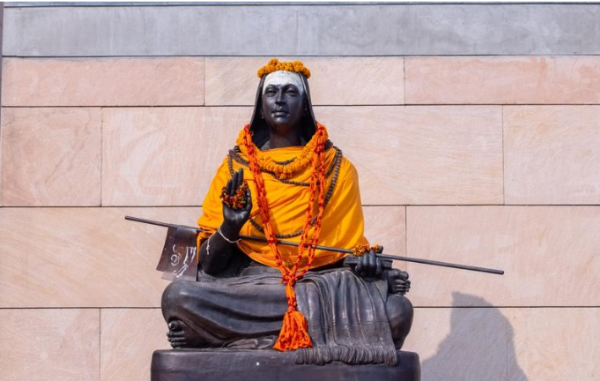
Fig. 15. Statue of Adi Shankaracharya, Kashi Vishvanath Temple, Varanasi. (iStock images licensed to Dr. U. K. Sharma).
This reference by Adi Shankaracharya to Kashmir as a seat of learning can be traced back to around 500 BC.
“Adi Sankaracharya was born in 510 BC as researched and published in The Theosophist magazine in 1883.”
This date has also been independently arrived at by the Dwarka Peeth matham, and the Sankara Matha at Kanchi. In addition, epigraphic evidence is also available in the form of a copperplate inscription from King Sudhanvan of Dwaraka. (Ref. 20).
The IMMENSE CULTURAL AND RELIGIOUS SIGNIFICANCE of this prayer CONTINUES TILL DATE, as mentioned below.
“Today, Sharada Peeth continues to figure in South Indian Brahmin traditions. At the beginning of formal education, some sects of Brahmins ritually prostrate in the direction of Sharada Peeth. [22] Saraswat Brahmin communities in Karnataka are also said to perform a ritual of moving seven steps towards Kashmir before retracing their steps during the Yagnopavit ceremony and [23][24][25] include the Sharada stotram in their morning prayers.
‘Namaste Sarada Devi Kashmira mandala vasini.
I bow to the Goddess Sharada, who lives in Kashmir.’”, (the prayer coined by Sri Adi Sankaracharya, see above),(Ref. 36), and Refs. 37, 38, and 39.
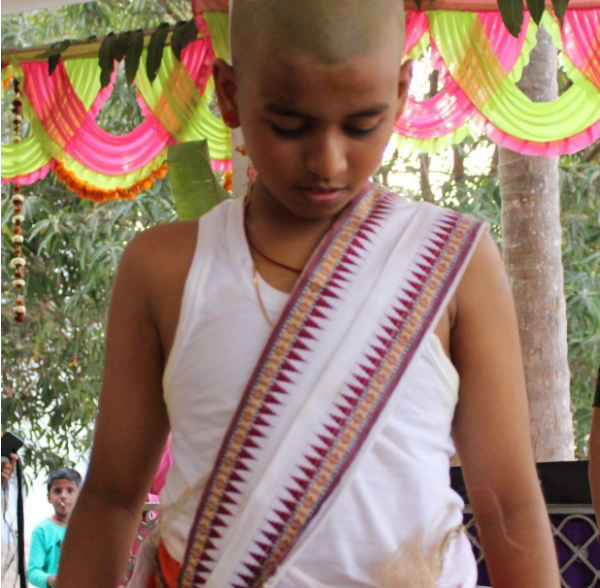
Fig. 16. Yagnopavit (Upanayanam) ceremony, boy begins his walk. (iStock images licensed to Dr. U. K. Sharma).
Kashmir is revered by Hindus, particularly Saraswats, not only as the seat of the Goddess of learning, namely Sharada Devi, but also as a purifier of mortal sins.
“According to the grammar (vyakarana) of Panini the meaning of the word Kasmira comes to be that which cleanses one of all the sins
Kasmalamirayati iti Kasmirah
Ityapi vyutpattimahuh sadhayanti ca pc/odaraditvat tadrupaC” (Ref. 40)
“…. the civilization that was at its peak in the Sarasvati basin and beyond in the 3rd millennium BCE and had its roots deep into the 5th millennium BCE, if not earlier ….. this civilization has made a lasting contribution to Indian culture, as may be observed in the various walks of life even today.”’
B. B. Lal points to “Nausharo: Terracotta female figure, painted. The yellow colour on ornaments suggests that these were made of gold; the hair is black, while the red on the line of partition (parting) of the hair indicates the use of vermilion. Period IB, 2800-2600 BCE.”
He compares this with the current cultural practices in Hindu society, where apart from gold ornaments, the traditional “sindoora (vermilion) in the manga (central partition-line of the hair on the head) of the lady is a sign of her marital status.” (Ref. 4).
“Fig. 11 shows the famous bronze damsel from a Mature Harappan level of Mohenjo-daro. On her left arm she wears a series of bangles, a feature still to be seen amongst women of Rajasthan, Haryana and elsewhere (Fig. 12).” (Continued)
(In this article, refer Figs. 17 and 18 below).
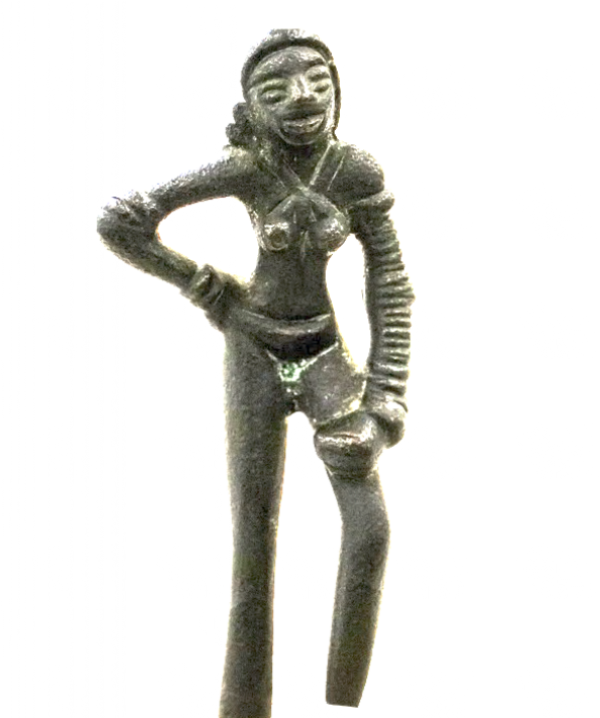
Fig. 17. The Dancing girl of Harappa, sporting bangles over entire arm. (iStock images licensed to Dr. U. K. Sharma).
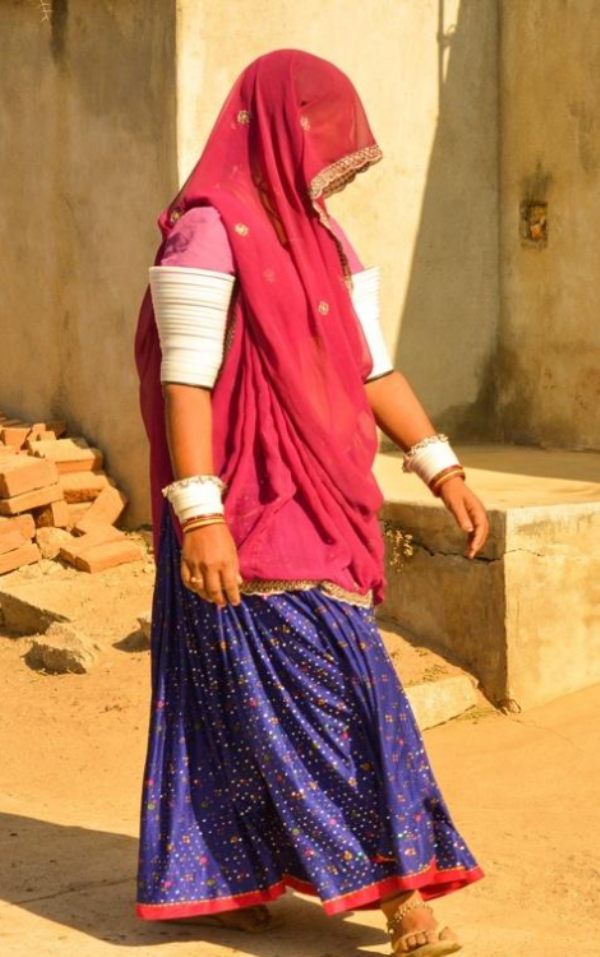
Fig. 18. Present day Rajasthani village woman sporting bangles on entire arm. (iStock images licensed to Dr. U. K. Sharma)
Another example of civilisational continuity is the bedtime stories told by grandmothers.
“The paintings discovered on the pots at Lothal, the well-known Harappan site in Gujarat, bring out some of these stories and here we shall draw attention to one. Fig. 20 shows, from the left a crow, a pitcher, a tree, a deer and again a tree. The story depicted is a well known one, viz. that of The thirsty Crow” (who raised the level of water in a half filled pitcher by dropping stones into it).(Ref. 4).
THE SINDHU- SARASVATI CIVILISATION, a CONTINUUM of the VEDIC CIVILISATION
After the discovery of the reality of the Sarasvati River, and hundreds of well developed settlements along the course of this magnificent river, it is now widely acknowledged that these are ALL synonymous- Harappan, Indus Valley, and others, are all identical to the Sindhu Sarasvati Civilisation, which is the preferred name today.
“Since during the Rigvedic times the Sarasvati was a mighty flowing river, the Rigveda must be dated prior to 2000 BCE. ….(when the river went underground)
According to RV 10.75.5-6, the Vedic Aryans occupied the region between the upper reaches of the Gangå-Yamunå on the east to the Indus on the west.7.”
“Which archaeological culture flourished in this very region and during the Rigvedic times, i.e. prior to 2000 BCE? The only answer is: the Indus-Sarasvati Civilization.
“….Thus, the Indus-Sarasvati Civilization and the Vedas are two faces of the same coin.
….. has made a lasting contribution to Indian culture, as may be observed in the various walks of life even today.
“…this civilization (Indus – Sarasvati) did not die out, but is still living in Indian culture and psyche.” (Ref. 4).
“…. the Bronze Age civilization of India is actually the most ancient on the face of earth and the civilization which flourished on the banks of Saraswati was a Vedic civilization.” Ref. 26. ……. “the Harappan culture, ……. is just a phase of the much earlier, more extensive and more durable Vedic culture that still continues.” (Ref. 41).
“Sanatana Dharma is arguably the oldest religion continuously practiced in human history. …… the roots of Sanatana Dharma lie in …… Saraswati Sindhu Civilization;….. “ (Ref. 42).
“We see a continuity of civilisation in India from sites as old as 8,000 years ago like Rakhigarhi or Bhirrana, another such ancient site in the Kurukshetra region in
Haryana.” (Ref. 43).
“ ….. the Vedic literature is far older than most thought, and the Harappans were a part of the Vedic culture.”
“ ……… N. S. Rajaram explains, "the Mahabharata, in the Shanti Parva, contains a description of the etymological texts whose contents are recorded on the (Harappan) seals, as well as the Vedic symbolism relating to the images on them...
“ …. close connections between the structure of the Indus script and the rules of grammar and phonetics described in such primary works on Vedic Sanskrit….. the language on the Indus script had to be Vedic Sanskrit…... the writings were connected with the Sutras, ….the Indus seals have provided further insights into the original location and time period of the Vedic culture.” (Ref. 44).
“In order to understand the history of the Rigvedic age, we must study the ebb, the flow and the ecology associated with this mighty river. This ecological data tells that the Harappans were a part of the Vedic Civilization and that they fell victim to a sudden calamity which forced them to take shelter in other parts of ancient India.” (Ref. 45).
“DNA was extracted from the skeletal remains excavated at Rakhigarhi. This research was carried out by The Deccan College Deemed University, Pune in collaboration with Centre for Cellular and Molecular Biology, Hyderabad and The Harvard Medical College. ……… Harappans are the indigenous people of this region. The genetic roots of the Harappans go back to 10,000 BCE. The DNA of the Harappans has continued till today and a majority of the South Asian population appears to be their descendents’
‘At no stage, the genetic history of the Indians was either discontinued or broken’
“….. reconstructed 3D features of the Harappan people….. male and female, show remarkable similarity with the modern population of Haryana. Thus, this study has indicated unbroken continuity for 5000 years in this region.’ (Ref. 46).
“Many elements of Harappan culture …. turned out to be quite compatible with Vedic culture: worship of fire, mother goddess, trees and animals, the use of oil lamps, red pigment, conch shells, ritual purification through water, and most importantly yoga and meditation.” (Ref. 47).
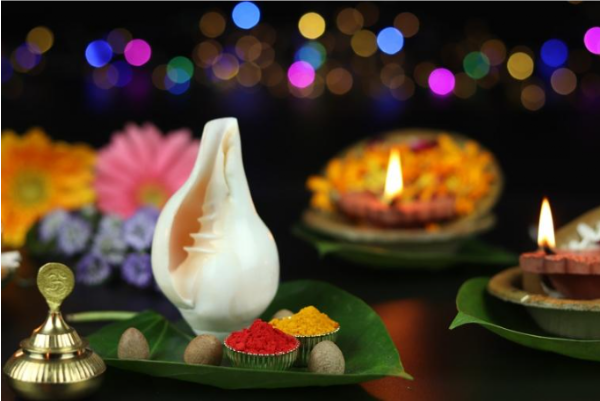
Fig. 19. Vedic pooja items oil lamp, sindoor (red pigment), conch shell, and others used even today.
(iStock images licensed to Dr. U.K. Sharma).
KASHMIR IN THE PAST – and TODAY
Vedic and Sindhu Sarasvati civilisations were a continuum, and the cultural practices, rituals of worship, social practices etc., are familiar and routinely practised traditions.
This continuum is easily visible all over Bharat, and is taken for granted by practising Hindus.
Kashmir unfortunately is a different story.
The continuum was devastated by Islamic invasions and genocides on multiple occasions, with complete destruction of temples, educational institutions and cultural symbols, and prohibition of socio-religious practices.
The role of Manda, Akhnoor in the growth and prosperity of Ancient Kashmiri civilisation, part of the magnificent Sindhu Sarasvati civilisation, through cedar wood timber trade both domestically and through export to Mesopotamia and other lands, are no longer even known to the local population, or for that matter, to the children of Bharat.
Akhnoor is today tragically in the headlines for reverberating with the sounds of enemy gunfire into Bharat.
“ …. an exchange of fire between two sides in Akhnoor had taken place
during the nights of May 1, April 30 and April 29 …” (Ref. 48).
What a disastrous turn of events!!
How grievous and appalling it feels to read the stark contrast between Akhnoor of Vedic times and Akhnoor of today!!
Who could have foreseen that the northernmost limit of the peace loving, intellectual, philosophical and supremely tolerant Sindhu Sarasvati Civilisation, viz, Akhnoor in Bharat’s Jammu and Kashmir, would, centuries later, be the location of an orchestrated geopolitical conflict imposed on Bharat.
“… War is madness ….. War is irrational; its only plan is to bring destruction; it seeks to grow by destroying…. Greed, intolerance, the lust for power … are the motives underlying the decision to go to war, and they are too often justified by an ideology ….”, Pope Francis, (Ref. 49).
CONCLUDING REMARKS
So far, in Part I (previous issue) and Part II (current issue), Timelines have been traced, revealing the birth of Bharat as a subcontinent, and the formation of the Himalayan Pir Panjal range of mountains, wherein nestles the valley of Kashmir, the Northern most part of Bharat.
The evolution of Man in this region was outlined, and the change from a pit-dwelling hunter gatherer to a cultivator of agricultural and horticultural produce is traced. Cultivation of various grains including rice, occurred in Rigvedic times.
In the Sarasvati civilization from which Kashmiri Hindus claim their descent, confirmed by DNA studies, craftsmanship in manufacturing copper articles, jewellery beads, gold objects, pottery, and above all, cotton cloth and articles of clothing have been described. Evidence of Ship building and dockyard building have been found. Seals of this Civilisation reveal influence of Vedic civilization which preceded it.
The Ancient Kashmiri civilization was a continuum from Vedic and Sindhu Saraswati civilization. DNA studies have clearly established the local origins of this civilization and dispelled the myth that the residents of Northern India came from outside Bharat.
Agriculture along the fertile banks of a mighty river is shown to have generated a scenario of plenty, leading to trade with neighbouring regions of Bharat, and to the supply of goods by maritime routes to distant lands such as Mesopotamia and Egypt.
Timber including cedar wood logs were sourced from Kashmir and traded.
The demise of the river Sarasvati in a geological catastrophe led to the migration of the Sindhu Sarasvati civilization along the Western coast, as well as westward outside Bharat to distant lands.
At the height of this great civilization, educational Universities flourished in the region, namely Takshashila and in particular, Sharada Peeth in Kashmir, the latter being a centre of Hindu learning.
The demise of Kashmiri portion of the Sarasvati civilization began with the Islamic invader zealots who destroyed the Sharada University resulting in the loss of aeons of intellectual development, art, culture, dance, drama, Sanskrit, astronomy, mathematics, literature etc.
The FIRST Kashmiri Hindu Genocide occurred in the 14th century as a result of the fanatical religious zeal of the barbarian Sikander Butsikhan.
For more on this, and for the heart wrenching details of how Islamic invasion led to the destruction of not only temples as a symbol of Hindu faith, but also the destruction of a fascinating, intellectually remarkable civilization, with unparalleled proficiency in the arts, dance, drama, literature, science, astronomy, philosophy, and a wholesome tolerance to other faiths, please await Part III of this article currently under final compilation.
IN MEMORIAM
OM SHANTI
THIS ARTICLE IS DEDICATED TO THE MEMORY OF ALL THE INNOCENT HINDUS TARGETED and SLAIN IN PAHALGAM on APRIL 22 2025, in a DASTARDLY ACT OF COWARDICE by ISLAMIC TERRORISTS in the name of RELIGION.
IT SALUTES THE BRAVE KASHMIRIS who ROSE ABOVE RELIGION, as they RISKED THEIR LIFE TO HELP THE SURVIVORS, the shawl vendor Sajad Ahmed who physically carried them to safety, and one who LOST HIS LIFE protecting them, the young pony driver Syed Adil Nawaz Hussein
EXEMPLIFYING THE AGE OLD VEDIC TRADITION OF HOSPITALITY –
“ATITHI DEVO BHAVA”- OUR GUEST IS OUR GOD
AI NON-USE DISCLAIMER
The author emphatically states that NO generative artificial intelligence tool was used for researching, compiling, collating or writing this article.
The author EXPRESSLY FORBIDS the use of this article to train AI technologies in data search, compilation, collation, publication and dissemination and/or the generation of similar publications using this article.
Find the detailed references refererred for the article as follows;
--

Dr. Usha Kamat Sharma
I am Dr. Mrs. Usha Kamat Sharma M.D., D.Cl.Pharm., Ph.D., who began my professional career as a lecturer in Pharmacology at the Seth G S Medical College affiliated to the KEM Hospital in Mumbai. I had the opportunity to conduct original research projects, graduate lectures and post graduate seminars in this period.
After earning my MD in the subject, I became a Pharmaceutical Physician, and retired after an innings of over 20 years in the Corporate Pharmaceutical world in India.
Thereafter I free lanced as a Pharmaceutical Medical and quality Consultant for a further 25 years or so. I indulged my love for writing by contributing invited articles to journals, and also contributed as a consultant editor for a few years on a couple of medical journals.
I turned once again to teaching, and accepted invitations as Visiting Faculty for various courses in Clinical Research for working professionals in the Pharmaceutical industry.
I designed and delivered a highly specialized course for several years at the Haffkine Institute for Training, Research and Testing, Government of Maharashtra, MUMBAI.
I soon turned to the pursuit of a new passion, the Ancient Civilisation and Culture of our beloved Motherland Bharat.
By this time I had written and published a Prescribed Textbook for Post-Graduates in Pharmacology, a Chapter in a Monograph on Tuberculosis, over 100+ Invited Reviews for a prestigious Pharmaceutical Bulletin, and assumed the Editorship of 2 Medical Journals for a few terms.
I have authored over 15 Original Medical Research Articles in Peer Reviewed Journals.
With this writing background I felt confident to venture into writing in what is essentially a new field for me. My love of teaching impels me to share what I learn with anyone who cares to listen and learn.
I look forward to writing this blog, and to incite curiosity and passion to learn about the riches of our heritage- verily treasures which our Vedic ancestors gifted to the World.
I am committed to providing the same thorough background research to this field as I had to Clinical Research.
I am excited to bring my fresh individual perspective to the subject, and hope I am able to stimulate thinking about this neglected topic.
It is revealing to come across so much national ownership and pride in the explorations carried out in other countries, while such rich treasures of knowledge and wisdom lie unfathomed, unseen, and untouched in the depths of a vast Ocean of the History of our Motherland.
The Time is now ripe for future generations to seek, even demand to know more about Her vast contributions to the World as they know it today.
Read on, and accompany me on this exhilarating journey of discovery into our past, the surest way to catapult meaningfully into the future.