Save the E20 fuel plan from burning


The 20% ethanol-blended petrol (E20) initiative in India is a significant step for nature and human development. The clarification by the Ministry of Petroleum and Natural Gas (August 2025) takes us out of the concern created by the theory of “huge mileage loss” due to E20. I have been working in the field of ethanol, bio-CNG and renewable energy for a long time. So I think it is time to clear the picture of the kind of perception being created about E20 in the country.
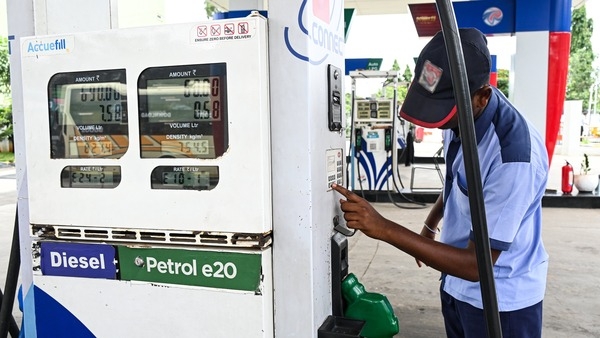
We must seriously understand that this is a national program of the Government of India. Which aims to reduce carbon emissions and increase the income of farmers. Research done by IOCL, ARAI, SIAM and NITI Aayog confirms that E20 reduces tailpipe carbon emissions by about 30% compared to E10. A study by Niti Aayog found that sugarcane-based ethanol reduces greenhouse gas emissions by 65 per cent and corn-based ethanol by 50 per cent. In the last 11 years, public sector oil companies have saved foreign exchange worth Rs 1.44 lakh crore and reduced carbon-di-oxide emissions by 736 lakh tonnes by blending ethanol in petrol, which is equivalent to planting 30 crore trees. It has replaced 245 lakh metric tonnes of crude oil, which shows India's positive contribution towards saving the environment.
The octane number of E20 (108.5) is higher than that of petrol (84.4), which improves the acceleration of vehicles. It reduces engine knocking and increases power by making the air-fuel mix denser. Earlier, the RON (Research Octane Number) of petrol sold in India was 88, which has now increased to 91 under BS-VI standards. By adding E20, it has increased to 95, which has improved the performance of vehicles.
It has been observed that for some time now, every effort is being made to spread confusion about E20. The argument presented was that due to this the mileage of vehicles has decreased. The Government of India has come forward to clear the confusion created by presenting such theories. The Petroleum Ministry has refuted the claim of "drastic" mileage reduction and clarified that the mileage of the vehicle also depends on driving habits, maintenance, tire pressure, alignment and use of AC. The ministry said that many manufacturers have been making E20-compatible vehicles since 2009, in which there is no significant impact on mileage. The ministry wants to remove the fears of vehicle owners regarding mileage, for this they have been asked to go to the authorized service centers without hesitation, if they feel that their vehicle needs tuning or replacement of parts for E20, then the entire network of service centers is ready to help.
The ethanol program has become a powerful medium of rural transformation. With 20% blending this year, it is expected that farmers will be paid Rs 40,000 crore and foreign exchange of Rs 43,000 crore will be saved. Farmers are now not only food providers, but also energy providers. This scheme strengthens the economic capacity and dignity of the farmer.
Some social media warriors also tried to propagate that insurance companies will not bear the cost of damage to vehicles in which E20 will be used. The reality is that the tweet of an insurance company was distorted and presented by the machinery of confusion in such a way that it makes people believe that insurance companies are washing their hands off vehicles running on E20 fuel. Whereas the reality is that the validity of insurance of vehicles using E20 fuel will not be affected.
There is a system active in the country which is bent on proving E20 fuel wrong in every way. A new gimmick was released by the same system that when ethanol is cheap, the price of E20 should also be low. People need to know that when the NITI Aayog report was prepared in 2020-21, ethanol was cheaper. Now its purchase price is more than petrol, which is Rs 71.32 per liter on average, including transport and GST. Corn-based ethanol is Rs 71.86 per liter.
Ethanol prices
- Sugarcane based:
- 2021-22: 46.66/liter
- 2024-25: 57.97/liter
- Corn based:
- 2021-22: 52.92/liter
- 2024-25: 71.86/liter
The E20 roadmap was made in 2021. This initiative is part of the Ethanol Blended Petrol (EBP) program of the Government of India. Which aims to reduce the country's dependence on oil and make vehicle emissions clean. Earlier the average ethanol blend was 12.06 percent, which increased to 14.6 percent. In February 2025, it reached 19.6 percent and after a short time the target of 20 percent has also been crossed. We have to understand very deeply that the ethanol-petrol blend is a bridge from dependence on fossil fuels to farmer-produced fuel.
We have to understand the attempt to create obstacles in India's progress. To live up to India's commitment to environmental protection, which has been expressed before the world, we will have to adopt all those options that are agriculturally produced, climate-friendly and beneficial for the nation. India has been experimental for centuries and the new India will move forward with new experiments every day and achieve new heights.
Vaibhav Dange
Vaibhav Dange is an Advisor in the National Highways Authority of India, Ministry of Road Transport & Highways. He had a rare privilege of being Private Secretary to Union Minister of Road Transport, Highways & Shipping, Government of India between 2014-19. Usually, the post of Private Secretary is manned by the officers of civil services that is IAS. Earlier, he worked as Deputy Director at FICCI, where he was responsible to coordinate with central and state governments on the issues related to investment promotion and policy reform, etc. He had also been involved in investment promotion events of state governments such as Vibrant Gujarat, Destination Madhya Pradesh, and Resurgent Rajasthan.
Vaibhav holds an MBA degree from Amaravati University, Maharashtra with major in Financing. He has also successfully completed course in “Japanese Managment Practices” at Tokyo, Japan sponsored by AOTS Japan. He joined Centre for Bharatiya Management Development an organisation incorporated for promotion of Indian economy in the overall framework of Indian values and needs. CBMD was an organisation in the making in 1999 and Vaibhav was instrumental making it pan India organisation within a short span of 6 years with branches at more than 13 places.
He also is associated as Member and on Advisory Committees of various trade and management organisations in the field of Management, Sustainable Mobility and Green Energy. Have presented various policy recommendations and papers at various levels. Specially to mention paper presented on Bio Diesel Program at a Conference at Rashtrapati Bhawan in the presence of Former president Dr. A P J Abdul Kalam and was included in the proceedings of the conference. He has delivered more than 100 lectures on economic issues at various industry associations, chambers, and academic institutions across India. Have developed various management-training modules for SME, Tiny & cottage industries. Has been conducting training programmes on various management issues such as Basic management for SME, understand your Market, Marketing and Selling. Price is Policy and so on. Recently attended refreshment course on Transport Modelling and Planning at University of New South Wales, Sydney, Australia.