Dharma, Faith and the Question of Religious Purpose (Part III)
Ultimately, the Bhagavad Gita offers a powerful measure of spiritual attainment:
Total Views |


- Pralhad Rathi
The distinction between religion and political ideology is fundamental to understanding the relationship between faith, civilisation and society. A religion, in the Indian philosophical understanding, is not merely a collection of prescribed rituals, declarations of faith or institutional practices. Its essence lies in Dharma, duty, benevolence, self-realisation and the pursuit of universal welfare. Viewed through this framework, several questions arise about the nature of Islam, its theological foundations and its relationship with India's civilisational philosophy.
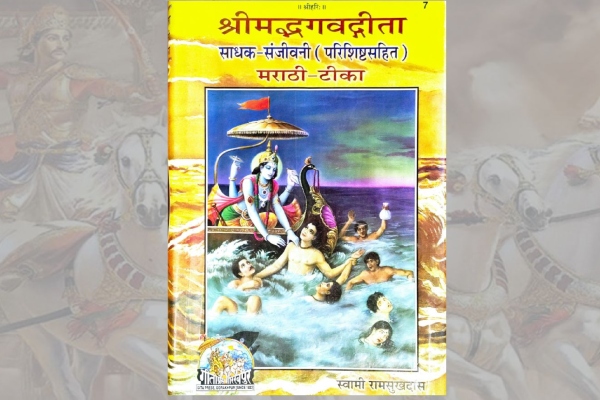
Islam identifies five cardinal obligations: Shahada (declaration of faith), Salah (five daily prayers), Zakat (charitable giving), Sawm (fasting during Ramadan) and Hajj (pilgrimage to Mecca). These constitute its Five Pillars and provide a framework for religious observance. However, a comparison with the philosophical depth of the Bhagavad Gita raises questions about the relationship between external religious obligations and inner spiritual transformation.
The Indian philosophical tradition recognises that ultimate truth can be approached through different paths. The Vedic understanding accommodates multiple forms of worship and diverse expressions of the divine. The Bhagavad Gita presents the idea of Vasudeva Sarvam, recognising the divine presence in everything. This understanding does not make one exclusive path the sole route to spiritual fulfilment. It creates space for diversity, individual inquiry and different approaches to realisation.
The distinction becomes clearer when examining religious practices. Salah prescribes five daily prayers, whereas the Gita emphasises dedicating every action to the divine. Its philosophy extends devotion beyond designated hours and places of worship. Similarly, Zakat prescribes giving a portion of accumulated wealth to the needy. Indian philosophy goes further through Nishkama Karma: performing one's duty without attachment to rewards or the ego of giving. Charity becomes a natural expression of duty rather than an obligation calculated through a prescribed proportion.
Fasting during Ramadan is another important Islamic observance. The Indian tradition, however, places moderation in food, sleep and other aspects of life within a broader discipline of living. Likewise, Hajj attaches religious significance to a particular sacred destination, whereas Indian spiritual traditions recognise the possibility of attaining enlightenment through genuine spiritual pursuit, irrespective of geographical location.
These comparisons should not be understood as denying the spiritual dimensions of Islamic practices. Rather, they invite examination of the philosophical objectives underlying religious observance. The central question is whether external conformity is sufficient or whether the transformation of the human mind and conduct must remain the ultimate objective.
The importance of Bhav
One of the most significant concepts in Indian philosophy is Bhav, the inner disposition behind an action. The Gita gives importance to intention, wisdom, self-discipline and the qualities of human conduct. Its emphasis on Nishkama Karma and Sarvabhutahite Ratah (working for the welfare of all beings) establishes benevolence as a central spiritual principle.
ALSO READ: Dharma and Religion: A Fundamental Civilisational Difference (PART I)
This raises an important question about religious exclusivism. Can a spiritual tradition genuinely claim universal benevolence if it discourages inquiry, rejects diversity or treats people outside its religious boundaries as adversaries? Conversion, when voluntary, is an exercise of individual freedom. Coercion, intimidation and violence, however, cannot be justified in the name of faith.
Religion and political power
The more serious concern emerges when religious identity becomes an instrument of political mobilisation and domination. History offers examples of religious movements becoming intertwined with military expansion, political authority and the suppression of competing beliefs. The Indian subcontinent has witnessed invasions, destruction of places of worship, forced conversions and Partition in 1947. These historical experiences deserve examination without attributing collective guilt to present-day believers.
The distinction between Islam as a faith and political movements claiming authority in its name is essential. Political Islam, particularly its authoritarian and expansionist interpretations, raises questions about pluralism, individual liberty and the compatibility of religious law with constitutional democracy.
The same test must apply to every religious and political ideology: does it respect the freedom of others, permit disagreement and accept equal citizenship? Sectarian intolerance, including conflicts between Sunni and Shia communities, also demonstrates how religious rigidity can undermine coexistence within a single faith.
The Indian civilisational test
India possesses a civilisational inheritance encompassing philosophical inquiry, cultural diversity, social traditions and multiple paths of spiritual exploration. Dharma, in this understanding, is fundamentally duty-oriented. It demands restraint, responsibility and service rather than domination.
ALSO READ: Is Islam a Religion or a Political Ideology? Test of Bharat’s Civilisational Philosophy (Part II)
Ultimately, the Bhagavad Gita offers a powerful measure of spiritual attainment: the transformation of the individual through wisdom, detachment, devotion and universal compassion. The Lord cannot be confined by geographical boundaries or competing religious identities. The eternal reality described in the Gita is universal and inclusive.
The real test of any religion is therefore not the number of its followers, the rigidity of its practices or its institutional power. It is the quality of human beings it produces. Faith that cultivates compassion, wisdom, freedom and responsibility strengthens civilisation. Faith invoked to legitimise coercion and domination undermines it. That distinction deserves serious examination in contemporary India.