BJP-Akali Reunion: More Than an Electoral Alliance
The historical relationship between the BJP and the Akali Dal provides substance to this argument.
NewsBharati 25-Nov-2026 12:23:54 PM
Total Views |


The reunion of the Bharatiya Janata Party (BJP) and the Shiromani Akali Dal (SAD) is among the most consequential political developments in Punjab ahead of the 2027 Assembly elections. Its significance, however, extends well beyond electoral calculations. At a time when Punjab is grappling with a drug crisis, deteriorating law and order, economic stagnation and challenges to its social cohesion, the restoration of this political partnership offers an opportunity to redefine the state's political direction. More importantly, it revives a relationship that represents a distinctive coming together of two political traditions rooted in India's national and civilisational ethos.
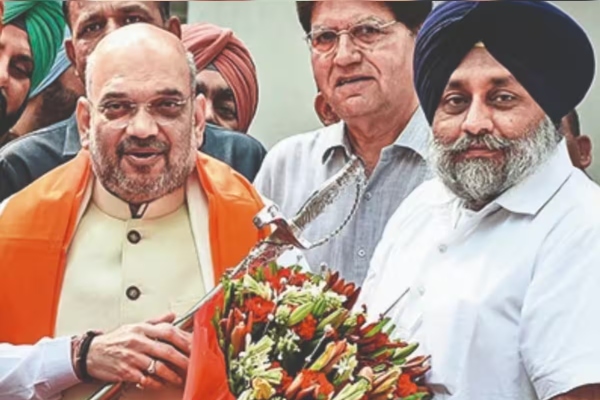
The historical relationship between the BJP and the Akali Dal provides substance to this argument. The partnership, forged in 1996 under the leadership of Atal Bihari Vajpayee and Parkash Singh Badal, was based on mutual political accommodation and a shared commitment to Punjab's stability. The two parties formed governments in 1997, 2007 and 2012. Their arrangement recognised the Akali Dal's wider rural and regional presence while allowing the BJP to consolidate its urban support base. It was a partnership in which ideological differences did not prevent political cooperation. More importantly, it demonstrated that regional aspirations and national interests need not be contradictory.
The breakdown of this relationship in September 2020 over the three farm laws was a serious setback. The Akali Dal withdrew from the NDA, and Harsimrat Kaur Badal resigned from the Union Cabinet. The subsequent repeal of the farm laws in November 2021 removed the principal political issue that had triggered the separation. Yet, restoring the alliance was not automatic. Differences over political positioning, electoral prospects and seat-sharing continued to complicate negotiations. The fact that both parties have now overcome these differences reflects a recognition that the challenges facing Punjab demand a broader political response.
The electoral context is equally important. The 2022 Assembly elections exposed the weakness of both parties when they contested separately. The Akali Dal secured only three seats, while the BJP won two in the 117-member Assembly. The AAP swept to power with an overwhelming mandate, capitalising on public dissatisfaction with the traditional political establishment. But the expectations raised by its promises have increasingly confronted the realities of governance. The drug menace remains a formidable challenge, concerns over law and order persist, and questions about employment, industrial investment, agricultural distress and the state's finances continue to dominate public discourse. The people of Punjab deserve more than political announcements and electoral slogans.
The drug crisis, in particular, has acquired alarming proportions. It is not merely a law-and-order problem; it threatens the social and economic foundations of Punjab. Drug addiction destroys families, deprives young people of productive futures and creates fertile ground for organised criminal networks. The state's geographical proximity to Pakistan adds a national security dimension. Cross-border smuggling, drone-assisted narcotics deliveries and the nexus between drug trafficking and hostile networks make the problem far more serious than an ordinary administrative challenge. Punjab cannot afford a government that treats this crisis as just another electoral issue. Amit Shah's commitment to making Punjab drug-free by December 31, 2029, must therefore be judged by measurable action, effective policing, intelligence coordination, rehabilitation and the dismantling of trafficking networks.
The security challenge also makes Punjab politically distinctive. The state has paid an enormous price for terrorism and separatist violence. The memories of the dark years of militancy should be sufficient warning against allowing divisive forces to exploit social grievances or revive separatist narratives. Any attempt to normalise radicalisation, glorify violence or weaken the constitutional unity of India must be confronted firmly. Punjab's peace is not simply a regional concern; it is integral to India's national security. A stable, prosperous and politically confident Punjab is essential for the security of the country's north-western frontier.
This is where the BJP-Akali partnership acquires a larger national significance. The Akali Dal has a longstanding political and social presence in Punjab, while the BJP brings the strength of a national organisation and the advantage of being part of the government at the Centre. Their cooperation can create a framework in which regional concerns are articulated effectively within the national development agenda. The relationship must not be reduced to the distribution of constituencies or the calculation of votes. It should become an instrument for addressing Punjab's structural problems.
The decision to retain the Akali Dal as the senior partner, with the Chief Minister coming from its ranks, is also politically significant. It demonstrates that the BJP is willing to accommodate regional leadership rather than insist on political primacy. This is particularly important in a state where regional identity, agrarian interests and community institutions have considerable influence. The BJP's willingness to respect the Akali Dal's position can help rebuild confidence among sections of the electorate that may have developed reservations following the 2020 rupture. At the same time, the Akali Dal must recognise that its past political legacy alone cannot guarantee renewed public support. It needs organisational rejuvenation, credible leadership and a clear programme for the future.
The alliance, however, should not be seen as an automatic guarantee of electoral success. The Akali Dal must confront the erosion of its traditional support base, while the BJP must expand its political appeal beyond its established urban constituencies. Both parties need to reconnect with farmers, youth, traders, industrialists and ordinary families. Agricultural prosperity, diversification beyond the wheat-paddy cycle, industrial revival, employment generation, infrastructure and fiscal discipline must become central to their common agenda. Punjab needs an economic vision that moves it beyond dependence on agriculture and addresses the aspirations of its younger generation.
Equally important is the restoration of public confidence in political institutions. Punjab has witnessed governments change, but many of its fundamental problems have remained unresolved. The politics of promises, accusations and counter-accusations cannot substitute for governance. The BJP and Akali Dal must present a credible alternative based on administrative accountability, development and social stability. Their proposed roadmap, prepared over three months, must translate into specific commitments with clear timelines rather than remain a document of electoral assurances.
Ultimately, the BJP-Akali reunion is an opportunity to correct a political rupture and reclaim a larger national and civilisational narrative. Punjab is not merely another state in India's electoral map. It is the land of the Sikh Gurus, the valour of the Khalsa, the sacrifices of countless patriots and a people whose contribution to India's defence, agriculture and nation-building is immeasurable. Its history cannot be separated from India's history, nor can its future be secured through narrow political calculations. Those who seek to exploit religious differences, revive separatist tendencies or turn Punjab into a theatre of political instability must recognise that the people of the state have too much at stake. The BJP and Akali Dal have reunited; now they must prove that they can unite Punjab's aspirations with India's national interests. The task is not simply to defeat AAP or Congress in 2027. It is to rescue Punjab from the cycle of political mismanagement, restore its economic vitality, defeat the drug menace and reaffirm its place as a confident, prosperous and integral part of India. That would make this reunion genuinely historic.
The timing of the announcement adds another dimension to the reunion. The parties have chosen the Parkash Purab of Sri Guru Nanak Dev, whose teachings of equality, social harmony and universal brotherhood continue to shape India's spiritual and cultural consciousness. The symbolism is significant. Hindu thoughts and Sikhism have shared civilisational roots, cultural traditions and historical experiences. The relationship between the two communities is not an artificial political construct but a deeply embedded social reality. The Sikh Gurus' contribution to the protection of Dharma and the defence of religious freedom occupies a unique place in India's history. Guru Tegh Bahadur's supreme sacrifice and Guru Gobind Singh's creation of the Khalsa are enduring reminders of this shared inheritance. Therefore, Amit Shah's description of the alliance as a symbol of Hindu-Sikh brotherhood carries significance beyond political messaging. It is a reaffirmation of a civilisational relationship that divisive politics must not be allowed to undermine.
The historical relationship between the BJP and the Akali Dal provides substance to this argument. The partnership, forged in 1996 under the leadership of Atal Bihari Vajpayee and Parkash Singh Badal, was based on mutual political accommodation and a shared commitment to Punjab's stability. The two parties formed governments in 1997, 2007 and 2012. Their arrangement recognised the Akali Dal's wider rural and regional presence while allowing the BJP to consolidate its urban support base. It was a partnership in which ideological differences did not prevent political cooperation. More importantly, it demonstrated that regional aspirations and national interests need not be contradictory.
The breakdown of this relationship in September 2020 over the three farm laws was a serious setback. The Akali Dal withdrew from the NDA, and Harsimrat Kaur Badal resigned from the Union Cabinet. The subsequent repeal of the farm laws in November 2021 removed the principal political issue that had triggered the separation. Yet, restoring the alliance was not automatic. Differences over political positioning, electoral prospects and seat-sharing continued to complicate negotiations. The fact that both parties have now overcome these differences reflects a recognition that the challenges facing Punjab demand a broader political response.
The electoral context is equally important. The 2022 Assembly elections exposed the weakness of both parties when they contested separately. The Akali Dal secured only three seats, while the BJP won two in the 117-member Assembly. The AAP swept to power with an overwhelming mandate, capitalising on public dissatisfaction with the traditional political establishment. But the expectations raised by its promises have increasingly confronted the realities of governance. The drug menace remains a formidable challenge, concerns over law and order persist, and questions about employment, industrial investment, agricultural distress and the state's finances continue to dominate public discourse. The people of Punjab deserve more than political announcements and electoral slogans.
The drug crisis, in particular, has acquired alarming proportions. It is not merely a law-and-order problem; it threatens the social and economic foundations of Punjab. Drug addiction destroys families, deprives young people of productive futures and creates fertile ground for organised criminal networks. The state's geographical proximity to Pakistan adds a national security dimension. Cross-border smuggling, drone-assisted narcotics deliveries and the nexus between drug trafficking and hostile networks make the problem far more serious than an ordinary administrative challenge. Punjab cannot afford a government that treats this crisis as just another electoral issue. Amit Shah's commitment to making Punjab drug-free by December 31, 2029, must therefore be judged by measurable action, effective policing, intelligence coordination, rehabilitation and the dismantling of trafficking networks.
The security challenge also makes Punjab politically distinctive. The state has paid an enormous price for terrorism and separatist violence. The memories of the dark years of militancy should be sufficient warning against allowing divisive forces to exploit social grievances or revive separatist narratives. Any attempt to normalise radicalisation, glorify violence or weaken the constitutional unity of India must be confronted firmly. Punjab's peace is not simply a regional concern; it is integral to India's national security. A stable, prosperous and politically confident Punjab is essential for the security of the country's north-western frontier.
This is where the BJP-Akali partnership acquires a larger national significance. The Akali Dal has a longstanding political and social presence in Punjab, while the BJP brings the strength of a national organisation and the advantage of being part of the government at the Centre. Their cooperation can create a framework in which regional concerns are articulated effectively within the national development agenda. The relationship must not be reduced to the distribution of constituencies or the calculation of votes. It should become an instrument for addressing Punjab's structural problems.
The decision to retain the Akali Dal as the senior partner, with the Chief Minister coming from its ranks, is also politically significant. It demonstrates that the BJP is willing to accommodate regional leadership rather than insist on political primacy. This is particularly important in a state where regional identity, agrarian interests and community institutions have considerable influence. The BJP's willingness to respect the Akali Dal's position can help rebuild confidence among sections of the electorate that may have developed reservations following the 2020 rupture. At the same time, the Akali Dal must recognise that its past political legacy alone cannot guarantee renewed public support. It needs organisational rejuvenation, credible leadership and a clear programme for the future.
The alliance, however, should not be seen as an automatic guarantee of electoral success. The Akali Dal must confront the erosion of its traditional support base, while the BJP must expand its political appeal beyond its established urban constituencies. Both parties need to reconnect with farmers, youth, traders, industrialists and ordinary families. Agricultural prosperity, diversification beyond the wheat-paddy cycle, industrial revival, employment generation, infrastructure and fiscal discipline must become central to their common agenda. Punjab needs an economic vision that moves it beyond dependence on agriculture and addresses the aspirations of its younger generation.
Equally important is the restoration of public confidence in political institutions. Punjab has witnessed governments change, but many of its fundamental problems have remained unresolved. The politics of promises, accusations and counter-accusations cannot substitute for governance. The BJP and Akali Dal must present a credible alternative based on administrative accountability, development and social stability. Their proposed roadmap, prepared over three months, must translate into specific commitments with clear timelines rather than remain a document of electoral assurances.
Ultimately, the BJP-Akali reunion is an opportunity to correct a political rupture and reclaim a larger national and civilisational narrative. Punjab is not merely another state in India's electoral map. It is the land of the Sikh Gurus, the valour of the Khalsa, the sacrifices of countless patriots and a people whose contribution to India's defence, agriculture and nation-building is immeasurable. Its history cannot be separated from India's history, nor can its future be secured through narrow political calculations. Those who seek to exploit religious differences, revive separatist tendencies or turn Punjab into a theatre of political instability must recognise that the people of the state have too much at stake. The BJP and Akali Dal have reunited; now they must prove that they can unite Punjab's aspirations with India's national interests. The task is not simply to defeat AAP or Congress in 2027. It is to rescue Punjab from the cycle of political mismanagement, restore its economic vitality, defeat the drug menace and reaffirm its place as a confident, prosperous and integral part of India. That would make this reunion genuinely historic.

Editor's Desk
Editor's Desk