Uddhav Thackeray: A Chicken-hearted Tiger
The fallout was immediate: leaders from Thackeray’s camp were compelled to engage in damage control, reaching out to Congress leadership to contain the anger. While the Congress has publicly refrained from fielding a candidate, the underlying unease remains unresolved.
NewsBharati 30-Apr-2026 16:01:20 PM
Total Views |


The decision of Uddhav Thackeray to opt out of the Legislative Council contest is not a routine political calculation. It is a revealing moment that underscores a deeper crisis of confidence within both his leadership and the Maharashtra Vikas Aghadi. At its core, this withdrawal appears less strategic and more defensive, driven by the apprehension that he may not secure the required votes, a setback that would puncture the carefully cultivated “Thackeray brand.”
For a leader who once occupied the Chief Minister’s office, the reluctance to face even an indirect electoral test raises uncomfortable questions. Thackeray’s political trajectory has consistently reflected a preference for the safer route. When he became Chief Minister, he chose to enter the legislature via the Council rather than contest a direct election. Even then, he had publicly stated that he would resign from the Council membership after stepping down from the top post. That promise was never honoured. The current episode only reinforces a pattern, avoidance of risk rather than engagement with it.
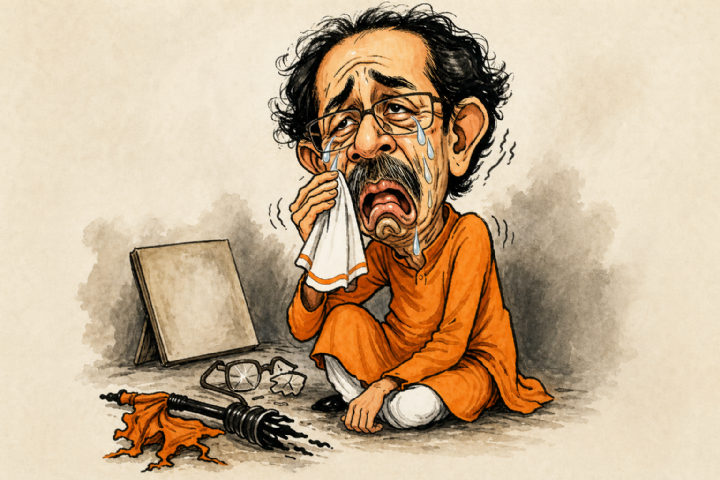
Equally telling is his lack of legislative presence. His tenure as a Member of the Legislative Council was marked by minimal participation. He was rarely seen in the House, seldom intervened in debates, and did little to establish himself as a serious parliamentary figure. In a political system where legislative engagement is a key measure of credibility, this absence has not gone unnoticed. The decision to stay away from the contest now appears consistent with that earlier disengagement, choosing the comfort of distance over the scrutiny of performance.
The political implications within the alliance are even more significant. Thackeray’s apparent lack of confidence in the support of MLAs from the MVA, including leaders from the Indian National Congress and Nationalist Congress Party, signals a breakdown of internal trust. Alliances survive on coordination and mutual respect; the perception that even allied legislators may not back him indicates a serious erosion of both.
This fragility was further exposed in the unilateral decision to nominate Ambadas Danve. The move, reportedly made without adequate consultation with alliance partners, triggered visible discontent, particularly within the Congress. The fallout was immediate: leaders from Thackeray’s camp were compelled to engage in damage control, reaching out to Congress leadership to contain the anger. While the Congress has publicly refrained from fielding a candidate, the underlying unease remains unresolved.
In such a climate, the risk of cross-voting or silent dissent cannot be dismissed. Legislative Council elections, conducted through indirect voting, are particularly vulnerable to internal fractures. Even a small degree of deviation can alter outcomes significantly. The mere possibility of such division highlights how fragile the alliance has become after its setback in the Assembly elections.
ALSO READ: Kolhapur: Gaibisab Dastagir, accused of love jihad, issues death threats to Hindu victim after out on bail, seeks withdrawl of complaint
More broadly, this episode illustrates the absence of a coherent recovery strategy within the MVA. Political defeats are not uncommon, but effective leadership is measured by the ability to regroup, rebuild confidence, and project direction. Instead, what is visible here is hesitation, internal discord, and a lack of decisive leadership. Thackeray’s withdrawal, rather than stabilising the situation, amplifies these weaknesses.
Ultimately, the issue is not just about one election or one seat. It is about leadership credibility and organisational coherence. By stepping aside at a moment that demanded assertion, Thackeray has allowed the narrative to shift, from that of a leader navigating political challenges to one retreating from them. For the MVA, already grappling with electoral setbacks and internal strains, this only deepens the perception of a coalition struggling to hold itself together.
Unless addressed with clarity and resolve, this episode may well become another marker in the gradual unravelling of an alliance that once claimed to represent a formidable political alternative in Maharashtra.
Dhananjay Pandit
Dhananjay Pandit is a political analyst. He keeps interest in economics, state politics and socio-economic aspects. He is known for his nationalist views and is associated with the Hindu Sangh.