The National Investigation Agency (
NIA) on May 14
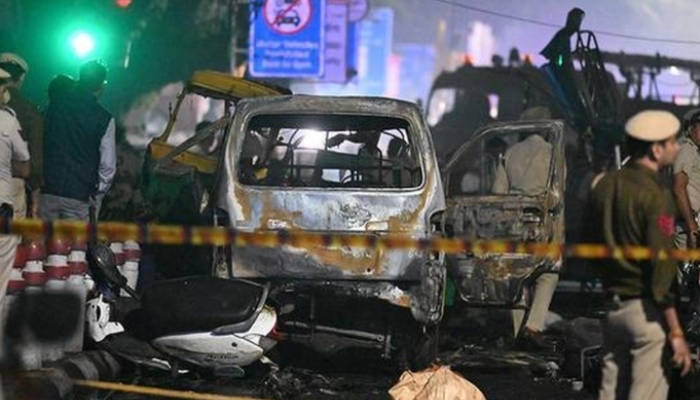
filed a 7500-page chargesheet before Delhi’s Patiala House Court in connection with the deadly vehicle-borne improvised explosive device (VBIED) blast near Delhi’s Red Fort. The blast killed 11 people and left several others injured on November 10, 2025.
The blast is now being
described by investigators as part of a wider transnational jihadi conspiracy linked to Ansar Ghazwat-ul-Hind (AGuH), an offshoot of Al-Qaida in the Indian Subcontinent (AQIS).
According to the
NIA, all 10 accused named in the chargesheet were
associated with the terror network and had allegedly conspired to wage violent jihad against India under an operation codenamed “Operation Heavenly Hind.”
Among the accused is Dr Umer Un Nabi, a Pulwama-based former Assistant Professor of Medicine at Al-Falah University in Haryana, who is alleged to have been the key conspirator behind the attack. Nabi, now deceased, has been described by investigators as a central figure in rebuilding the terror outfit after a failed attempt to reach Afghanistan through Turkey.
The other accused named in the chargesheet includes Aamir Rashid Mir, Jasir Bilal Wani, Dr Muzamil Shakeel, Dr Adeel Ahmed Rather, Dr Shaheen Saeed, Mufti Irfan Ahmad Wagay, Soyab, Dr Bilal Naseer Malla, and Yasir Ahmad Dar.
The agency stated that charges against Nabi would be abated due to his death.
Radicalised professionals, secret meetings
According to the
NIA investigation, the accused were radicalised by AQIS and AGuH ideology and had regrouped during a clandestine meeting held in Srinagar in 2022.
Investigators said the terror outfit was reconstituted as “AGuH Interim” after their failed “Hijrat” attempt to Afghanistan. Under this regrouped organisation, the accused launched “Operation Heavenly Hind,” with the stated objective of overthrowing the democratically elected Indian government and establishing Sharia rule through violent jihad.
The chargesheet paints a disturbing picture of educated and professionally qualified individuals allegedly turning towards radical Islamist extremism. Several among the accused are medical professionals, a detail that investigators believe highlights the expanding reach of online radicalisation networks.
According to the probe agency, the accused recruited members, propagated extremist ideology, stockpiled arms and ammunition, and manufactured explosives using commercially available chemicals.
The explosive used in the Red Fort attack was identified as Triacetone Triperoxide (TATP), a highly volatile explosive often associated with global terror attacks. Investigators said the accused procured chemicals clandestinely and repeatedly conducted experiments to perfect the explosive composition before carrying out the attack.
AK-47s, drone IEDs, and plans for attacks
The
NIA further revealed that the accused had allegedly procured prohibited weapons, including AK-47 rifles, Krinkov rifles, and country-made pistols, along with live ammunition. The terror module had also allegedly experimented with rocket-based and drone-mounted IEDs with plans to target security establishments in Jammu and Kashmir and other parts of the country.
Investigators said the accused purchased specialised laboratory equipment, electric circuits, switches, and explosive-related materials from online and offline sources to expand their operational capabilities.
The agency further stated that forensic examinations, DNA fingerprinting, voice analysis, and evidence recovered from locations in Jammu and Kashmir, Faridabad, and Delhi helped establish the conspiracy and identify the accused involved in the operation.
The investigation, spread across Jammu and Kashmir, Haryana, Uttar Pradesh, Maharashtra, Gujarat, and Delhi-NCR, includes 588 witness testimonies, over 395 documentary exhibits, and more than 200 seized material objects.
NIA says wider terror network was being built
Officials said the accused intended to expand operations beyond Jammu and Kashmir and build a larger pan-India terror network before the module was dismantled.
A total of 11 people have been arrested so far in the case, while the
NIA said efforts are continuing to identify and apprehend additional absconders whose roles surfaced during the investigation.