Hindu groups oppose Maharashtra’s new temple land law, meet CM Fadnavis
Several Hindu organisations in Maharashtra have opposed the proposed Devasthan Inams Abolition Draft Act 2026. They claim the new law could allow temple lands to go to tenants, encroachers and private people while Waqf properties are kept out of the law.
Total Views |


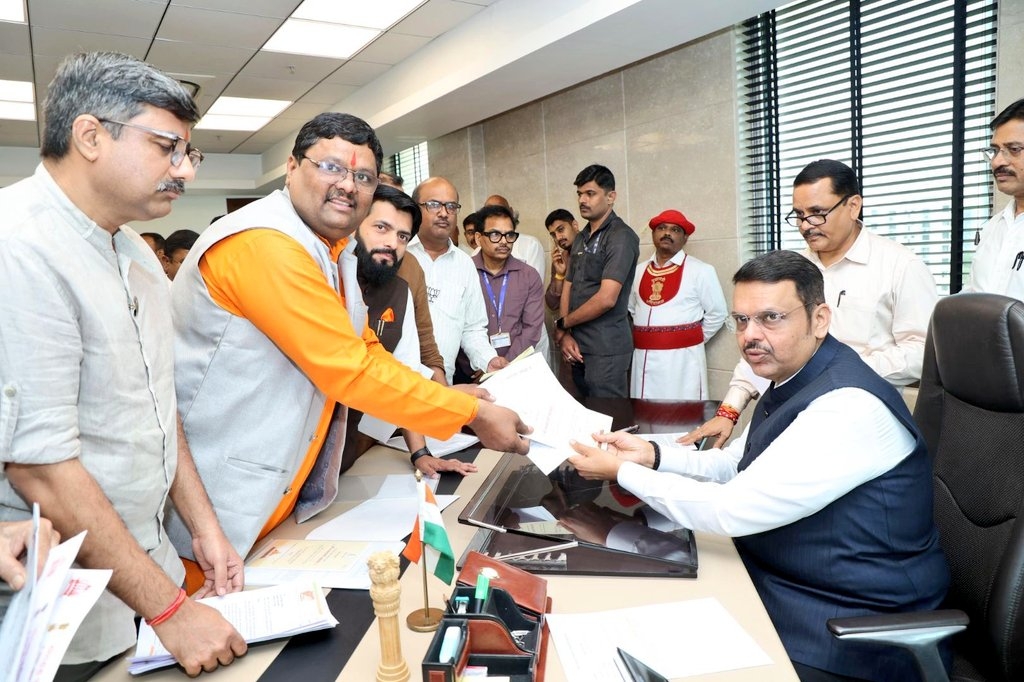
The proposed Maharashtra Devasthan Inams Abolition (Draft) Act, 2026 has created controversy in the state, with Hindu temple organisations strongly opposing the law. A delegation of Hindu activists recently met Maharashtra Chief Minister Devendra Fadnavis and submitted a memorandum demanding that the draft law be withdrawn.
The main opposition is coming from the Maharashtra Mandir Mahasangh, which says the law could weaken temple ownership rights and allow temple lands to be transferred to tenants, encroachers and private occupants. The organisation has warned that it may launch a statewide protest if the law is passed in its current form.
What are Devsthan Inam Lands?
Devsthan Inam lands are lands that were historically given to temples and religious institutions by kings and rulers. These lands were used to support temple expenses, religious rituals, festivals, priests and charitable activities.
The Maharashtra government now wants to abolish the old Devsthan Inam system and bring a new law to manage issues related to ownership, tenancy and encroachments on these lands.
Why are Hindu organisations opposing the law?
Temple organisations claim that some provisions of the draft law could result in temple lands being permanently transferred to people currently occupying them. They say many temple lands have remained with temples for centuries and should continue to remain under temple control.
One of the biggest objections is that the proposed law excludes Waqf properties from its scope. Hindu organisations say this creates unequal treatment because temple lands are being targeted while Waqf lands remain protected.
🚨 नागपूर: देवस्थान इनाम व मंदिरांच्या जमिनी कुळे/वहिवाटदारांना देण्याचा प्रस्तावित कायदा
— Mandir Mahasangh (@mandirmahasangh) May 5, 2026
हा अन्यायकारक मसुदा तात्काळ मागे घ्या ⚠️ — सुनील घनवट
अन्यथा राज्यभर तीव्र जनआंदोलन छेडले जाईल 🔥
मंदिरांची जमीन ही श्रद्धा, संस्कृती व ओळखीचा आधार आहे 🙏@SanatanPrabhat pic.twitter.com/kJ0mYNdgs5
Maharashtra Mandir Mahasangh organiser Sunil Ghanwat said many of these lands may have originally been donated by Hindu rulers, including Chhatrapati Shivaji Maharaj and other dynasties. According to the organisation, transferring these lands would weaken temples financially and affect religious activities.
One of the most debated parts of the draft law is a provision that gives occupancy rights to tenants and other people cultivating the land. Temple groups fear this may give ownership-like rights to occupants and permanently reduce temple control over the lands.
The law also allows regularisation of some unauthorised occupations if the occupants have been staying there since before January 1, 2011 and fulfil certain conditions. Critics say this could legalise old encroachments on temple lands.
Government also proposes anti-encroachment rules
At the same time, the proposed law includes strict punishment for future illegal occupation of temple lands. It provides for jail terms, fines and eviction action against land grabbers.
However, temple organisations say the law sends mixed signals because it regularises some old occupations while punishing new encroachments.
A delegation led by Sunil Ghanwat met Chief Minister Devendra Fadnavis along with MLAs Pratap Adsad and Pratap Pachpute to raise their concerns. According to the organisation, the Chief Minister assured them that the matter would be discussed further with the concerned departments and ministers.
The proposed 'Maharashtra Devasthan Inam Abolition Draft Act 2026' poses a major difficulty for temple lands and their management. Millions of temple trustees across the state are strongly opposing this law.
— Sunil Ghanwat 🛕🛕 (@SG_HJS) May 15, 2026
In this regard, a memorandum was submitted to the Hon. Chief Minister… pic.twitter.com/eQl42s2t0m
The Maharashtra government has currently placed the draft law in the public domain and invited suggestions and objections till June 5, 2026. The government may now amend the draft, delay it or move ahead with the legislation.
With growing protests from Hindu organisations and debate over the Waqf exemption, the issue is becoming a major political and religious controversy in Maharashtra.