Gujarat: Rs 226-crore crypto network linked to drugs, terrorism busted; Mohsin, Md Hussain, Isam among 9 arrested
Total Views |


The Gujarat Cyber Center of Excellence has uncovered a cryptocurrency-based network operating out of Ahmedabad that investigators say was linked to drug trafficking, money laundering, and terror financing. The probe has so far led to the arrest of nine individuals from different parts of India, with authorities tracing transactions worth nearly Rs 226.54 crore through crypto wallets allegedly connected to the accused.
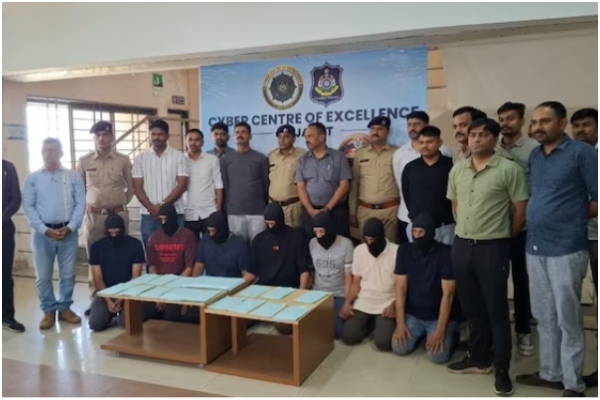
According to the Superintendent of Police at the Cyber Center of Excellence, investigators tracked suspicious crypto transactions originating from ARTEMISLAB.CC, an alleged illegal dark web drug marketplace. The money trail reportedly led to crypto wallets linked to Ahmedabad resident Mohsin Sadiq Molani and several associates across India.
The probe further revealed that one of the accused, Mohammad Zubair Mohammad Hussain Popatia, allegedly operated a crypto wallet that had previously been frozen by Israel’s National Bureau for Counter Terror Financing (NBCTF) in 2025. Investigators claimed the wallet had links to entities allegedly associated with Hamas as well as Dubai-based crypto exchanges.
According to investigators, Mohsin Molani allegedly accepted drug orders from customers in the United Kingdom through Telegram groups and online platforms. These orders were then allegedly forwarded to Mohammad Zubair Popatia, who investigators claim managed the supply chain from Dubai.
Another accused, Isam Salman Ghulam Ali Ansari, is currently serving a sentence in a UK prison after being convicted in 2024 in a drug trafficking and money laundering case. Investigators suspect the network continued operating even during his incarceration.
Police alleged that hawala channels and “dirty crypto” converted into USDT were used to move funds across borders and support criminal operations. Authorities have registered multiple cases under provisions of the Bharatiya Nyaya Sanhita (BNS) and the Information Technology Act, invoking charges related to organised crime, terror financing, conspiracy, and cyber fraud.
Officials further revealed that 935 complaints had earlier been filed on the NCCRP portal against Binance P2P-linked bank accounts allegedly connected to the accused. The investigation into the network’s international connections remains ongoing.
Officials said the investigation exposed a sophisticated network spread across multiple Indian cities, including Ahmedabad, Mumbai, and Karnal, with suspected links to international criminal syndicates, dark web drug markets, and organisations accused of financing terrorism.
According to the Superintendent of Police at the Cyber Center of Excellence, investigators tracked suspicious crypto transactions originating from ARTEMISLAB.CC, an alleged illegal dark web drug marketplace. The money trail reportedly led to crypto wallets linked to Ahmedabad resident Mohsin Sadiq Molani and several associates across India.
Investigators said the accused allegedly relied heavily on the privacy-centric cryptocurrency Monero to conceal fund movements. Authorities traced transactions worth nearly USD 20 million (around Rs 193 crore) involving Monero, which is frequently associated with dark web activities due to its anonymity features and has appeared in several global probes related to illegal trade and terror financing.
The probe further revealed that one of the accused, Mohammad Zubair Mohammad Hussain Popatia, allegedly operated a crypto wallet that had previously been frozen by Israel’s National Bureau for Counter Terror Financing (NBCTF) in 2025. Investigators claimed the wallet had links to entities allegedly associated with Hamas as well as Dubai-based crypto exchanges.
Officials also alleged that the network’s transactions were connected to crypto wallets sanctioned by the US Office of Foreign Assets Control (OFAC), including entities allegedly linked to Yemen’s Ansar Allah (Houthis), Iran’s IRGC-QF, and the sanctioned Russian crypto exchange Garantex.
According to investigators, Mohsin Molani allegedly accepted drug orders from customers in the United Kingdom through Telegram groups and online platforms. These orders were then allegedly forwarded to Mohammad Zubair Popatia, who investigators claim managed the supply chain from Dubai.
Another accused, Isam Salman Ghulam Ali Ansari, is currently serving a sentence in a UK prison after being convicted in 2024 in a drug trafficking and money laundering case. Investigators suspect the network continued operating even during his incarceration.
Police alleged that hawala channels and “dirty crypto” converted into USDT were used to move funds across borders and support criminal operations. Authorities have registered multiple cases under provisions of the Bharatiya Nyaya Sanhita (BNS) and the Information Technology Act, invoking charges related to organised crime, terror financing, conspiracy, and cyber fraud.
Officials further revealed that 935 complaints had earlier been filed on the NCCRP portal against Binance P2P-linked bank accounts allegedly connected to the accused. The investigation into the network’s international connections remains ongoing.