West Bengal starts deportation drive, illegal Bangladeshi immigrants gather at borders; videos viral
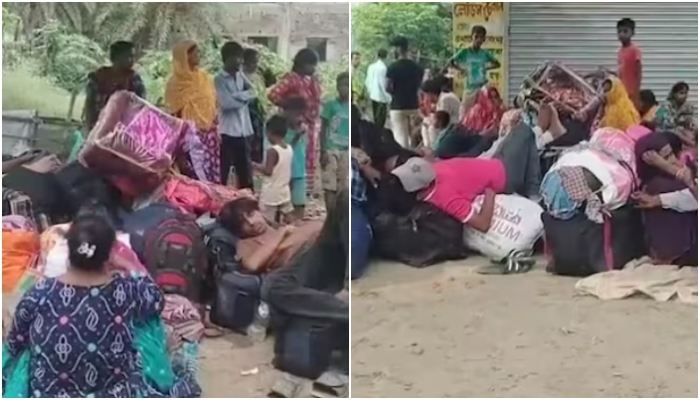
At the Hakimpur checkpoint in the Basirhat subdivision of North 24 Parganas, over a hundred Bangladeshi men and women gathered seeking to cross back over the international border.


We are Bangladeshi citizens. We want to return to our homeland, Bangladesh. Ever since the BJP government came to power, poor people like us have been treated very badly. We even had voter cards, but the EC cancelled them during the SIR.
— Rishi Bagree (@rishibagree) May 26, 2026
- An illegal Bangladeshi migrant pic.twitter.com/wbkqexfzWt
Just after the announcement of detention camps in Bengal, illegal Bangladeshi are heading towards Bangladesh border to return home.
— Facts (@BefittingFacts) May 26, 2026
The next step is identifying illegal birth certificates issued under TMC govt.
This can solve a major national problem. pic.twitter.com/33WK7qc3G0
🚨 BIG! People have again gathered at the Hakimpur border area in North 24 Parganas, reportedly to RETURN to Bangladesh.
— Megh Updates 🚨™ (@MeghUpdates) May 26, 2026
After holding centres opened and West Bengal CM Suvendu Adhikari took a tough stand on illegal immigrants, fresh gatherings have emerged. pic.twitter.com/aEDq8OBN5Z
It is important to note that the illegal immigration from neighboring Bangladesh has created serious demographic, economic, and security challenges in the border districts of the state of West Bengal in the past few years. The earlier government led by the All India Trinamool Congress was pursuing vote-bank politics by allegedly turning a blind eye to undocumented migration and weak border enforcement.
However, it failed to notice that illegal immigration placed pressure on public resources, altered local social dynamics, and contributed to criminal activities such as smuggling, document forgery, cattle trafficking, and organized border crimes in certain regions. Several such illegal immigrants were also found to be involved in incidents of love jihad. BJP leaders have earlier repeatedly demanded stricter citizenship verification, stronger border security, and tougher action against networks involved in illegal settlement and cross-border crimes. However, evidently, the power change was necessary for the country to get rid of such illegal immigrants.
Siddhi Somani
Siddhi Somani is known for her satirical and factual hand in Economic, Social and Political writing. Having completed her post graduation in Journalism, she is currently engaged in completing her Masters in Politics. The author meanwhile is also exploring her hand in analytics and statistics.