Failed or forced failure? Why Bharat lagged in the critical semiconductor race
Bharat"s semiconductor journey began with immense promise. In the late 1950s, Fairchild Semiconductor was established in California by the "traitorous eight"—a group of pioneering scientists who left Shockley Semiconductor Laboratory.
NewsBharati 01-Jun-2026 11:10:30 AM
Total Views |


The ancient wisdom of the Mahabharat offers a profound lens through which we can view modern geopolitical and economic setbacks. In the Udyog Parv, Prime Minister Vidur attempts to caution King Dhritarashtra with a powerful verse:
Meaning: The most dangerous adversary is the one hidden within your own clan or circle. Living in proximity to such internal enemies is exceptionally devastating and painful.
_202606011132280103_H@@IGHT_400_W@@IDTH_600.jpg "semiconductor mission")
The Foundation of Modern Technology
Semiconductors, or microchips, serve as the foundational bedrock of the digital age. Acting as electronic switches and amplifiers, they regulate the flow of electricity in everything from smartphones, medical equipment, and automobiles to advanced aerospace satellites. Today, virtually no modern infrastructure can function without them.
Yet, long before these giants rose to dominance, Bharat was poised to become a global chip manufacturing powerhouse, centered in its thriving northern granary: Punjab.
Early Pioneer Status and Bureaucratic Apathy
Bharat's semiconductor journey began with immense promise. In the late 1950s, Fairchild Semiconductor was established in California by the "traitorous eight"—a group of pioneering scientists who left Shockley Semiconductor Laboratory. By the 1960s, Fairchild sought to establish its very first Asian semiconductor foundry in Bharat. At the time, the domestic ecosystem was in its infancy, led by the state-owned Bharat Electronics Limited (BEL) and the private firm Continental Device India Limited (CDIL), both of which produced germanium semiconductors.
Regrettably, severe bureaucratic hurdles and government apathy stifled Fairchild's ambitions, forcing the company to divert its investment to Malaysia instead.
Despite this missed opportunity and the geopolitical fallout of the 1962 war, domestic firms like BEL and CDIL persevered in manufacturing early integrated circuits. A decade later, Chennai-based Metkem Silicon Limited, partnering with BEL, began producing polysilicon wafers. However, a lack of robust state support left them vulnerable, and cheaper, thinner Taiwanese imports eventually undercut them.
The Rise and Mysterious Fall of SCL Mohali
Despite these systemic roadblocks, a visionary trio—Dr. M.J. Zarabi, Dr. Kamaljeet Singh, and Shri K.P.P. Nambiar spearheaded a mission to secure Bharat's technological sovereignty. Securing approvals from President Giani Zail Singh in 1976, they established the Semiconductor Complex Ltd (SCL) in Mohali, Punjab, which commenced production in 1984.
SCL was a technological marvel. Operating on a 5000-nanometer (nm) process, it rapidly advanced toward an 800-nm process, trailing the global industry leader, Intel, by a mere year.
The Geopolitical and Domestic Turmoil
The resulting Khalistani separatist movement gained traction, fueled by external support from factions within the UK and Canada, and aggravated by domestic political maneuvering aimed at destabilizing the state of Punjab.
_202606011121049948_H@@IGHT_400_W@@IDTH_700.jpg "India")
The Fatal Blow
On February 7, 1989, while Punjab was under direct central governance, catastrophe struck. A massive, unexplained fire ripped through the SCL facility in Mohali late at night, completely decimating the main wafer production line. The disaster caused damage estimated between ₹60 crore and ₹75 crore.
While the Intelligence Bureau (IB) investigated the incident, their final report proved inconclusive, pointing to potential chemical or electrical faults while never entirely dismissing the possibility of sabotage. The fire completely halted production for nearly a decade, not restarting until 1997. This critical delay created a massive vacuum, allowing emerging competitors like TSMC (Taiwan) and Samsung (South Korea) to capture the global market.
Can Bharat Reclaim Its Future?
In the decades that followed, prominent domestic conglomerates like the Tata Group, Vedanta, and major public sector units attempted to scale global chip manufacturing but faced uphill battles. However, Bharat’s ambitions remain resilient.
A historic turning point occurred recently on May 16, 2026, during a strategic diplomatic tour. Tata Electronics secured a monumental partnership with the Dutch technology titan ASML. Holding a near-monopoly on Extreme Ultraviolet (EUV) lithography systems—the precise machines required to print the world's smallest, most advanced microchips—ASML is Europe’s highest-valued tech firm.
Bharat's Semiconductor Evolution -
SCL Mohali (1984) ----> (1989 Fire/Decade Delay) ----> Market Lost to TSMC/Samsung
Tata & ASML (2026) ---> (EUV Tech Transfer) --------> Next-Gen Dholera Fab (AI & Auto)
Through this collaboration, ASML will provide vital technology and supply chain infrastructure to develop the front-end Dholera Fab in Gujarat. By embedding complex chipmaking expertise locally, Bharat is actively building a resilient supply chain, minimizing its dependence on foreign semiconductor imports, and positioning itself as a formidable competitor in the global AI and automotive chip race.
“ज्ञातिशत्रुःसुघोराणां संनिकर्षोऽतिदारुणः”
Meaning: The most dangerous adversary is the one hidden within your own clan or circle. Living in proximity to such internal enemies is exceptionally devastating and painful.
Historically, some of Bharat’s deepest wounds have not been inflicted by open adversaries, but by internal instability and the betrayal of trusted entities at critical junctures. This tragic dynamic is vividly illustrated in the story of how Bharat lost its early dominance in the global semiconductor race.
The Foundation of Modern Technology
Semiconductors, or microchips, serve as the foundational bedrock of the digital age. Acting as electronic switches and amplifiers, they regulate the flow of electricity in everything from smartphones, medical equipment, and automobiles to advanced aerospace satellites. Today, virtually no modern infrastructure can function without them.
The global landscape is currently dominated by "Chip Czars" like Nvidia—an AI hardware pioneer founded in 1993, now boasting a valuation of approximately $5.1 trillion—and TSMC (Taiwan Semiconductor Manufacturing Company). Founded in 1987, TSMC commands over 60% to 70% of the global foundry market and manufactures more than 90% of the world's most advanced microchips.
Yet, long before these giants rose to dominance, Bharat was poised to become a global chip manufacturing powerhouse, centered in its thriving northern granary: Punjab.
Early Pioneer Status and Bureaucratic Apathy
Bharat's semiconductor journey began with immense promise. In the late 1950s, Fairchild Semiconductor was established in California by the "traitorous eight"—a group of pioneering scientists who left Shockley Semiconductor Laboratory. By the 1960s, Fairchild sought to establish its very first Asian semiconductor foundry in Bharat. At the time, the domestic ecosystem was in its infancy, led by the state-owned Bharat Electronics Limited (BEL) and the private firm Continental Device India Limited (CDIL), both of which produced germanium semiconductors.
Regrettably, severe bureaucratic hurdles and government apathy stifled Fairchild's ambitions, forcing the company to divert its investment to Malaysia instead.
Despite this missed opportunity and the geopolitical fallout of the 1962 war, domestic firms like BEL and CDIL persevered in manufacturing early integrated circuits. A decade later, Chennai-based Metkem Silicon Limited, partnering with BEL, began producing polysilicon wafers. However, a lack of robust state support left them vulnerable, and cheaper, thinner Taiwanese imports eventually undercut them.
The Rise and Mysterious Fall of SCL Mohali
Despite these systemic roadblocks, a visionary trio—Dr. M.J. Zarabi, Dr. Kamaljeet Singh, and Shri K.P.P. Nambiar spearheaded a mission to secure Bharat's technological sovereignty. Securing approvals from President Giani Zail Singh in 1976, they established the Semiconductor Complex Ltd (SCL) in Mohali, Punjab, which commenced production in 1984.
SCL was a technological marvel. Operating on a 5000-nanometer (nm) process, it rapidly advanced toward an 800-nm process, trailing the global industry leader, Intel, by a mere year.
The Geopolitical and Domestic Turmoil
Simultaneously, Punjab was undergoing intense political and economic shifts. Following the election of the Akali government in the 1970s, the state's economic output expanded rapidly, driving its contribution to Bharat’s GDP growth by over 37% as against a decade earlier. However, this growing prosperity was soon threatened by radical elements advocating for a separate state.
The resulting Khalistani separatist movement gained traction, fueled by external support from factions within the UK and Canada, and aggravated by domestic political maneuvering aimed at destabilizing the state of Punjab.
This created a volatile environment of militancy, mirroring how external interventions have historically birthed radical groups globally. Across the border, training camps further radicalized youth, plunging a once-thriving province into a dark era of fear. The state government was dissolved the state of Punjab was run under the direction of Prime Minister Rajiv Gandhi.
The Fatal Blow
On February 7, 1989, while Punjab was under direct central governance, catastrophe struck. A massive, unexplained fire ripped through the SCL facility in Mohali late at night, completely decimating the main wafer production line. The disaster caused damage estimated between ₹60 crore and ₹75 crore.
While the Intelligence Bureau (IB) investigated the incident, their final report proved inconclusive, pointing to potential chemical or electrical faults while never entirely dismissing the possibility of sabotage. The fire completely halted production for nearly a decade, not restarting until 1997. This critical delay created a massive vacuum, allowing emerging competitors like TSMC (Taiwan) and Samsung (South Korea) to capture the global market.
Can Bharat Reclaim Its Future?
In the decades that followed, prominent domestic conglomerates like the Tata Group, Vedanta, and major public sector units attempted to scale global chip manufacturing but faced uphill battles. However, Bharat’s ambitions remain resilient.
A historic turning point occurred recently on May 16, 2026, during a strategic diplomatic tour. Tata Electronics secured a monumental partnership with the Dutch technology titan ASML. Holding a near-monopoly on Extreme Ultraviolet (EUV) lithography systems—the precise machines required to print the world's smallest, most advanced microchips—ASML is Europe’s highest-valued tech firm.
Bharat's Semiconductor Evolution -
SCL Mohali (1984) ----> (1989 Fire/Decade Delay) ----> Market Lost to TSMC/Samsung
Tata & ASML (2026) ---> (EUV Tech Transfer) --------> Next-Gen Dholera Fab (AI & Auto)
Through this collaboration, ASML will provide vital technology and supply chain infrastructure to develop the front-end Dholera Fab in Gujarat. By embedding complex chipmaking expertise locally, Bharat is actively building a resilient supply chain, minimizing its dependence on foreign semiconductor imports, and positioning itself as a formidable competitor in the global AI and automotive chip race.
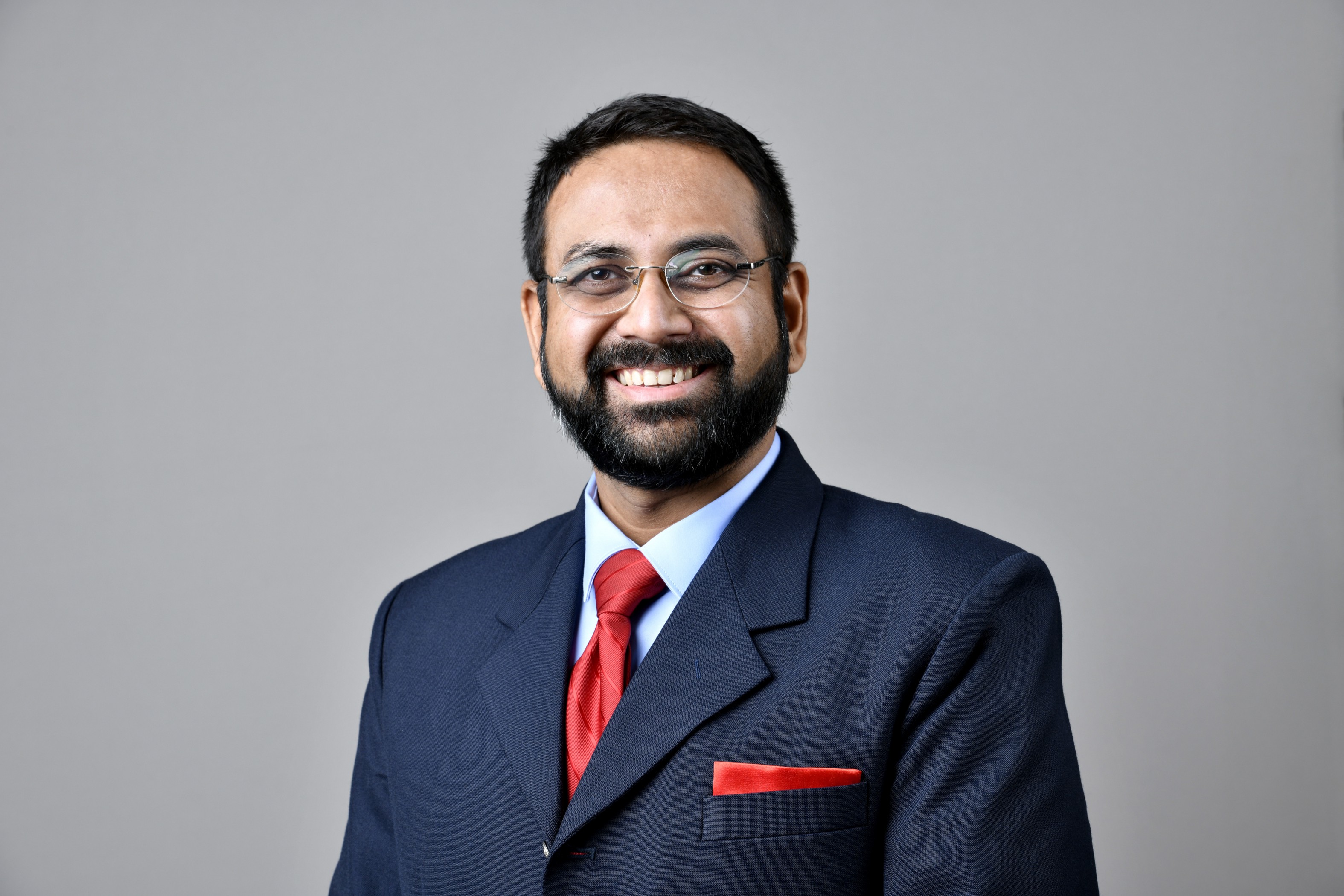
Siddhartha Rastogi
Siddhartha Rastogi is Managing Director & Chief Operating Officer of a Leading Full Service Investment Bank. Views and opinions expressed in this article are those of the authors and do not necessarily reflect the official view or position of any company or sister concerns or group company where the author is presently employed.